Kinross Gold’s Lobo-Marte update: capex, NPV and schedule lens for mine planners
Reviewed by Tom Sullivan
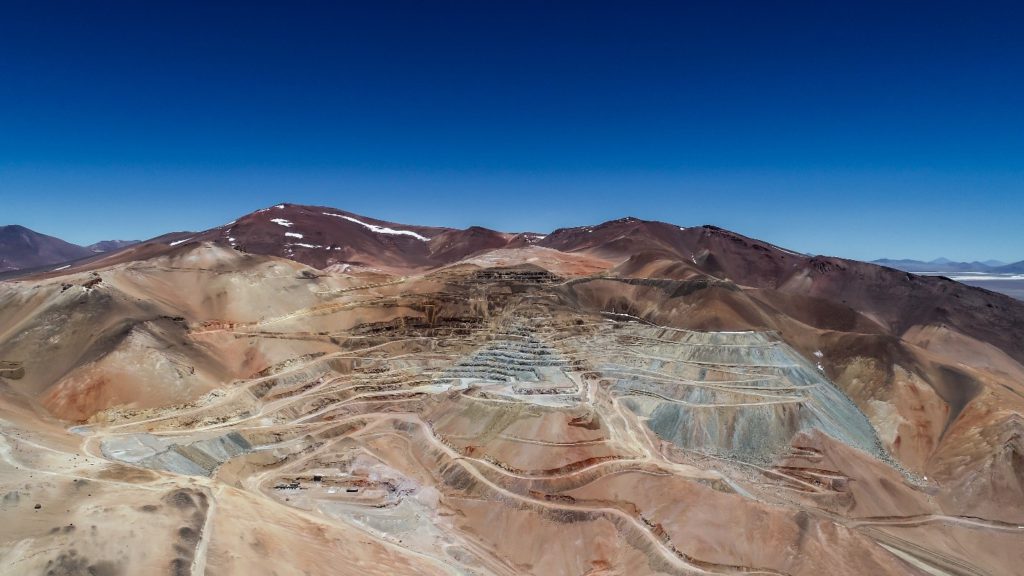
First reported on MINING.com
30 Second Briefing
Kinross Gold has lifted Lobo-Marte’s capex by 67% to US$1.8 billion, with a refreshed post-tax NPV of US$4.3 billion, driven by more than US$400 million of inflation, a US$100 million switch to new mining equipment, and a higher 19% contingency. The Chilean project is designed to mine 161 million tonnes of ore from sequential Marte and Lobo open pits, feeding a 35,000 t/d three-stage crushing and heap-leach plant, with 69% recovery, a 2:1 strip ratio, and processing and mining costs of US$12.30/t and US$3.25/t. Planned output averages 350,000 oz./y over 15 years at about US$1,000/oz. AISC, with a 26% IRR and 2.3-year payback at US$4,100/oz., while permitting is expected to run two to three years before a three-year build to first production in the early 2030s.
Technical Brief
- Capital split: US$1.1 billion direct, ~US$700 million indirects and 19% contingency after refresh.
- Process facilities dominate capex at US$490 million, with US$410 million for site works and infrastructure.
- Inflation since 2021 contributes >US$400 million, plus ~US$100 million to purchase new mining fleet.
- Original pit shells and reserve base retained to avoid reworking environmental baseline and delaying permitting.
- Proven and probable reserves: 160.7 Mt at 1.3 g/t Au (6.73 Moz contained).
- Additional upside from 120.8 Mt indicated at 0.71 g/t and 32.9 Mt inferred at 0.63 g/t Au.
- Site infrastructure requires 75 km access road, 60 km power line and 40 km water pipeline from La Coipa wellfield.
- Power concept uses renewable grid supply, electric shovels and covered conveyors to reduce dust and emissions.
- At US$3,500/oz gold, economics still show US$3.2 billion NPV and 22% IRR with 2.7-year payback.
Our Take
In our database of 1266 Mining stories, Kinross Gold appears frequently as a rare example of a mid-tier producer advancing two large-scale gold projects simultaneously (Lobo-Marte in Chile and Great Bear in Ontario), which tends to stretch internal technical and project-delivery bandwidth even when balance sheet metrics like the reported $4.4 billion liquidity look comfortable.
The earlier 1 April 2026 item on Kinross lodging Lobo-Marte with Chile’s Environmental Impact Assessment System suggests the current 2–3 year permit review window will overlap with the late‑2029 first production target at Great Bear, implying Kinross will likely stagger major capex peaks between Canada and Chile rather than build both projects at full speed in parallel.
With Lobo-Marte’s 15‑year mine life and 6.73 million oz. of reserves at 1.3 g/t in the Atacama, the project sits at the larger, lower‑grade end of gold projects in our coverage, meaning its economics are unusually sensitive to the high realised gold prices that have recently driven Kinross’ record margins and free cash flow in Q1–Q2 2026 articles.
Prepared by collating external sources, AI-assisted tools, and Geomechanics.io’s proprietary mining database, then reviewed for technical accuracy & edited by our geotechnical team.
Related Articles


Related Industries & Products
Mining
Geotechnical software solutions for mining operations including CMRR analysis, hydrogeological testing, and data management.
Construction
Quality control software for construction companies with material testing, batch tracking, and compliance management.
CMRR-io
Streamline coal mine roof stability assessments with our cloud-based CMRR software featuring automated calculations, multi-scenario analysis, and collaborative workflows.
HYDROGEO-io
Comprehensive hydrogeological testing platform for managing, analysing, and reporting on packer tests, lugeon values, and hydraulic conductivity assessments.
GEODB-io
Centralised geotechnical data management solution for storing, accessing, and analysing all your site investigation and material testing data.