Geomechanics.io

  • Free Tools
Sign UpLog In

Geomechanics.io

Geomechanics, Streamlined.

© 2026 Geomechanics.io. All rights reserved.

Geomechanics.io

CMRR-ioGEODB-ioHYDROGEO-ioQCDB-ioFree Tools & CalculatorsBlogLatest Industry News

Industries

MiningConstructionTunnelling

Company

Terms of UsePrivacy PolicyLinkedIn
    AllGeotechnicalMiningInfrastructureMaterialsHazardsEnvironmentalSoftwarePolicy
    Product
    Sustainability
    Projects

    Hydrogen to decarbonise asphalt production: performance insights for UK pavement engineers

    March 11, 2026|

    Reviewed by Tom Sullivan

    Hydrogen to decarbonise asphalt production: performance insights for UK pavement engineers

    First reported on New Civil Engineer

    30 Second Briefing

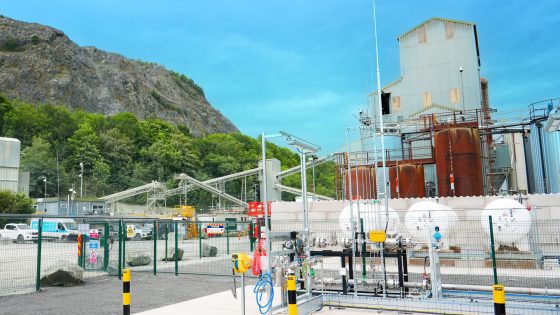
    Hydrogen has been used by Heidelberg Materials UK to decarbonise asphalt production on an industrial scale for the first time in the UK, replacing conventional fossil fuel combustion in the drying and heating phase of the mixing process. The trial, conducted in a full-scale asphalt plant rather than a laboratory rig, demonstrates that hydrogen burners can maintain production temperatures and binder performance within standard specification limits. For pavement designers and contractors, this signals emerging scope to cut Scope 1 emissions from asphalt plants without changing mix designs or laying procedures.

    Technical Brief

    • For other plants, the work provides an early reference case for hydrogen-ready burner conversion strategies.

    Our Take

    Hydrogen appears in 16 keyword‑matched pieces in our database, and several UK items – including the Lower Thames Crossing green hydrogen supply – are now moving beyond pilots, signalling that hydrogen is being tested across both construction processes and materials like asphalt rather than in energy systems alone.

    With Heidelberg Materials UK using hydrogen in asphalt and GeoPura supplying green hydrogen for National Highways’ Lower Thames Crossing, the United Kingdom is emerging in our coverage as the most active European testbed for hydrogen in road‑building supply chains.

    For materials producers, hydrogen‑fuelled asphalt in the UK suggests that early access to regional hydrogen transport and storage networks, such as the Humber proposal highlighted in another related piece, could become a locational advantage when bidding for low‑carbon infrastructure work.

    Geotechnical Software for Modern Teams

    Centralise site data, logs, and lab results with GEODB-io, CMRR-io, and HYDROGEO-io.

    No credit card required.

    • Save and export unlimited calculations
    • Advanced data visualisation
    • Generate professional PDF reports
    • Cloud storage for all your projects

    Prepared by collating external sources, AI-assisted tools, and Geomechanics.io’s proprietary mining database, then reviewed for technical accuracy & edited by our geotechnical team.
    Related Articles

    Designing asphalt for circularity: performance-based mix lessons for engineers
    Materials
    1 day ago

    Designing asphalt for circularity: performance-based mix lessons for engineers

    Australia’s asphalt sector, led by guidance from the Australian Flexible Pavements Association (AfPA) and Projects Technical Advisor Trevor Distin, is pushing performance-based mix design to exploit asphalt’s 100 per cent recyclability and cut pavement carbon. Reclaimed asphalt pavement (RAP) is being reprocessed into new surface and base courses, with higher RAP contents enabled by rejuvenators, tighter binder grading and improved plant controls. For designers and asset owners, the shift means specifying functional performance (rutting, fatigue, texture, skid resistance) and lifecycle cost rather than prescriptive mix recipes.

    US DOE gallium TRACE-Ga awards: process flowsheet insights for engineers
    Materials
    2 days ago

    US DOE gallium TRACE-Ga awards: process flowsheet insights for engineers

    The US Department of Energy’s TRACE-Ga initiative is awarding about $5.4 million to five firms to design and validate flowsheets to restart primary gallium production, after nearly 40 years of zero domestic output and 100% import reliance under China’s 98% global supply dominance. PHNX Materials will target non-traditional waste streams to co-produce gallium, supplementary cementitious materials, alumina and ammonium sulphate, while Atlantic Alumina and Found Energy will apply counter-current ion exchange, electrochemistry and Direct Bayer Extraction to recover gallium from hot, dilute Bayer liquors. Kunin Technologies aims for a 12 tpa gallium pathway from high-Ga metal streams, and Indium Corporation will build recycling-based recovery from scrap, signalling new process options for alumina refineries and metallurgical residues.

    Murphy’s UK-first Ecocem ACT concrete pour: specification notes for designers
    Materials
    3 days ago

    Murphy’s UK-first Ecocem ACT concrete pour: specification notes for designers

    Murphy has completed the UK’s first permanent works pour using Ecocem ACT low‑carbon concrete, marking a shift from traditional CEM I mixes on a live infrastructure scheme. Ecocem ACT is a clinker‑reduced binder system designed to cut embodied CO₂ significantly while maintaining CEM I‑equivalent strength and setting performance, enabling direct substitution in structural elements. For designers and contractors, this early UK deployment provides a live reference for specification, QA testing, and durability assessment of next‑generation low‑carbon binders in permanent works.

    Related Industries & Products

    Construction

    Quality control software for construction companies with material testing, batch tracking, and compliance management.

    QCDB-io

    Comprehensive quality control database for manufacturing, tunnelling, and civil construction with UCS testing, PSD analysis, and grout mix design management.