Heidelberg’s Manchester recycling expansion: process and design notes for engineers
Reviewed by Tom Sullivan
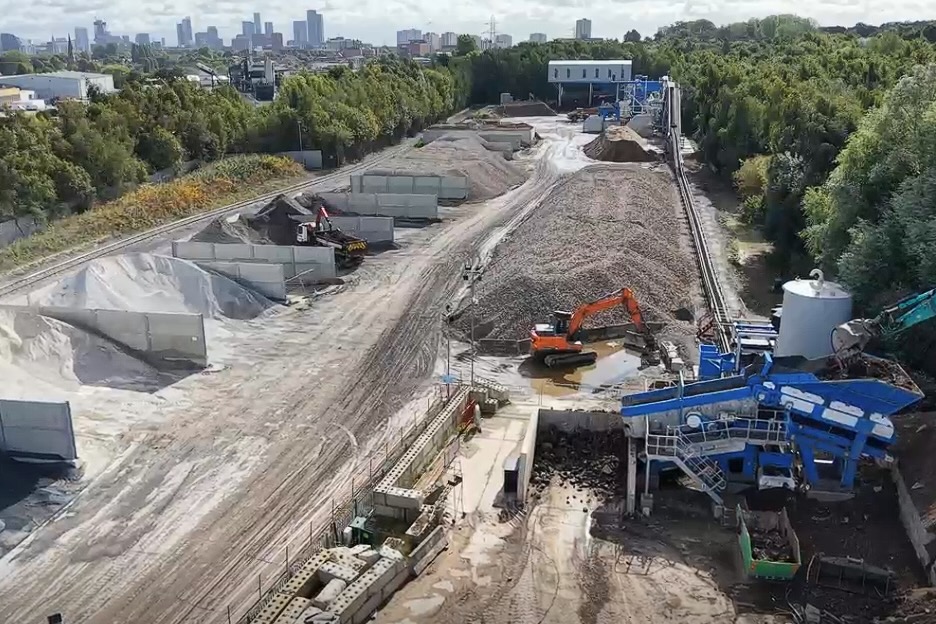
First reported on The Construction Index
30 Second Briefing
Heidelberg Materials has expanded its Agecroft recycling site in Swinton, Manchester with the UK’s largest wash plant, capable of processing up to 450,000 tonnes of excavated waste a year and fitted with a near-closed-loop drainage and water recovery system. The plant separates, washes and upgrades mainly soil-based construction, demolition and industrial arisings into high-quality recycled aggregates under strict contamination-control protocols. A new rail siding now brings primary aggregate from Horton quarry in the Yorkshire Dales, cutting HGV movements and CO₂ for supply into the Manchester market.
Technical Brief
- Agecroft is configured to handle mainly soil-dominant CDE arisings from construction, demolition and industrial sources.
- Bespoke plant design focuses on on-site recovery and washing rather than off-site disposal or blending.
- Strict contamination-control protocols govern incoming loads, protecting recycled aggregate quality and downstream concrete/asphalt performance.
- Rail-fed primary aggregates allow Agecroft to operate as a combined primary–recycled hub for the Manchester market.
- Investment is positioned within Heidelberg Materials UK’s regional strategy for aggregates, asphalt and recycling in the North.
- Similar hub-and-spoke rail-linked recycling sites could materially reduce HGV traffic on constrained urban networks.
Our Take
In our database, Heidelberg Materials UK’s push to reopen the 160m‑tonne Westdown limestone quarry near Frome sits alongside this Agecroft aggregates recycling expansion, signalling a dual track of both primary extraction and secondary materials to secure long-term supply in the UK.
The planned replication of the wash plant concept at the Bristol-based B&A Group site by 2025 suggests Heidelberg is standardising a modular, water-efficient processing set‑up that can be rolled out across regional aggregates hubs rather than treating Agecroft as a one‑off pilot.
Across the 44 Materials stories in our coverage, Heidelberg appears frequently in low‑carbon concrete and specialist backfill products, so the Manchester aggregates recycling move strengthens its positioning as a full‑chain decarbonisation player from raw aggregates through to engineered construction materials.
Prepared by collating external sources, AI-assisted tools, and Geomechanics.io’s proprietary mining database, then reviewed for technical accuracy & edited by our geotechnical team.
Related Articles


Related Industries & Products
Construction
Quality control software for construction companies with material testing, batch tracking, and compliance management.
Mining
Geotechnical software solutions for mining operations including CMRR analysis, hydrogeological testing, and data management.
QCDB-io
Comprehensive quality control database for manufacturing, tunnelling, and civil construction with UCS testing, PSD analysis, and grout mix design management.