Great British Railways’ stations of the future: resilience design notes for engineers
Reviewed by Tom Sullivan
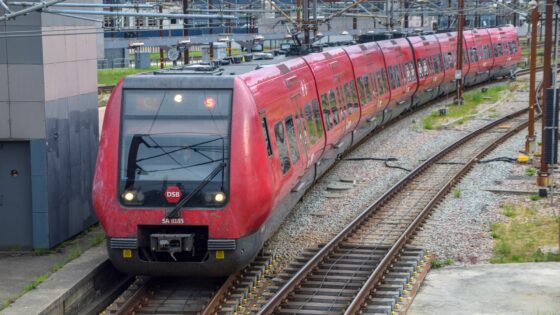
First reported on New Civil Engineer
30 Second Briefing
Great British Railways’ push to reshape the network is driving a shift towards stations designed as resilient civic assets, with integrated flood‑resilient structures, passive cooling, and secure, compartmentalised concourses that can operate during major disruptions. Future layouts emphasise flexible platforms and concourse spaces that can be reconfigured for crowd surges, temporary medical or shelter use, and multimodal interchange with buses, micromobility hubs and active‑travel corridors. For engineers, this signals more emphasis on whole‑life performance, robust power and data redundancy, and designing public‑realm structures to security and climate‑stress criteria rather than minimum passenger throughput alone.
Technical Brief
- Station structural envelopes are being designed for progressive-collapse resistance under blast or impact loading scenarios.
- Fire engineering moves towards multi-compartment smoke-control zones, enabling partial operation during localised incidents.
- Platform and concourse slabs are sized to accommodate temporary vehicle loading for emergency services access.
- Power systems adopt redundancy on critical feeds, with segregated cable routes for resilience.
- CCTV, access control and hostile vehicle mitigation are integrated into primary structural and streetscape layouts.
- Drainage and below-ground structures are detailed to maintain safe egress routes during pluvial or fluvial flooding.
- Crowd-modelling outputs are now routinely driving stair, concourse and platform width selection for abnormal events.
Our Take
Great British Railways’ confirmation of Derby as its operational centre in the 16 April 2026 piece suggests that any ‘stations of the future’ concepts in the UK will need to interface with a more centralised asset and timetable management structure than under Network Rail alone.
Coverage in our database on the Railways Bill and the creation of the GBR chair role indicates that governance and funding frameworks for stations in the United Kingdom are in flux, so long‑life station redesigns will likely need contractual flexibility to accommodate future GBR-led standards and access regimes.
With 912 Infrastructure stories and 2,437 tag‑matched pieces on projects, sustainability and safety, this Great British Railways article sits in a cluster where UK rail schemes are increasingly evaluated not just on capacity but on demonstrable carbon, accessibility and safety performance at station level.
Prepared by collating external sources, AI-assisted tools, and Geomechanics.io’s proprietary mining database, then reviewed for technical accuracy & edited by our geotechnical team.
Related Articles


Related Industries & Products
Mining
Geotechnical software solutions for mining operations including CMRR analysis, hydrogeological testing, and data management.
Construction
Quality control software for construction companies with material testing, batch tracking, and compliance management.
CMRR-io
Streamline coal mine roof stability assessments with our cloud-based CMRR software featuring automated calculations, multi-scenario analysis, and collaborative workflows.
HYDROGEO-io
Comprehensive hydrogeological testing platform for managing, analysing, and reporting on packer tests, lugeon values, and hydraulic conductivity assessments.
GEODB-io
Centralised geotechnical data management solution for storing, accessing, and analysing all your site investigation and material testing data.