Glencore halts Cerrejón coal railway: corridor risk and logistics lessons for mines
Reviewed by Joe Ashwell
First reported on MINING.com
30 Second Briefing
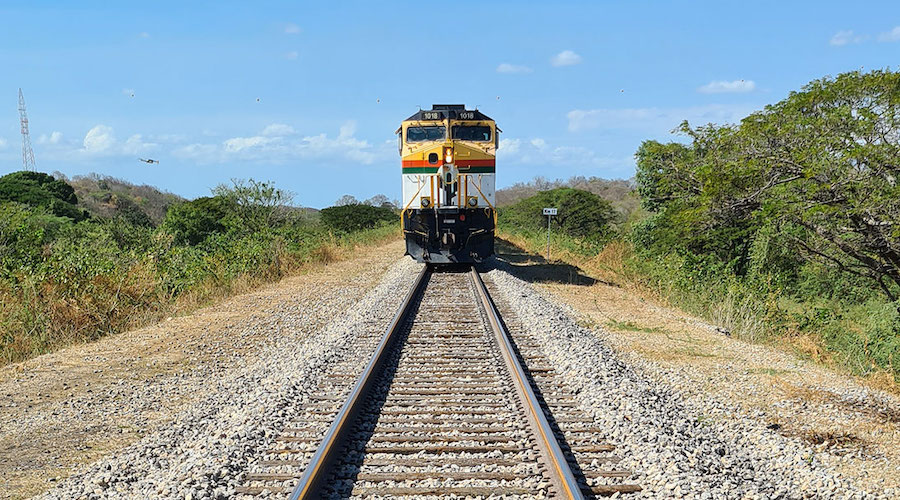
Glencore has halted rail operations at its Cerrejón coal mine in Colombia after explosives hit its 150 km railway near Uribia, La Guajira, damaging a train in the sixth attack on the corridor this year. The mine itself, one of the world’s largest open pits with 2025 output of 16.8 million tonnes, continues operating while the National Army secures the line and engineers await access for damage assessment. Prolonged repairs could again choke inbound supplies and coal exports via Puerto Bolívar, exposing the operation’s heavy reliance on a single transport corridor.
Technical Brief
- Explosive loading directly impacted rolling stock on the Cerrejón–Puerto Bolívar 150 km heavy-haul corridor.
- Incident occurred near Uribia on the evening of 22 September, enabling precise time-bounded event reconstruction.
- Sixth recorded attack on Cerrejón rail infrastructure in 2026 indicates a recurring, non-random threat pattern.
- National Army securing the right-of-way is a prerequisite for close-range NDT, track survey and rolling-stock inspection.
- For similar single-corridor bulk operations, quantified security risk now becomes a core element of rail availability modelling.
Our Take
In our database, Glencore’s coal exposure at Cerrejón is now being reported alongside multiple copper and critical-minerals items (such as the Nth Cycle black-mass offtake and Canadian value-add studies), which signals that physical security and social licence at legacy coal assets may influence how investors price its transition narrative towards copper and battery materials.
The repeated disruption of the 150 km Cerrejón railway underscores how single-corridor export systems in Latin America can become structural bottlenecks; operators of other bulk routes in the region, including copper corridors in Chile, will likely scrutinise contingency planning and community/security engagement models in light of this pattern.
Prepared by collating external sources, AI-assisted tools, and Geomechanics.io’s proprietary mining database, then reviewed for technical accuracy & edited by our geotechnical team.
Related Articles


Related Industries & Products
Mining
Geotechnical software solutions for mining operations including CMRR analysis, hydrogeological testing, and data management.
Construction
Quality control software for construction companies with material testing, batch tracking, and compliance management.
CMRR-io
Streamline coal mine roof stability assessments with our cloud-based CMRR software featuring automated calculations, multi-scenario analysis, and collaborative workflows.
HYDROGEO-io
Comprehensive hydrogeological testing platform for managing, analysing, and reporting on packer tests, lugeon values, and hydraulic conductivity assessments.
GEODB-io
Centralised geotechnical data management solution for storing, accessing, and analysing all your site investigation and material testing data.