Fortescue’s green ammonia shipping milestone: port design and safety notes for engineers
Reviewed by Joe Ashwell
First reported on Australian Mining
30 Second Briefing
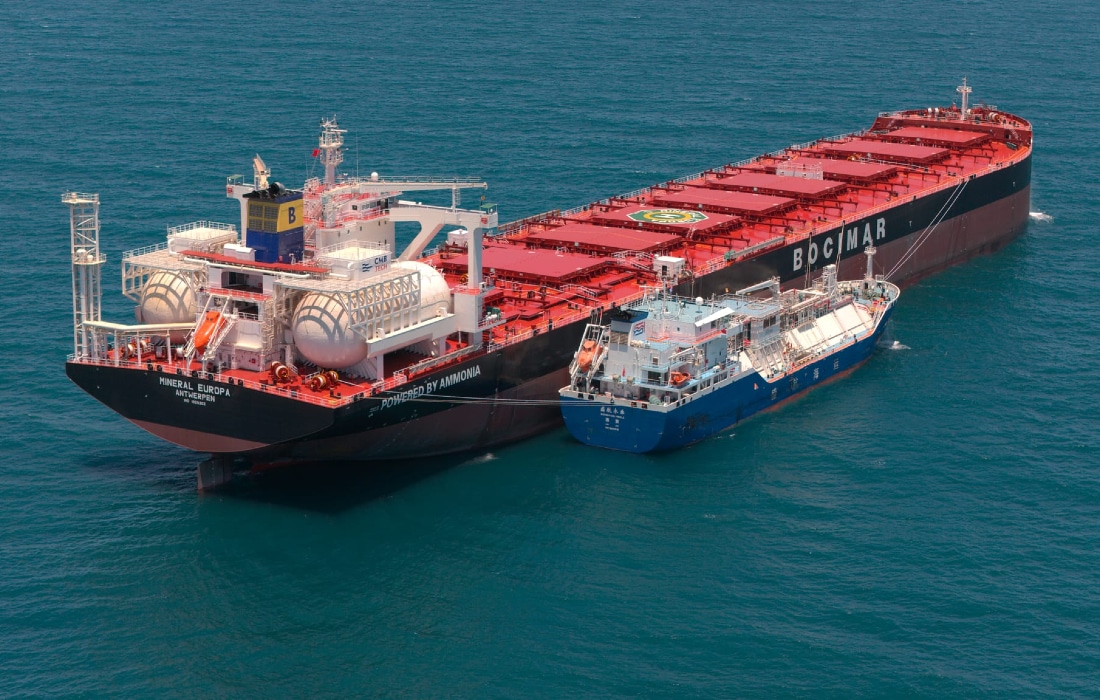
Fortescue has completed Australia’s first green ammonia bunkering of an ammonia‑powered dry bulk carrier at Port Hedland, fuelling the 300‑metre Mineral Europa, billed as the world’s first ammonia‑powered dry bulk vessel, with certified green ammonia from a dedicated bunker vessel. The trial validates ship‑side handling of ammonia as a marine fuel at one of the world’s largest iron ore export ports, with implications for future storage, piping and safety systems in high‑throughput bulk terminals. Engineers will now focus on fuel system integrity, NOx emissions control and port risk management for scaling similar operations.
Technical Brief
- Port Hedland’s role as a major iron ore export hub forces ammonia handling to integrate with high-throughput bulk operations.
- Ship-side transfer required closed, hard-piped systems to minimise fugitive ammonia and protect deck crew.
- Emergency response planning had to address ammonia toxicity, vapour cloud dispersion and potential jet releases on the berth.
- Port safety case and risk assessments now need explicit ammonia-fuel scenarios alongside conventional oil-based bunkering.
- Existing hazardous area zoning on the wharf must be revalidated for ammonia’s different flammability and toxicity behaviour.
- Lessons from this operation will influence design of future ammonia storage, transfer piping and gas detection layouts at bulk ports.
Our Take
Fortescue’s use of the 300 m Mineral Europa at Port Hedland aligns with its wider push to decarbonise Pilbara iron ore logistics, which in related coverage includes large-scale electrification of its Pilbara operations and grid build‑out rather than only mine‑site changes.
Our database shows multiple recent Fortescue items tying Western Australian operations to new power and fuel systems (including the Green Grid PPA with Pilgangoora), suggesting this ammonia shipping move is part of a broader attempt to lock in low‑carbon infrastructure across both mining and export corridors.
Among Infrastructure pieces tagged for Sustainability, there are relatively few that combine iron ore export hubs like Port Hedland with alternative fuels such as ammonia, signalling that Fortescue is positioning itself early in Australia’s green maritime supply chain rather than following established practice.
Prepared by collating external sources, AI-assisted tools, and Geomechanics.io’s proprietary mining database, then reviewed for technical accuracy & edited by our geotechnical team.
Related Articles


Related Industries & Products
Mining
Geotechnical software solutions for mining operations including CMRR analysis, hydrogeological testing, and data management.
Construction
Quality control software for construction companies with material testing, batch tracking, and compliance management.
CMRR-io
Streamline coal mine roof stability assessments with our cloud-based CMRR software featuring automated calculations, multi-scenario analysis, and collaborative workflows.
HYDROGEO-io
Comprehensive hydrogeological testing platform for managing, analysing, and reporting on packer tests, lugeon values, and hydraulic conductivity assessments.
GEODB-io
Centralised geotechnical data management solution for storing, accessing, and analysing all your site investigation and material testing data.