Fortescue Real Zero build‑out: Pilbara Green Grid implications for mine engineers
Reviewed by Joe Ashwell
First reported on Australian Mining
30 Second Briefing
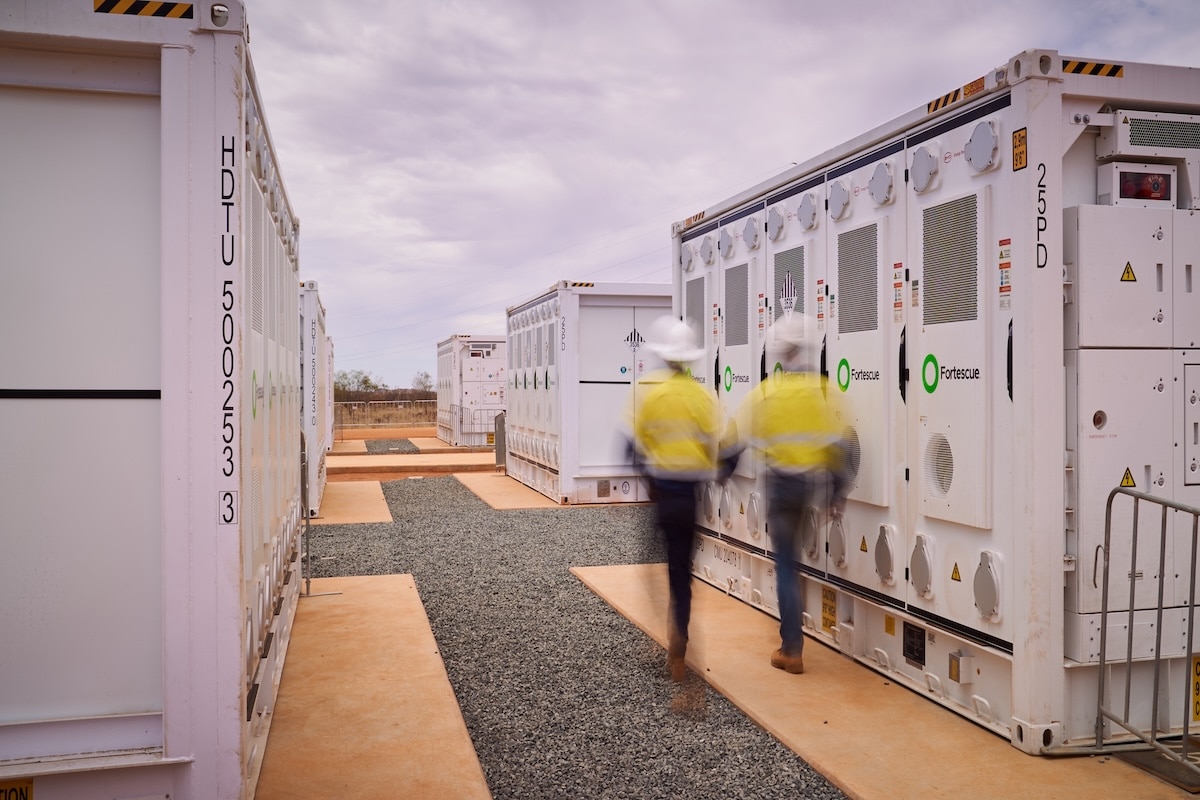
Fortescue has started building a 690‑megawatt solar farm at Turner River in the Pilbara and a 650‑megawatt‑hour battery energy storage system at its Cloudbreak iron ore operations, advancing its Real Zero decarbonisation strategy. The assets form part of the Pilbara Green Grid, an integrated renewables and transmission network intended to displace gas and diesel generation across multiple mine sites. For engineers, the scale of the PV and BESS installations signals future demand for high‑capacity grid connections, foundation design in cyclonic conditions, and mine‑site load management integration.
Technical Brief
- Turner River solar construction start triggers large-scale earthworks, access tracks and PV foundation installation.
- Cloudbreak BESS build requires high-capacity concrete foundations and blast-rated enclosures for containerised battery units.
- Grid-forming inverters at both sites must manage weak-grid conditions typical of remote Pilbara operations.
- Cyclonic wind design in the Pilbara drives heavier racking, deeper piles and stricter uplift checks for PV arrays.
- Battery system siting at Cloudbreak must consider blast vibration, dust ingress and iron ore haul road separation distances.
- Centralised control of PV and BESS will require advanced energy management systems tuned to mine load variability.
- Similar large remote BESS–PV combinations are likely to standardise on modular container units for rapid brownfield deployment.
Our Take
The 690 MW Turner River solar and 650 MWh Cloudbreak storage build-out aligns with Fortescue’s parallel trials of battery-electric haulage with Liebherr and XCMG, signalling a push to ensure mine power infrastructure can support large-scale fleet electrification rather than just offset grid emissions.
In our database of 1,190 mining stories, Fortescue features unusually often in both ‘Projects’ and ‘Sustainability’ tags, indicating that its Real Zero decarbonisation work in the Pilbara is now a core strategic pillar rather than a side initiative compared with many iron ore peers.
Prepared by collating external sources, AI-assisted tools, and Geomechanics.io’s proprietary mining database, then reviewed for technical accuracy & edited by our geotechnical team.
Related Articles
Related Industries & Products
Construction
Quality control software for construction companies with material testing, batch tracking, and compliance management.
Mining
Geotechnical software solutions for mining operations including CMRR analysis, hydrogeological testing, and data management.
CMRR-io
Streamline coal mine roof stability assessments with our cloud-based CMRR software featuring automated calculations, multi-scenario analysis, and collaborative workflows.
HYDROGEO-io
Comprehensive hydrogeological testing platform for managing, analysing, and reporting on packer tests, lugeon values, and hydraulic conductivity assessments.
GEODB-io
Centralised geotechnical data management solution for storing, accessing, and analysing all your site investigation and material testing data.