Ferrexpo’s Ukraine shutdown: production, funding and risk notes for mine planners
Reviewed by Joe Ashwell
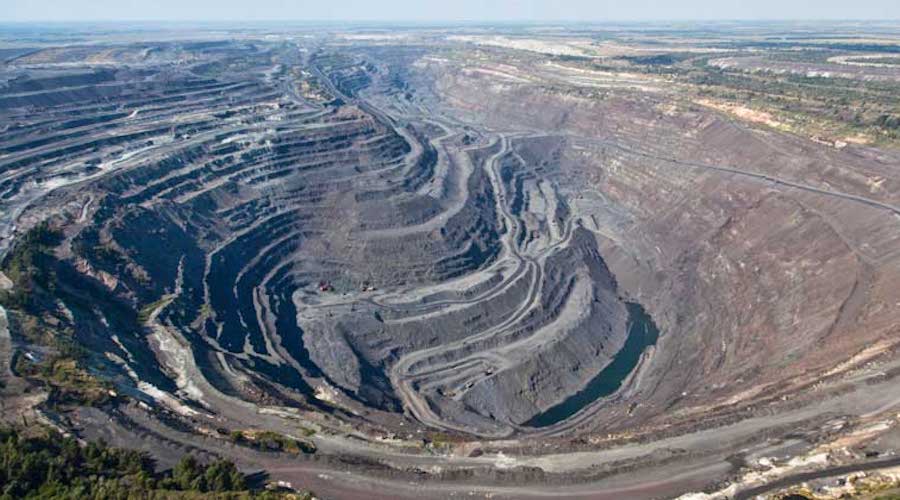
First reported on MINING.com
30 Second Briefing
Ferrexpo has halted all iron ore mining and pellet production at its Horishni Plavni complex in central Ukraine after Russian attacks on Black Sea shipping, including a drone strike on a third-party vessel carrying 55,000 tonnes of direct-reduction-grade pellets, killed one crew member and forced the ship out of the war-risk zone. The company, formerly the world’s third-largest pellet exporter, produced only 1.56 million tonnes in H1 2026 (down 54% year-on-year) with one of four pellet lines running and now has just enough accessible cash to operate until mid-September without fresh funding. Ferrexpo is seeking at least $100 million in equity while $90.3 million in withheld VAT refunds and bankruptcy proceedings at Ferrexpo Poltava Mining compound liquidity and asset-control risks for European steel supply chains reliant on high-grade pellets.
Technical Brief
- Drone strike on a third-party vessel carrying 55,000 t of DR-grade pellets caused fatality and cargo damage risk, triggering immediate export-route risk reassessment.
- Vessel has been towed out of the war-risk zone to a nearby port for hull and cargo inspection, with Ferrexpo yet to confirm pellet condition or contamination.
- The attacked shipment formed part of 189,000 t of pellets already produced for sale, including ~90,000 t of DR-grade material in onshore stockpiles valued at ~US$20 million in production and delivery costs.
- Alternative logistics now rely on westbound rail and barge corridors primarily into Europe, implying higher unit transport costs and constrained volumes versus Black Sea bulk shipments.
- Liquidity constraints are acute: only US$17 million in accessible cash was available on 17 April against a US$100+ million equity requirement to fund 18 months of reduced operations.
- Ferrexpo Poltava Mining faces parallel bankruptcy proceedings with a court-appointed insolvency manager before Supreme Court resolution, creating governance uncertainty over mine asset stewardship and statutory safety responsibilities.
- From a failure-investigation standpoint, the incident will focus on vessel routing, AIS and convoy protocols in declared war-risk areas, with ongoing monitoring of shipping cancellations and port-area attack frequency to inform any future restart of seaborne exports.
Our Take
The combination of only one of four pellet lines operating and a 54% year-on-year production decline suggests Ferrexpo’s unit costs are likely spiking into the upper end of the iron ore cost curve, which can quickly erode lender appetite for the short-horizon financing the company is now seeking to get beyond mid-September.
VAT refunds of about US$90.3 million owed in Ukraine dwarf Ferrexpo’s US$17 million accessible cash, so any delay or haircut on those receivables effectively functions as a sovereign credit risk that equity and debt investors will now have to price into their exposure to Ukrainian iron ore supply chains.
Prepared by collating external sources, AI-assisted tools, and Geomechanics.io’s proprietary mining database, then reviewed for technical accuracy & edited by our geotechnical team.
Related Articles
Related Industries & Products
Mining
Geotechnical software solutions for mining operations including CMRR analysis, hydrogeological testing, and data management.
CMRR-io
Streamline coal mine roof stability assessments with our cloud-based CMRR software featuring automated calculations, multi-scenario analysis, and collaborative workflows.
HYDROGEO-io
Comprehensive hydrogeological testing platform for managing, analysing, and reporting on packer tests, lugeon values, and hydraulic conductivity assessments.
GEODB-io
Centralised geotechnical data management solution for storing, accessing, and analysing all your site investigation and material testing data.