Europe’s subsea infrastructure: design-life and IMR priorities for engineers
Reviewed by Tom Sullivan
First reported on New Civil Engineer
30 Second Briefing
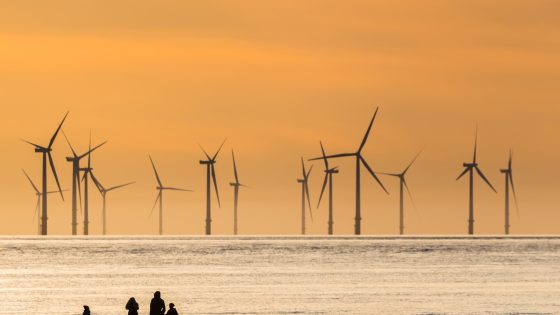
Europe’s rapid build-out of offshore wind farms and interconnectors is driving a surge in subsea assets that must withstand decades of exposure to saltwater, currents and cyclic loading. Developers and TSOs are being pushed to adopt more robust inspection, maintenance and repair regimes for subsea cables, monopile and jacket foundations, including ROV-based condition monitoring and predictive maintenance to prevent cable faults and grout or weld failures. For civil and geotechnical engineers, design life assumptions, access for inspection, and whole-life integrity of subsea structures are becoming as critical as initial installation cost.
Technical Brief
- Inspection regimes must address corrosion-fatigue interaction in welded joints and grouted connections under combined cyclic loading.
- Cable protection design now needs explicit allowance for scour development, free-span formation and vortex-induced vibration fatigue.
- Condition monitoring data are being used to refine probabilistic failure models for joints, terminations and bend stiffeners.
- Safety cases for offshore substations and foundations are being updated to integrate subsea integrity KPIs and alarm thresholds.
- Life-extension assessments require revalidation of original design partial factors against observed degradation and updated loading statistics.
- Interfaces between monopiles, transition pieces and secondary steelwork are emerging as critical locations for hidden corrosion and grout washout.
- For future projects, consenting and FEED scopes are expanding to include defined inspection access, tooling envelopes and decommissioning readiness.
Our Take
New Civil Engineer’s recent webinars on BIM, common data environments and asset management platforms signal that UK and wider European operators are already grappling with the ‘data handover gap’ on major infrastructure, which is likely to be even more acute for subsea assets where inspection histories and condition data are harder to capture and standardise.
Within our 912 Infrastructure stories and 2480 tag‑matched pieces on Projects, Safety and Sustainability, relatively few focus on subsea systems in Europe, suggesting that inspection and repair practice offshore may be lagging the level of codification and shared learning now seen for bridges and airports in the United Kingdom.
The bridge-focused ‘National Bridge Retrofit Library’ concept highlighted in New Civil Engineer’s Bridges Conference coverage points to a template that could be adapted for subsea infrastructure in Europe, enabling operators to benchmark repair strategies and failure modes rather than treating each offshore asset as a one‑off engineering problem.
Prepared by collating external sources, AI-assisted tools, and Geomechanics.io’s proprietary mining database, then reviewed for technical accuracy & edited by our geotechnical team.
Related Articles


Related Industries & Products
Construction
Quality control software for construction companies with material testing, batch tracking, and compliance management.
Mining
Geotechnical software solutions for mining operations including CMRR analysis, hydrogeological testing, and data management.
CMRR-io
Streamline coal mine roof stability assessments with our cloud-based CMRR software featuring automated calculations, multi-scenario analysis, and collaborative workflows.
HYDROGEO-io
Comprehensive hydrogeological testing platform for managing, analysing, and reporting on packer tests, lugeon values, and hydraulic conductivity assessments.
GEODB-io
Centralised geotechnical data management solution for storing, accessing, and analysing all your site investigation and material testing data.