European nuclear drought curtailments: cooling design lessons for engineers
Reviewed by Tom Sullivan
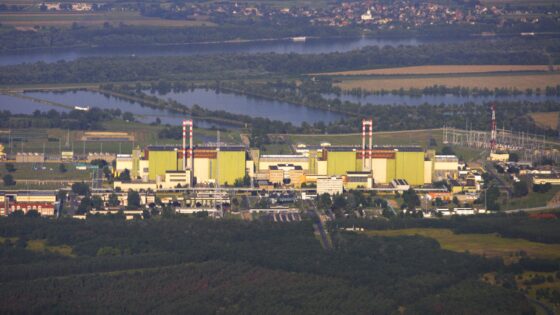
First reported on New Civil Engineer
30 Second Briefing
Droughts and historically low river levels across Europe are forcing several nuclear power plants that rely on once-through river water cooling to cut output or temporarily shut down to stay within thermal discharge limits. Facilities on major rivers such as the Rhône and Rhine are constrained by maximum allowable downstream temperature rises of only a few degrees Celsius, reducing available cooling capacity during heatwaves. Civil and mechanical engineers are being pushed to consider retrofitting closed‑loop or hybrid cooling towers, larger intake structures and alternative water sources to maintain design output under more frequent low‑flow conditions.
Technical Brief
- Low river heads reduce NPSH at circulating-water pumps, increasing cavitation risk and vibration at full load.
- Sediment concentration rises during droughts, accelerating erosion of pump impellers, condenser tubes and trash screens.
- Thermal discharge consents require continuous temperature and flow monitoring, forcing automatic power derating when thresholds approach.
- Safety cases for European pressurised water reactors assume minimum cooling-water availability, now challenged by extended low-flow durations.
- Emergency shutdown procedures must consider reduced dilution for residual decay-heat rejection after reactor trip.
- Retrofitting hybrid or dry cooling demands additional plot area, structural supports and seismic checks on new towers.
Our Take
New Civil Engineer’s broader coverage of digital asset management and BIM-driven handover suggests that utilities may increasingly need integrated hydrological and climate datasets in their asset models, so that nuclear and thermal plants in Europe can forecast and manage drought-related derating more proactively.
Prepared by collating external sources, AI-assisted tools, and Geomechanics.io’s proprietary mining database, then reviewed for technical accuracy & edited by our geotechnical team.
Related Articles


Related Industries & Products
Construction
Quality control software for construction companies with material testing, batch tracking, and compliance management.
Mining
Geotechnical software solutions for mining operations including CMRR analysis, hydrogeological testing, and data management.
CMRR-io
Streamline coal mine roof stability assessments with our cloud-based CMRR software featuring automated calculations, multi-scenario analysis, and collaborative workflows.
HYDROGEO-io
Comprehensive hydrogeological testing platform for managing, analysing, and reporting on packer tests, lugeon values, and hydraulic conductivity assessments.
GEODB-io
Centralised geotechnical data management solution for storing, accessing, and analysing all your site investigation and material testing data.