Epiroc tunnels in Himalayas: controlled excavation lessons for tunnel engineers
Reviewed by Tom Sullivan
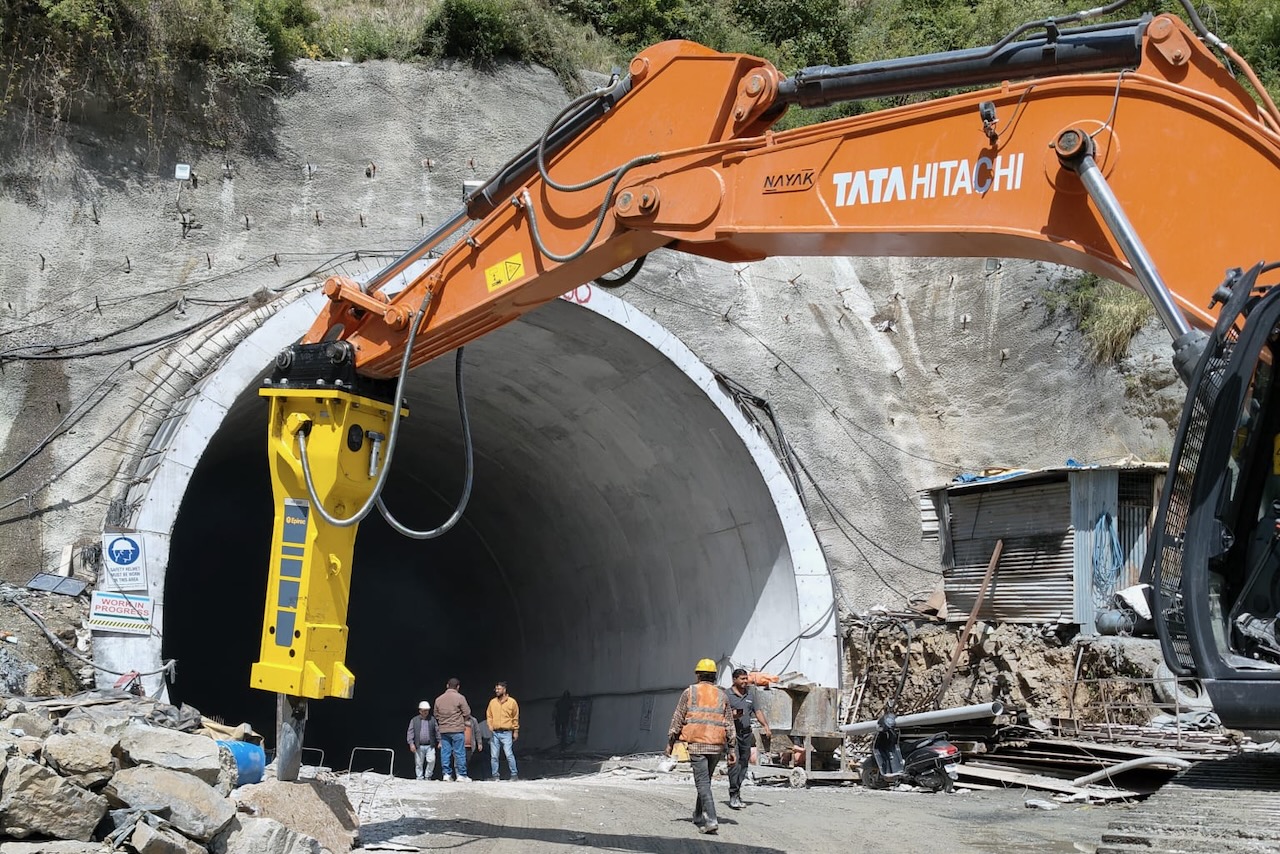
First reported on The Construction Index
30 Second Briefing
Epiroc has supplied its HB 3600 DP hydraulic breaker to Bharat Constructions for the 27.4km Shimla Bypass Tunnel Project in India, where blasting is restricted in geologically sensitive Himalayan sections close to populated areas. The breaker provides controlled, non‑explosive rock excavation in zones with complex formations and faulted ground, complementing drill‑and‑blast tunnelling supported by the New Austrian Tunnelling Method. Technical adaptations for tunnel clearances, continuous duty and underground working cycles enabled steady advance while keeping vibration and safety within regulatory limits.
Technical Brief
- NATM use allows observational adjustment of support classes as Himalayan ground conditions change during advance.
- Variable geology includes complex rock formations and fault zones, increasing localised instability and overbreak risk.
- Proximity to inhabited areas imposes strict vibration and noise limits, constraining conventional blasting patterns and charge sizes.
- Similar mixed-method tunnel drives in urban or environmentally sensitive corridors can adopt hydraulic breaking to maintain compliance where blast permits are curtailed.
Our Take
Epiroc’s use of the HB 3600 DP on the Shimla Bypass Tunnel Project sits alongside a run of recent product updates such as the lighter EC 122 breaker, signalling that its hydraulic attachment line is being pushed simultaneously into both high‑altitude infrastructure and more weight‑sensitive carrier classes.
With the National Highways Authority of India backing a 27.4 km bypass around Shimla, this Himalayan tunnel joins one of the larger, more complex road projects in our Infrastructure database, suggesting long-term demand for high‑reliability rock excavation gear in India’s mountainous corridors.
Recent Epiroc items in our coverage include autonomous haulage, OEM‑agnostic charging, and advanced ground support, so deploying its equipment on a Himalayan tunnel gives Bharat Constructions and NHAI a pathway to plug into that broader technology stack if they later move towards more automated or battery‑electric underground fleets.
Prepared by collating external sources, AI-assisted tools, and Geomechanics.io’s proprietary mining database, then reviewed for technical accuracy & edited by our geotechnical team.
Related Articles


Related Industries & Products
Mining
Geotechnical software solutions for mining operations including CMRR analysis, hydrogeological testing, and data management.
Tunnelling
Specialised solutions for tunnelling projects including grout mix design, hydrogeological analysis, and quality control.
QCDB-io
Comprehensive quality control database for manufacturing, tunnelling, and civil construction with UCS testing, PSD analysis, and grout mix design management.
CMRR-io
Streamline coal mine roof stability assessments with our cloud-based CMRR software featuring automated calculations, multi-scenario analysis, and collaborative workflows.