Geomechanics.io

  • Free Tools
Sign UpLog In

Geomechanics.io

Geomechanics, Streamlined.

© 2026 Geomechanics.io. All rights reserved.

Geomechanics.io

CMRR-ioGEODB-ioHYDROGEO-ioQCDB-ioFree Tools & CalculatorsBlogLatest Industry News

Industries

MiningConstructionTunnelling

Company

Terms of UsePrivacy PolicyLinkedIn
    Product
    Sustainability
    Projects

    Enva recycles fridges for construction: HIPS-8513 performance and LCA insights for engineers

    August 7, 2026|

    Reviewed by Tom Sullivan

    Enva recycles fridges for construction: HIPS-8513 performance and LCA insights for engineers

    First reported on The Construction Index

    30 Second Briefing

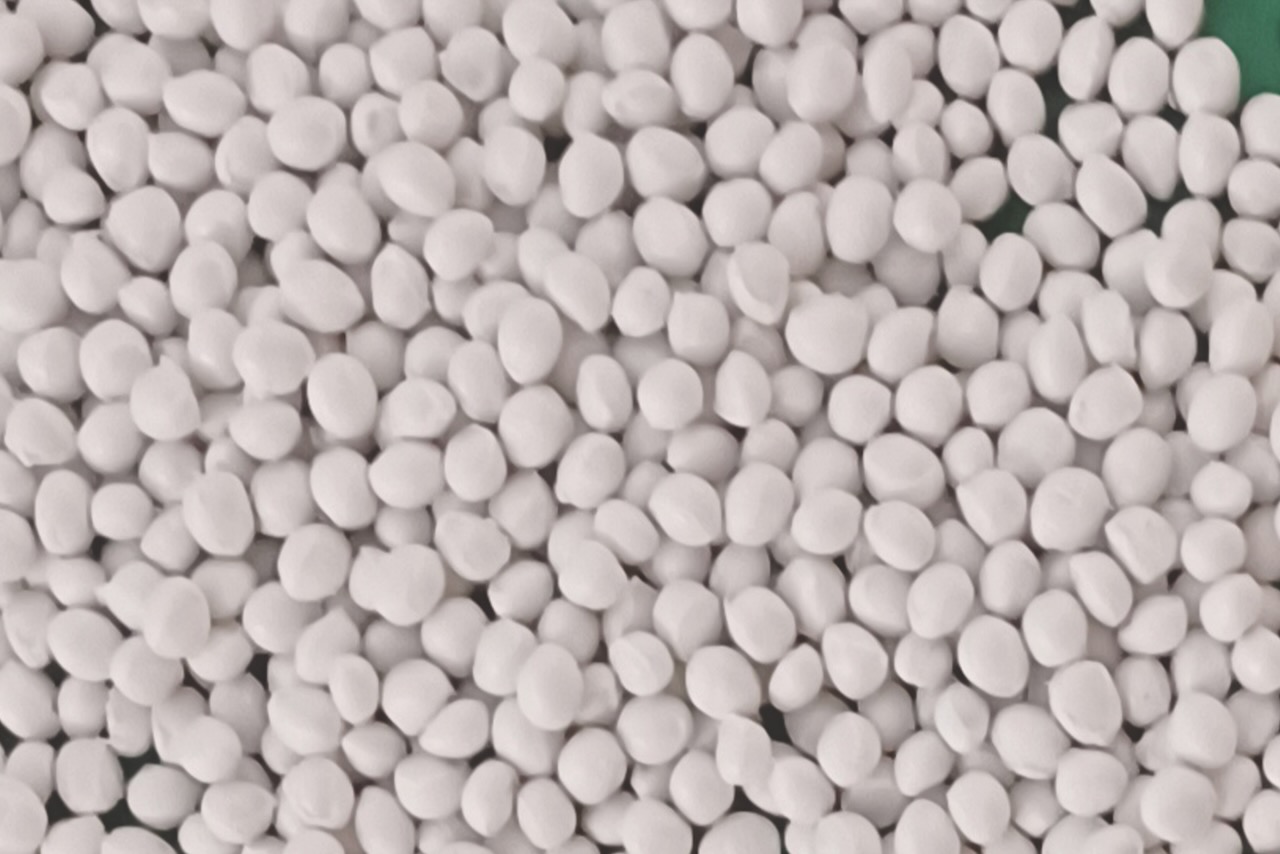
    Enva has launched White HIPS-8513, a high-impact polystyrene compound made from end-of-life refrigerators, containing 93% post-consumer recycled content and positioned as its whitest recycled HIPS grade for construction products such as piping, ducting, ventilation components, access panels and loft hatches. Life cycle assessment shows more than 90% lower carbon emissions than equivalent virgin HIPS while maintaining prime-equivalent mechanical performance and colour consistency. With integrated control from appliance recycling to compounding, Enva has installed capacity to supply 12,000 tonnes per year, targeting long-term, traceable raw material streams for manufacturers.

    Technical Brief

    • Compound White HIPS-8513 is formulated specifically for white construction components requiring colour uniformity.
    • Targeted applications include internal piping, ducting, ventilation fittings, access panels and loft hatches.
    • Feedstock is plastic recovered from end-of-life refrigerators processed through Enva’s appliance recycling lines.
    • Advanced sorting and compounding are used to control contaminants and achieve consistent optical and mechanical properties.
    • Enva manages the full chain from appliance intake to finished compound, enabling closed-loop quality control.
    • Integrated operations are intended to secure long-term availability and traceability of recycled polymer streams for OEMs.
    • Installed capacity of 12,000 tonnes per annum supports medium- to large-scale building product manufacturing programmes.
    • For specifiers, the grade offers a route to lower embodied carbon plastics without changing base polymer family.

    Our Take

    With White HIPS-8513 using 93% post-consumer recycled content and more than 90% lower emissions than virgin high impact polystyrene, Enva’s UK plastics stream sits at the high-performance end of the ‘several keyword-matched’ plastic items in our database, which more often focus on modest recycled blends rather than near-fully circular compounds.

    Positioned within 46 Materials stories and 2,499 tag-matched pieces on Product/Sustainability/Projects, this HIPS compound gives construction specifiers in the United Kingdom a concrete route to hit embodied-carbon and recycled-content targets without switching away from familiar polystyrene-based systems.

    For waste and demolition contractors, fridge-to-construction HIPS creates a higher-value outlet for plastic fractions that are otherwise hard to monetise, which can support gate-fee economics and justify more aggressive recovery of plastics from UK WEEE and bulky waste streams.

    Geotechnical Software for Modern Teams

    Centralise site data, logs, and lab results with GEODB-io, CMRR-io, and HYDROGEO-io.

    No credit card required.

    • Save and export unlimited calculations
    • Advanced data visualisation
    • Generate professional PDF reports
    • Cloud storage for all your projects

    Prepared by collating external sources, AI-assisted tools, and Geomechanics.io’s proprietary mining database, then reviewed for technical accuracy & edited by our geotechnical team.

    Related Articles

    SuperCritical appoints Neal Froneman: project development takeaways for engineers
    Materials
    1 day ago

    SuperCritical appoints Neal Froneman: project development takeaways for engineers

    SuperCritical Materials has appointed Neal Froneman, founder and former CEO of Sibanye-Stillwater, as chair of its board, bringing more than 30 years’ experience and a track record that includes leading Sibanye’s move into lithium via a stake in Finland’s Keliber project. Froneman, already an investor in SuperCritical, says he was attracted by its focus on fuel‑production infrastructure for nuclear. The company is scaling advanced seawater uranium extraction to expand nuclear fuel supply for new reactors and power‑hungry AI data centres, signalling future demand for large marine and processing facilities.

    CRH Q2 revenue up 6%: materials demand and M&A signals for contractors
    Materials
    7 days ago

    CRH Q2 revenue up 6%: materials demand and M&A signals for contractors

    CRH reported second-quarter revenues of $10.8bn, up 6%, with adjusted EBITDA rising 7% to $2.6bn, driven by 10% revenue growth in its Americas Materials Solutions business and 5% growth in Europe from infrastructure and reindustrialisation demand. The group agreed an $8.5bn acquisition of Arcosa to strengthen its aggregates and critical infrastructure footprint in North America, while completing three non-core divestitures. For contractors and materials suppliers, this signals sustained demand for asphalt, aggregates and concrete, particularly in US and European infrastructure pipelines.

    Carbon capture and cement: design, energy and liability notes for engineers
    Materials
    8 days ago

    Carbon capture and cement: design, energy and liability notes for engineers

    Carbon capture is being deployed at cement plants to tackle process emissions that account for much of cement’s contribution to roughly 8% of global CO₂ output, targeting the calcination step where limestone is converted to clinker. Projects are trialling post‑combustion capture on kiln exhausts, oxy‑fuel combustion to produce CO₂‑rich flue gas, and integration with storage or utilisation routes such as mineralisation in aggregates. For designers and contractors, this enables lower‑embodied‑carbon concrete without major changes to mix design, but raises questions on plant energy demand, capture rates and long‑term storage liability.

    Related Industries & Products

    Construction

    Quality control software for construction companies with material testing, batch tracking, and compliance management.

    Mining

    Geotechnical software solutions for mining operations including CMRR analysis, hydrogeological testing, and data management.

    QCDB-io

    Comprehensive quality control database for manufacturing, tunnelling, and civil construction with UCS testing, PSD analysis, and grout mix design management.

    AllGeotechnicalMiningInfrastructureMaterialsHazardsEnvironmentalSoftwarePolicy