Engineering reliability into dust control: design lessons for mine operators
Reviewed by Joe Ashwell
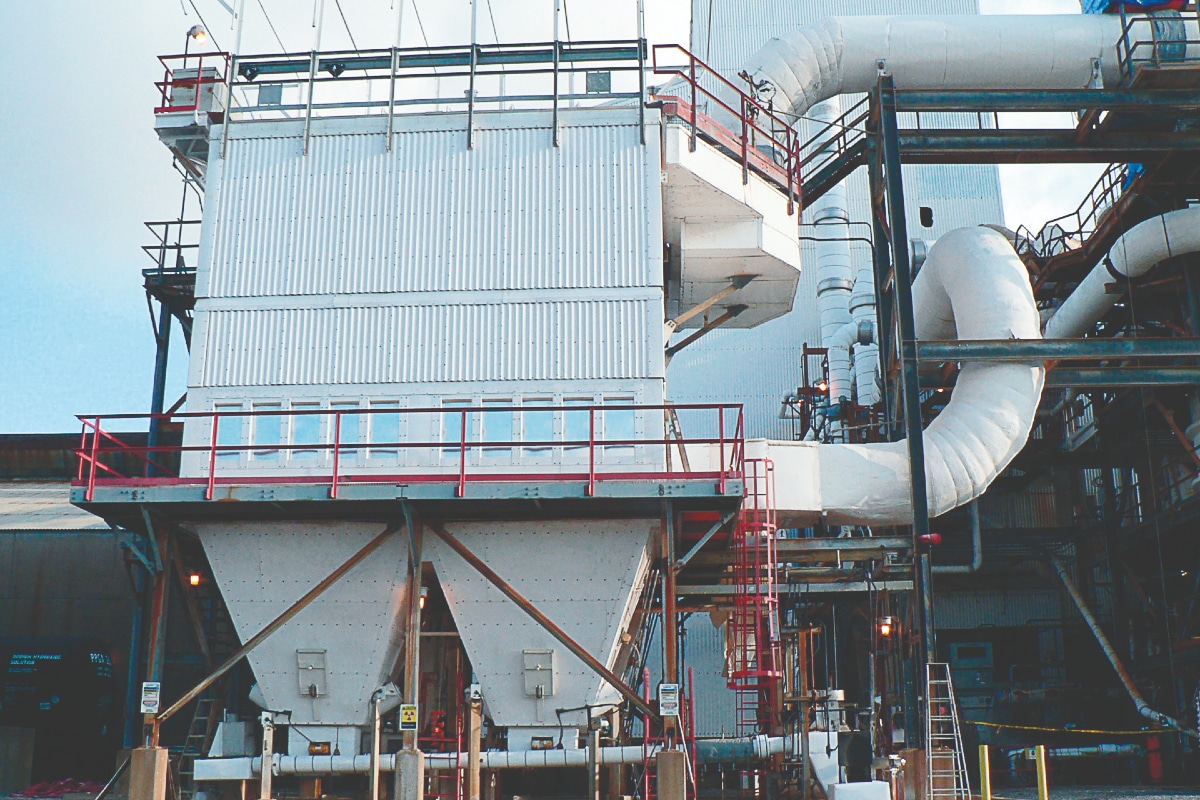
First reported on Australian Mining
30 Second Briefing
Engineering firm Nederman MikroPul is promoting baghouse dust collectors and engineered air‑pollution control systems designed for demanding mining environments, targeting sources such as crushers, transfer points and fine ore bins. The company stresses reliability through correct filter media selection for abrasive and hygroscopic dusts, robust pulse‑jet cleaning systems, and properly sized hoppers and discharge devices to prevent bridging and re‑entrainment. For operators, the message is that poor design of ducting, airflows and maintenance access can quickly erode collection efficiency and drive up emissions and operating costs.
Technical Brief
- Penthouse-style baghouse enclosures keep pulse valves and compressed-air manifolds outside corrosive, dust-laden gas streams.
- Nederman MikroPul specifies abrasion-resistant inlet baffles to drop out coarse particles before reaching filter bags.
- Systems are engineered for high dust loadings typical of primary crushing and screening plants in hard-rock mines.
- Collector casings and hoppers are designed for negative-pressure operation, reducing fugitive leakage at panel joints and doors.
- Access platforms and walkways are integrated to allow safe bag change-out and valve maintenance without scaffolding.
- Control systems monitor differential pressure across bags to trigger maintenance before emissions or energy use escalate.
- Explosion vents and isolation devices are incorporated where combustible dusts are present, aligning with typical ATEX/NFPA practice.
- For other mines, the key implication is that dust control reliability now hinges on integrated mechanical, control and access design, not just filter sizing.
Our Take
Dust control in Australian mines is increasingly being framed alongside other ‘Safety’ and ‘Sustainability’ product stories in our database, such as XCMG’s battery-electric fleets, signalling that operators are expected to treat air quality and decarbonisation as parallel engineering priorities rather than separate compliance boxes.
For Australian METS suppliers like Nederman MikroPul, robust dust-control offerings can be a differentiator when targeting export markets; a recent piece on Austmine’s push into the US highlights that proven safety and environmental performance is now a core selling point for Australian technology abroad.
Given Australian Mining’s role across multiple recent items on technology, equipment auctions and workforce recognition, featuring Nederman MikroPul in this context suggests dust-control reliability is moving from a niche hygiene factor to a visible part of how mine sites present their operational maturity to investors and regulators.
Prepared by collating external sources, AI-assisted tools, and Geomechanics.io’s proprietary mining database, then reviewed for technical accuracy & edited by our geotechnical team.
Related Articles


Related Industries & Products
Mining
Geotechnical software solutions for mining operations including CMRR analysis, hydrogeological testing, and data management.
CMRR-io
Streamline coal mine roof stability assessments with our cloud-based CMRR software featuring automated calculations, multi-scenario analysis, and collaborative workflows.
HYDROGEO-io
Comprehensive hydrogeological testing platform for managing, analysing, and reporting on packer tests, lugeon values, and hydraulic conductivity assessments.
GEODB-io
Centralised geotechnical data management solution for storing, accessing, and analysing all your site investigation and material testing data.