Geomechanics.io

  • Free Tools
Sign UpLog In

Geomechanics.io

Geomechanics, Streamlined.

© 2026 Geomechanics.io. All rights reserved.

Geomechanics.io

CMRR-ioGEODB-ioHYDROGEO-ioQCDB-ioFree Tools & CalculatorsBlogLatest Industry News

Industries

MiningConstructionTunnelling

Company

Terms of UsePrivacy PolicyLinkedIn
    AllGeotechnicalMiningInfrastructureMaterialsHazardsEnvironmentalSoftwarePolicy
    Projects
    Contract Award
    Product

    EnergyX Project Lonestar DLE plant: capex, scale-up and process notes for mine planners

    March 29, 2026|

    Reviewed by Joe Ashwell

    EnergyX Project Lonestar DLE plant: capex, scale-up and process notes for mine planners

    First reported on MINING.com

    30 Second Briefing

    EnergyX has commissioned Project Lonestar in Hooks, Texas, the first US direct lithium extraction (DLE) plant processing local Smackover formation brines, with a 250 t/y lithium carbonate equivalent demonstration capacity and a US$30 million capex. The integrated DLE and refining facility will generate 5–25 t batches of battery-grade lithium for qualification, validate process economics and recovery performance at industrial scale, and de-risk a planned >US$1 billion commercial plant across EnergyX’s 47,500-acre position. Senator Ted Cruz framed the project as strengthening US energy security and reducing dependence on China’s 70–75% share of global lithium conversion capacity.

    Technical Brief

    • Plant applies EnergyX’s proprietary ‘GET-Lit’ lithium separation technology to Smackover formation brines on-site.
    • Facility is described as the largest integrated DLE lithium demonstration plant currently operating in the United States.
    • Location in the Smackover brine trend (Florida–Texas) leverages EnergyX’s 47,500-acre lease position for scale-up.
    • Capital spend of US$30 million on the demo plant precedes a planned commercial build exceeding US$1 billion.
    • EnergyX claims lowest US cost position for lithium chemicals, targeting improved extraction efficiency and recovery versus incumbents.
    • Offtake agreements for future production are reportedly secured but remain undisclosed, affecting visibility on long-term revenue.
    • US senator Ted Cruz explicitly links Lonestar output to defence battery supply and national energy security objectives.
    • Demonstration of non-Chinese refining capacity directly targets China’s current 70–75% share of global lithium conversion.

    Our Take

    With China still controlling an estimated 70–75% of global lithium chemical conversion capacity, a US‑based DLE demonstration in the Smackover formation that can ship 5–25 tonne LCE samples gives North American offtakers a practical way to qualify non‑Chinese supply chains at commercial scale.

    Our database shows multiple recent EnergyX items spanning DLE, membrane production and nuclear‑grade lithium isotopes, indicating the company is trying to monetise lithium across both battery and advanced nuclear markets rather than relying solely on conventional lithium carbonate demand growth.

    Geotechnical Software for Modern Teams

    Centralise site data, logs, and lab results with GEODB-io, CMRR-io, and HYDROGEO-io.

    No credit card required.

    • Save and export unlimited calculations
    • Advanced data visualisation
    • Generate professional PDF reports
    • Cloud storage for all your projects

    Prepared by collating external sources, AI-assisted tools, and Geomechanics.io’s proprietary mining database, then reviewed for technical accuracy & edited by our geotechnical team.

    Related Articles
    SKRI ‘phytocapture’ at Raygorodok: dust control performance insights for mine engineers
    Mining
    about 13 hours ago

    SKRI ‘phytocapture’ at Raygorodok: dust control performance insights for mine engineers

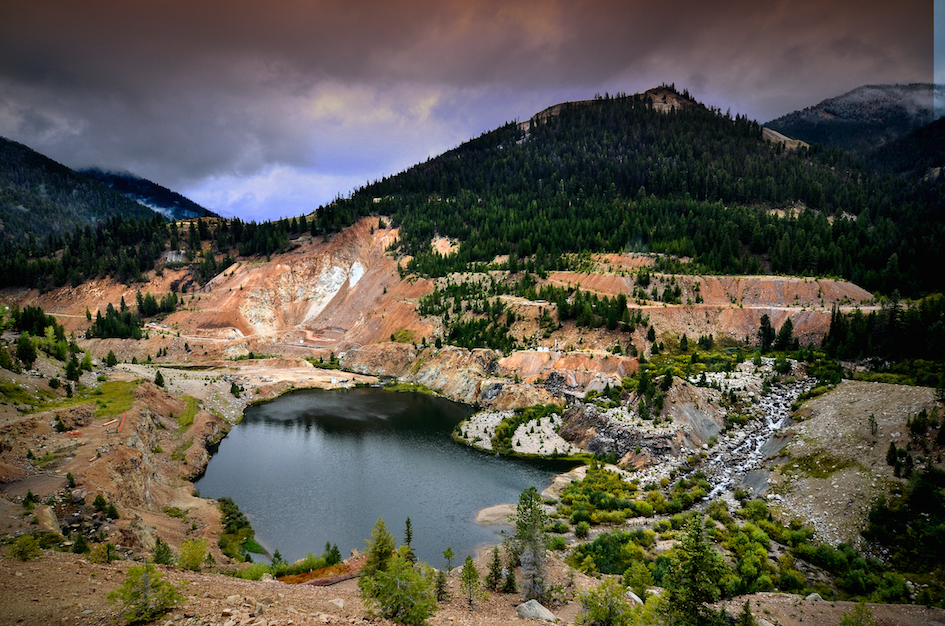
    China’s Zijin Mining is expanding RG Gold’s Raygorodok operation in Kazakhstan with a $500 million processing plant while deploying SKRI’s ‘phytocapture’ system, planting over 100,000 Scots pines across more than 20 hectares about 1.7 km downwind of the open pit. Supercomputer modelling using regional wind-rose data sets tree species and spacing to form multilayered vegetative barriers, not simple landscaping. SKRI reports particulate-matter reductions above 40%, with the forest belt expected to capture roughly one-third of dust emissions as mining advances towards the barrier.

    Barrick’s Reko Diq copper project delays: capex and schedule lens for mine planners
    Mining
    about 14 hours ago

    Barrick’s Reko Diq copper project delays: capex and schedule lens for mine planners

    Barrick Mining has warned of “significant increases” to the capital budget and schedule for the 50%-owned Reko Diq copper-gold project in Balochistan, where Phase 1 was previously costed at US$5.6–6.0 billion and Phase 2 at US$3.3–3.6 billion, with first production targeted by end-2028. Citing escalating security risks in Pakistan and the wider region, Barrick will slow field development and extend the technical and financing review to mid‑2027, while keeping the project under “active management” with reduced capital spend. The porphyry deposit, holding an estimated 15 million tonnes of copper reserves and modelled for a 37‑year mine life, remains central to Barrick’s Tier 1 copper strategy and its long-term community commitments in Balochistan.

    Orica tech for smaller North American mines: blast design gains for engineers
    Mining
    about 17 hours ago

    Orica tech for smaller North American mines: blast design gains for engineers

    Orica is targeting smaller North American mines and quarries with the same digital blasting toolkit used on large sites, including its BlastIQ cloud platform for blast design and performance tracking and on-bench digital loading systems. Area Business Manager Elliott Giles told IM that these operations, aggregated, form a major explosives volume market, and are now adopting electronic detonators and precise blast modelling to cut oversize and improve fragmentation. For geotechs and drill‑and‑blast engineers, the shift means more consistent burden control, tighter vibration management and better data for pit wall stability assessment even on “small” jobs.

    Related Industries & Products

    Mining

    Geotechnical software solutions for mining operations including CMRR analysis, hydrogeological testing, and data management.

    CMRR-io

    Streamline coal mine roof stability assessments with our cloud-based CMRR software featuring automated calculations, multi-scenario analysis, and collaborative workflows.

    HYDROGEO-io

    Comprehensive hydrogeological testing platform for managing, analysing, and reporting on packer tests, lugeon values, and hydraulic conductivity assessments.

    GEODB-io

    Centralised geotechnical data management solution for storing, accessing, and analysing all your site investigation and material testing data.