Geomechanics.io

  • Free Tools
Sign UpLog In

Geomechanics.io

Geomechanics, Streamlined.

© 2026 Geomechanics.io. All rights reserved.

Geomechanics.io

CMRR-ioGEODB-ioHYDROGEO-ioQCDB-ioFree Tools & CalculatorsBlogLatest Industry News

Industries

MiningConstructionTunnelling

Company

Terms of UsePrivacy PolicyLinkedIn
    Projects
    Op-Ed
    Sustainability

    Copper supply crisis as sulfur management challenge: process options for engineers

    May 4, 2026|

    Reviewed by Joe Ashwell

    Copper supply crisis as sulfur management challenge: process options for engineers

    First reported on MINING.com

    30 Second Briefing

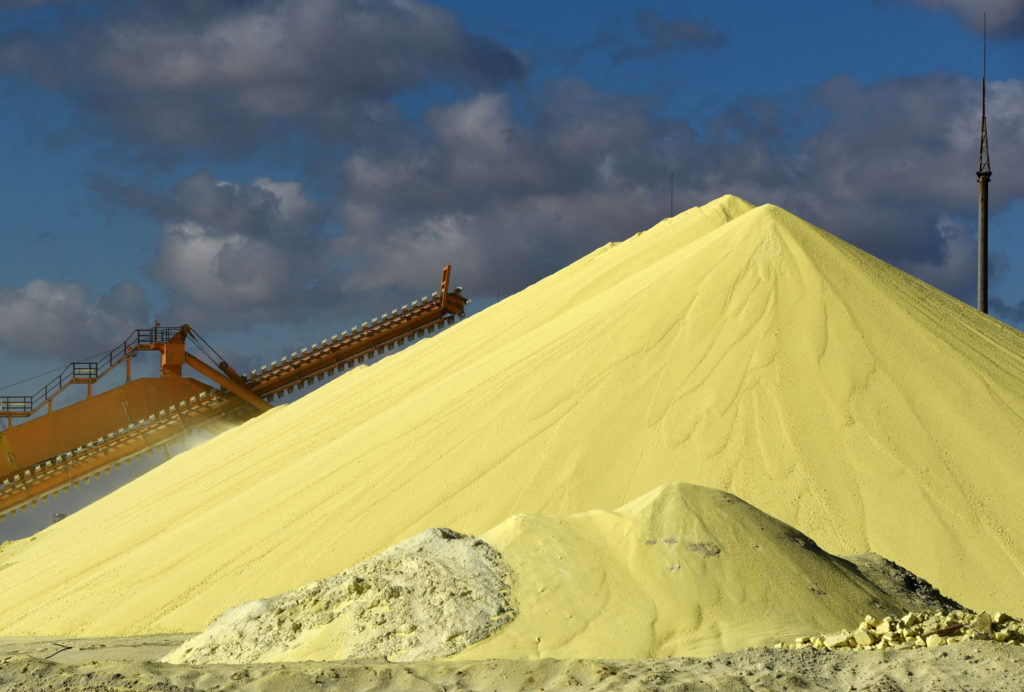
    China’s sudden halt of sulfuric acid exports, after shipping 4.65 million tonnes in 2025 (about 40% from metal smelters), has doubled delivered acid prices to Chile since February and is squeezing heap-leach copper operations in Chile, the DRC and Zambia. Randy Allen argues that for each tonne of copper from sulfide concentrates, 3–3.5 tonnes of sulfuric acid can be generated and monetised, alongside co-products such as ferrous sulfate and iron oxides. He points to pressure oxidation and electrochemical reductive leaching as non-combustion routes to capture copper and fully valorise sulfur, cutting SO₂ emissions and acid mine drainage risks.

    Technical Brief

    • Global sulphuric acid output exceeds 260 Mt/y, with ~60% consumed by phosphate fertiliser production.
    • China built nearly half of global copper smelting capacity, with ~40% of its acid exports from smelters.
    • Closure of the Strait of Hormuz, Russia’s export ban extension, and Turkish/DRC curbs simultaneously constrain sulphur flows.
    • Chile relies on >1 Mt/y of imported Chinese acid specifically for heap-leach copper circuits.
    • Conventional sulphide processing routes push most sulphur into tailings, waste rock and off-gas, driving long-term AMD liabilities.
    • Smelting-based containment still requires scrubbers, lined tailings, water treatment and SO₂-to-H₂SO₄ plants, costing billions in mitigation CAPEX/OPEX.
    • Pressure oxidation and electrochemical reductive leaching are cited as non-combustion options to convert sulphides into saleable sulphur products.
    • Reframing sulphur as a co-product enables polymetallic-style project economics: copper, acid, elemental sulphur, ferrous sulphate, iron oxides and precious metals.

    Our Take

    With heap-leach operations in Chile accounting for roughly 20% of global copper output, the recent doubling of sulfuric acid prices into Chile signals disproportionate margin and volume risk for leach-heavy producers compared with sulphide-concentrate smelter routes elsewhere.

    Given that 60% of global sulfuric acid goes to fertiliser manufacture, any sustained diversion of acid towards copper leaching would likely tighten phosphate fertiliser supply, creating an indirect cost and food-security angle that policymakers in fertiliser‑reliant regions such as the Middle East and parts of Africa will need to factor into critical minerals strategies.

    Geotechnical Software for Modern Teams

    Centralise site data, logs, and lab results with GEODB-io, CMRR-io, and HYDROGEO-io.

    No credit card required.

    • Save and export unlimited calculations
    • Advanced data visualisation
    • Generate professional PDF reports
    • Cloud storage for all your projects

    Prepared by collating external sources, AI-assisted tools, and Geomechanics.io’s proprietary mining database, then reviewed for technical accuracy & edited by our geotechnical team.

    Related Articles
    Mining
    about 7 hours ago

    Carmeuse Cat Command hauling at Drummond Island: design and safety notes for planners

    Carmeuse is deploying Caterpillar’s MineStar Command for hauling across its fleet of Cat 777 rigid dump trucks at the Drummond Island limestone quarry in Michigan, with implementation delivered by Caterpillar and dealer Fabick Cat. The retrofit autonomous haulage system will convert the existing 777 fleet rather than replace it, signalling growing OEM support for autonomy on mid-size quarry trucks rather than only ultra-class units. For geotechnical and quarry planners, this raises the bar on traffic management design, berm standards and interaction rules for mixed autonomous–manual operations.

    CIM appoints Lucy Potter: technical assurance and risk priorities for miners
    Mining
    about 11 hours ago

    CIM appoints Lucy Potter: technical assurance and risk priorities for miners

    CIM has appointed Lucy Potter, currently general manager of technical and sustainability at Rio Tinto’s Iron & Titanium and Diamonds division, as president-elect for the 2028–29 term, following John Rhind (2026–27) and Randy Smallwood (2027–28). With more than 25 years’ experience across exploration, mineral resource stewardship, operations and technical governance at Rio Tinto and Glencore, Potter has previously served as global head of geology and mineral resources. Her mandate will centre on technical assurance, enterprise risk and sustainable production, with a strong emphasis on value-chain-wide knowledge sharing.

    Barrick’s Reko Diq delays: security, capex and production risks for mine planners
    Mining
    about 12 hours ago

    Barrick’s Reko Diq delays: security, capex and production risks for mine planners

    Militant attacks in Pakistan’s Balochistan province, including a 31 January raid by about 500 Baloch Liberation Army fighters that killed nearly three dozen people and cut road access to Reko Diq, are forcing Barrick Mining to slow development of its $9 billion copper-gold project towards mid-2027. The two-stage mine is designed to produce 200,000 tonnes of copper concentrate and 250,000 oz. of gold annually in a $5.5 billion first phase, doubling output in a $3.5 billion second phase, from 1.5 billion tonnes of reserves grading 0.48% Cu and 0.28 g/t Au. Security instability now threatens both the project’s projected $74 billion in free cash flow over 37 years and a $1.3 billion US-Pakistan investment pact aimed at countering Chinese-backed infrastructure in Balochistan.

    Related Industries & Products

    Mining

    Geotechnical software solutions for mining operations including CMRR analysis, hydrogeological testing, and data management.

    CMRR-io

    Streamline coal mine roof stability assessments with our cloud-based CMRR software featuring automated calculations, multi-scenario analysis, and collaborative workflows.

    HYDROGEO-io

    Comprehensive hydrogeological testing platform for managing, analysing, and reporting on packer tests, lugeon values, and hydraulic conductivity assessments.

    GEODB-io

    Centralised geotechnical data management solution for storing, accessing, and analysing all your site investigation and material testing data.

    AllGeotechnicalInfrastructureHazardsEnvironmental