Barrick’s Reko Diq delays: security, capex and production risks for mine planners
Reviewed by Joe Ashwell
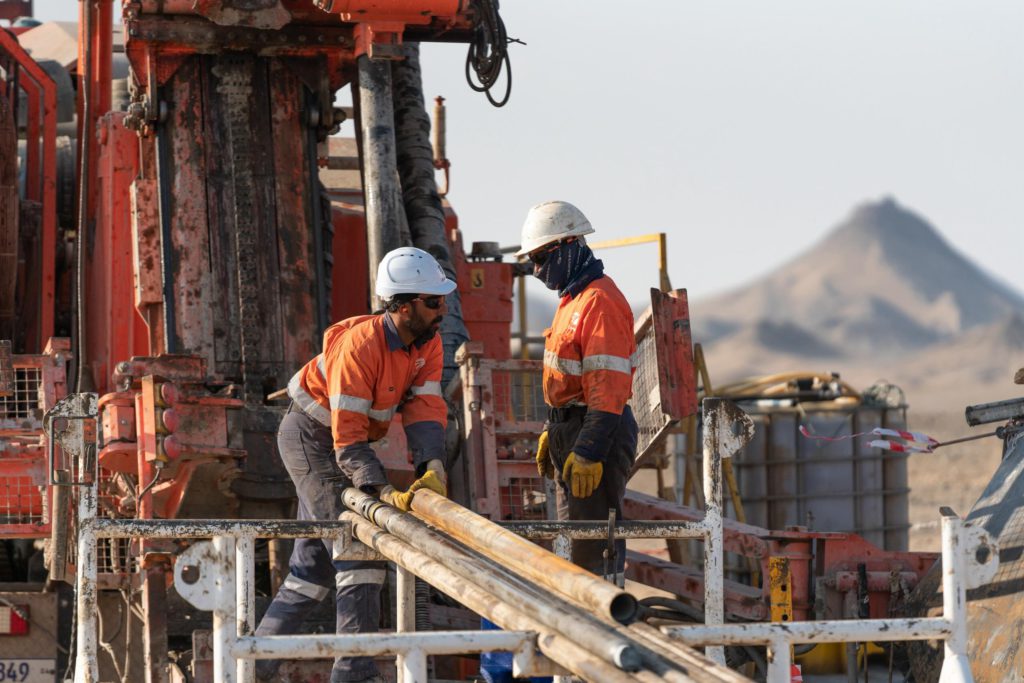
First reported on MINING.com
30 Second Briefing
Militant attacks in Pakistan’s Balochistan province, including a 31 January raid by about 500 Baloch Liberation Army fighters that killed nearly three dozen people and cut road access to Reko Diq, are forcing Barrick Mining to slow development of its $9 billion copper-gold project towards mid-2027. The two-stage mine is designed to produce 200,000 tonnes of copper concentrate and 250,000 oz. of gold annually in a $5.5 billion first phase, doubling output in a $3.5 billion second phase, from 1.5 billion tonnes of reserves grading 0.48% Cu and 0.28 g/t Au. Security instability now threatens both the project’s projected $74 billion in free cash flow over 37 years and a $1.3 billion US-Pakistan investment pact aimed at countering Chinese-backed infrastructure in Balochistan.
Technical Brief
- Capex is split into a US$5.5 billion first stage and US$3.5 billion second stage.
- Proven and probable reserves total 1.5 billion tonnes at 0.48% Cu and 0.28 g/t Au.
- Contained metal inventory is 7.3 million tonnes copper and 13 million oz. gold.
- After-tax NPV is about US$6.5 billion at 8% discount, with ~17% internal rate of return.
- Free cash flow is projected at ~US$74 billion over a 37‑year mine life, using consensus prices.
- Revenue sharing grants 50% of project proceeds to Pakistan, split equally between federal and Balochistan governments.
- A US$1.3 billion US–Pakistan investment package in Balochistan is explicitly tied to Reko Diq’s development.
- Regional instability is compounded by cross-border tensions with Iran and Afghanistan, elevating long-term security risk premia.
Our Take
The decision to slow work at the Reko Diq copper-gold project in Balochistan aligns with Barrick Mining’s April 2026 signal that it is retreating from higher‑risk regions after a sharp drop in gold output, suggesting capital may be reallocated towards North American Barrick assets ahead of the planned IPO.
With a US$9 billion capex and 37‑year cash-flow profile, Reko Diq is one of the larger copper-gold projects in our Mining projects coverage, so prolonged security disruption in Pakistan could tighten Barrick’s long‑term copper pipeline relative to peers like Newmont and First Quantum that feature in other recent copper pieces.
The earlier 2 April 2026 note on “significant increases” to the Reko Diq capital budget, combined with the mid‑2027 shift in key work, implies that even if security stabilises, the project’s 17% IRR at an 8% discount rate may come under pressure, potentially forcing design, phasing, or partnership changes to preserve returns.
Prepared by collating external sources, AI-assisted tools, and Geomechanics.io’s proprietary mining database, then reviewed for technical accuracy & edited by our geotechnical team.
Related Articles

Related Industries & Products
Mining
Geotechnical software solutions for mining operations including CMRR analysis, hydrogeological testing, and data management.
Construction
Quality control software for construction companies with material testing, batch tracking, and compliance management.
CMRR-io
Streamline coal mine roof stability assessments with our cloud-based CMRR software featuring automated calculations, multi-scenario analysis, and collaborative workflows.
HYDROGEO-io
Comprehensive hydrogeological testing platform for managing, analysing, and reporting on packer tests, lugeon values, and hydraulic conductivity assessments.
GEODB-io
Centralised geotechnical data management solution for storing, accessing, and analysing all your site investigation and material testing data.