Clapham Junction trackside fire: signalling resilience lessons for rail engineers
Reviewed by Tom Sullivan
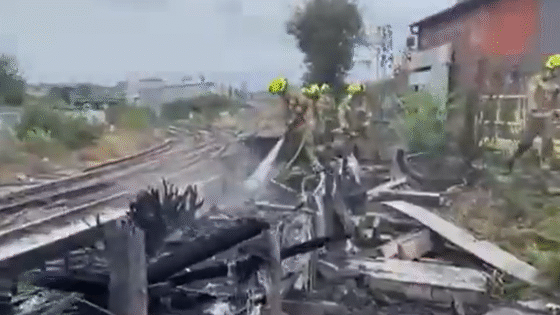
First reported on New Civil Engineer
30 Second Briefing
A trackside fire reported and extinguished on Sunday 27 September near Clapham Junction has severely damaged signalling equipment, forcing an “extremely reduced train service” to and from London Victoria until at least 14:00 today. Network Rail signalling and permanent way teams worked overnight to reinstate key interlocking and lineside control circuits to keep a limited number of routes open through one of Europe’s busiest junctions. The incident exposes the vulnerability of legacy lineside signalling assets to localised fire and heat damage, with knock-on impacts on timetable resilience and maintenance planning.
Technical Brief
- Ongoing monitoring likely to rely on periodic thermal imaging and insulation resistance checks of adjacent legacy assets.
- For similar brownfield junctions, segregated cable routes and enhanced fire barriers could materially improve signalling resilience.
Our Take
The prolonged service restriction window to at least 2pm on a Sunday suggests that contingency and possession planning for signalling assets in the United Kingdom may still be geared more to planned works than to rapid fault isolation and sectional recovery after trackside fires.
New Civil Engineer’s recent webinar coverage on BIM, CDEs and asset management platforms points to a growing digital toolkit that, if fully integrated, could give UK operators better real‑time condition data on lineside equipment and shorten recovery times after signalling failures.
Prepared by collating external sources, AI-assisted tools, and Geomechanics.io’s proprietary mining database, then reviewed for technical accuracy & edited by our geotechnical team.
Related Articles


Related Industries & Products
Construction
Quality control software for construction companies with material testing, batch tracking, and compliance management.
Mining
Geotechnical software solutions for mining operations including CMRR analysis, hydrogeological testing, and data management.
CMRR-io
Streamline coal mine roof stability assessments with our cloud-based CMRR software featuring automated calculations, multi-scenario analysis, and collaborative workflows.
HYDROGEO-io
Comprehensive hydrogeological testing platform for managing, analysing, and reporting on packer tests, lugeon values, and hydraulic conductivity assessments.
GEODB-io
Centralised geotechnical data management solution for storing, accessing, and analysing all your site investigation and material testing data.