Geomechanics.io

  • Free Tools
Sign UpLog In
Built byBoxcut Studio

Geomechanics.io

Geomechanics, Streamlined.

© 2026 Geomechanics.io. All rights reserved.

Geomechanics.io

CMRR-ioGEODB-ioHYDROGEO-ioQCDB-ioFree Tools & CalculatorsBlogLatest Industry News

Industries

MiningConstructionTunnelling

Company

Terms of UsePrivacy PolicyLinkedIn
    Projects
    Research

    Chalice Mining’s Gonneville palladium uplift: recovery and plant design notes for engineers

    November 23, 2026|

    Reviewed by Joe Ashwell

    Chalice Mining’s Gonneville palladium uplift: recovery and plant design notes for engineers

    First reported on Australian Mining

    30 Second Briefing

    Chalice Mining has lifted projected palladium recovery at the Gonneville nickel-copper-PGE project in Western Australia to above 83 per cent for the first four years of operation after collaborative testwork with the University of Western Australia identified additional recoverable metal in the processing flowsheet. The research focused on optimising flotation and downstream processing conditions to capture palladium previously lost to tailings, improving the metal balance across the concentrator. Higher early-life recoveries materially strengthen project economics and may influence plant design choices such as regrind sizing, reagent schemes and tailings management.

    Technical Brief

    • Scope is currently limited to the first four operating years and to palladium behaviour, not all PGEs.

    Our Take

    Gonneville’s projected palladium recovery above 83 per cent, combined with its 23‑year mine life focus in our other coverage, suggests Chalice Mining is trying to position the asset at the lower end of the cost curve for PGE-rich critical minerals in Western Australia.

    The collaboration with the University of Western Australia aligns with UWA’s broader push into mining R&D seen elsewhere in our database, and signals that process optimisation work at Gonneville may also feed into regional training and technology transfer pipelines.

    Geotechnical Software for Modern Teams

    Centralise site data, logs, and lab results with GEODB-io, CMRR-io, and HYDROGEO-io.

    Cancel at any time.

    • Save and export unlimited calculations
    • Advanced data visualisation
    • Generate professional PDF reports
    • Cloud storage for all your projects

    Prepared by collating external sources, AI-assisted tools, and Geomechanics.io’s proprietary mining database, then reviewed for technical accuracy & edited by our geotechnical team.

    Related Articles
    Edna May first ore for Forrestania: wet commissioning lens for mine engineers
    Mining
    24 minutes ago

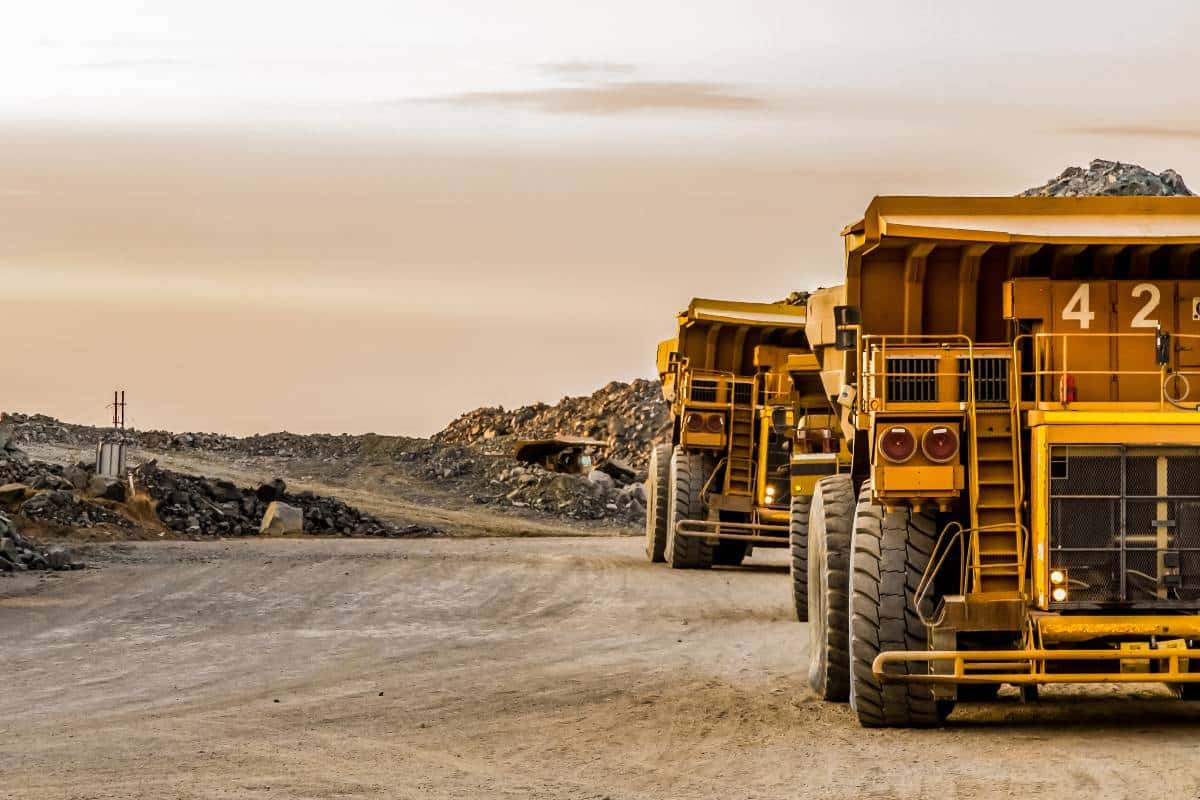
    Edna May first ore for Forrestania: wet commissioning lens for mine engineers

    Forrestania Resources has started wet commissioning at the Edna May gold mine in Western Australia after delivering first ore to the primary crusher, about 11 weeks after formally taking control of the operation. The restart programme is tracking towards a first gold pour in December 2026, signalling imminent reactivation of the existing processing plant rather than a greenfield build. Geotechnical and processing teams will now be focused on crusher performance, water balance and tailings management under wet commissioning conditions ahead of ramp-up.

    China’s iron ore strategy and CMRG: pricing and capex signals for miners
    Mining
    24 minutes ago

    China’s iron ore strategy and CMRG: pricing and capex signals for miners

    China’s push to consolidate iron ore buying power through the state-backed China Mineral Resources Group (CMRG) is testing pricing and contract strategies for Australian majors BHP and Rio Tinto, whose executives met Premier Li Qiang in Beijing alongside Prime Minister Anthony Albanese. Beijing is seeking more benchmark influence over the 1.1–1.2 billion‑tonne seaborne market and tighter control of long-term offtake terms, freight, and index-linked pricing. For Pilbara producers heavily exposed to Chinese mills, any shift in CMRG’s procurement model could affect mine expansion timing, blend strategies and capital allocation.

    Encounter Resources’ Aileron niobium step-out: pit design and geotech notes for planners
    Mining
    24 minutes ago

    Encounter Resources’ Aileron niobium step-out: pit design and geotech notes for planners

    Encounter Resources has extended high-grade niobium mineralisation beyond the current resource boundary at the Green deposit within its Aileron project in Western Australia’s West Arunta region, potentially enlarging the initial open-pit footprint. Recent drilling east of the Green southwest zone returned several strong intersections, including 25m at 3.8 per cent Nb₂O₅, confirming continuity of carbonatite-hosted mineralisation. For mine planners and geotechnical teams, the step-out results suggest a broader pit shell, revised strip ratios, and updated geometallurgical domains for niobium recovery.

    Related Industries & Products

    Mining

    Geotechnical software solutions for mining operations including CMRR analysis, hydrogeological testing, and data management.

    CMRR-io

    Streamline coal mine roof stability assessments with our cloud-based CMRR software featuring automated calculations, multi-scenario analysis, and collaborative workflows.

    HYDROGEO-io

    Comprehensive hydrogeological testing platform for managing, analysing, and reporting on packer tests, lugeon values, and hydraulic conductivity assessments.

    GEODB-io

    Centralised geotechnical data management solution for storing, accessing, and analysing all your site investigation and material testing data.

    AllGeotechnicalInfrastructureHazardsEnvironmental