Bubble–particle interaction in MAXGen cells: design notes for concentrator engineers
Reviewed by Tom Sullivan
First reported on Australian Mining
30 Second Briefing
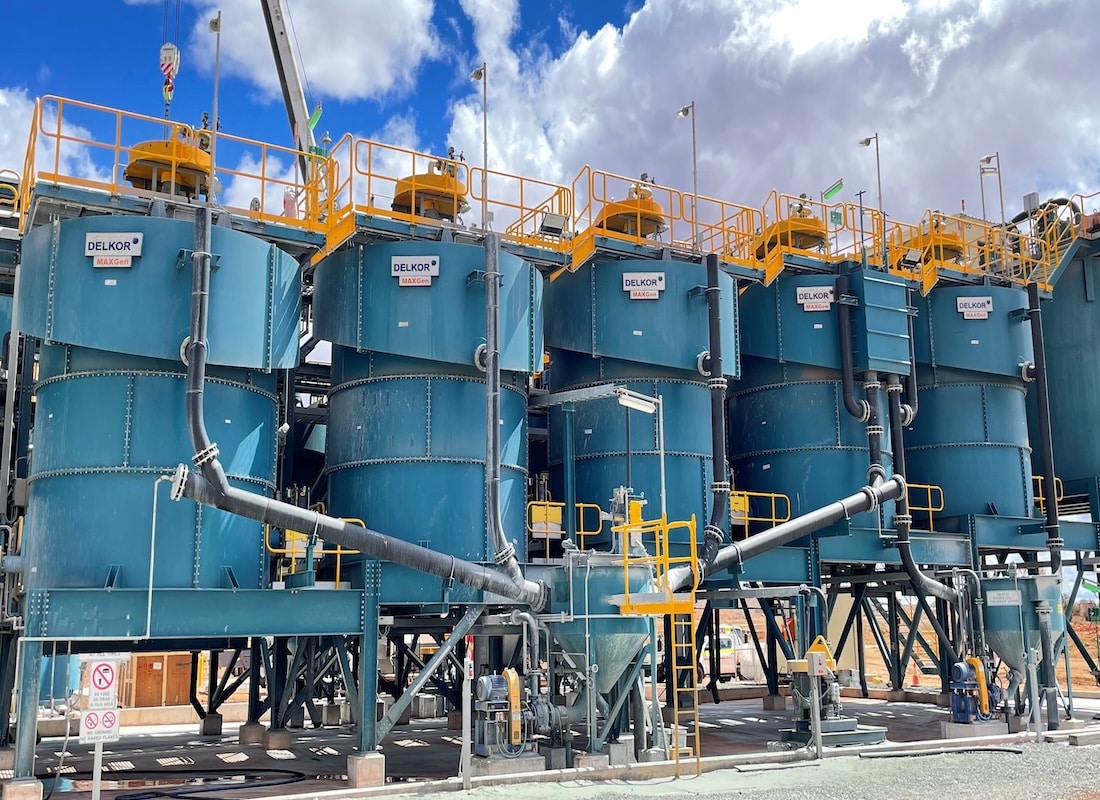
TAKRAF Group is upgrading flotation performance with its DELKOR BQR MAXGen cells, using optimised hydrodynamics and improved bubble–particle interaction to boost recovery from increasingly complex ore bodies while cutting energy use. The MAXGen design focuses on controlled air dispersion, high shear zones and stable froth conditions to improve fine particle attachment and reduce reagent consumption. For brownfield concentrators, retrofitting these cells into existing circuits offers a relatively low-footprint route to higher metallurgical performance without major layout changes.
Technical Brief
- TAKRAF’s design work centres on cell hydrodynamics, targeting lower specific energy consumption in existing concentrators.
- Innovation focus is on mechanical cell internals rather than wholesale circuit reconfiguration or additional flotation stages.
- MAXGen units are configured to retrofit into current tank geometries, limiting structural and piping modifications.
- TAKRAF positions the cells for complex, variable ore feeds where conventional cells struggle with stable operating windows.
- The technology is being marketed as suitable for both greenfield plants and incremental debottlenecking projects.
- For operators, the main capital efficiency lever is swapping out old mechanisms within existing cell shells.
- Wider implication is a shift towards hydrodynamics-driven upgrades instead of large-scale concentrator expansions.
Our Take
TAKRAF Group’s focus on flotation performance in Australia sits alongside its recent South American X-TREME Class Mineral Sizer deployment, signalling a strategy to cover both comminution and downstream separation steps in the flowsheet for brownfield and greenfield projects.
Given Australian Mining’s parallel coverage of real-time risk management technologies, positioning flotation upgrades in Australia may also be aimed at sites looking to pair process-intensity gains with automation and operator de-risking in dense plant areas like flotation banks.
Prepared by collating external sources, AI-assisted tools, and Geomechanics.io’s proprietary mining database, then reviewed for technical accuracy & edited by our geotechnical team.
Related Articles


Related Industries & Products
Mining
Geotechnical software solutions for mining operations including CMRR analysis, hydrogeological testing, and data management.
CMRR-io
Streamline coal mine roof stability assessments with our cloud-based CMRR software featuring automated calculations, multi-scenario analysis, and collaborative workflows.
HYDROGEO-io
Comprehensive hydrogeological testing platform for managing, analysing, and reporting on packer tests, lugeon values, and hydraulic conductivity assessments.
GEODB-io
Centralised geotechnical data management solution for storing, accessing, and analysing all your site investigation and material testing data.