Brixton’s 5,015 g/t silver at Langis: resource and mine-planning notes for engineers
Reviewed by Tom Sullivan
First reported on MINING.com
30 Second Briefing
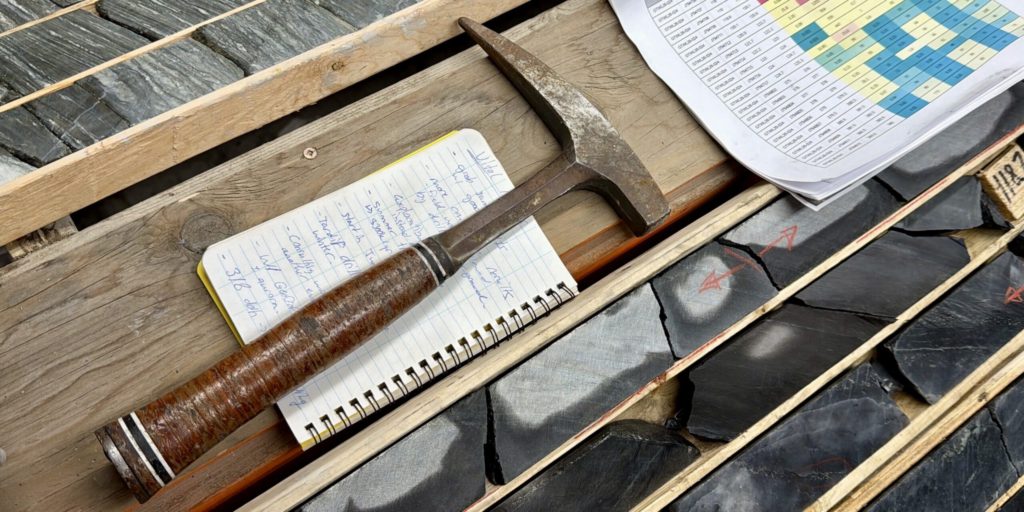
Brixton Metals has reported an exceptional intercept of 20 m averaging 5,015 g/t silver from 165 m downhole in hole LM-26-377 at the brownfield Langis project near Cobalt, including 14 m at 7,150 g/t from 169 m, in ground with no historic stoping. Follow-up holes LM-26-353 and LM-26-352 returned 13 m at 287.8 g/t and 7 m at 275 g/t silver respectively, as part of a 2026 campaign totalling 24,017 m in 105 holes, with up to 60,000 m planned. Mineralisation occurs both in veins and disseminated through host rocks, potentially expanding targets beyond the narrow native-silver veins that characterised historic Cobalt camp mining.
Technical Brief
- Mineralisation has been traced for at least 100 m along strike at Shaft 6 Southeast.
- Shaft 6 Southeast and Shaft 6 South are being drilled to understand structures controlling the highest silver grades.
- The current 2026 Langis campaign has already completed 24,017 m of core drilling in 105 holes.
- Brixton plans to extend drilling to as much as 60,000 m at Langis before initial resource definition.
- Historic Langis mine produced 10.4 Moz silver between 1908–1989 at 20–25 oz/t head grades.
- Past Langis operators developed over 10 km of underground workings with reported 88–98% silver recoveries.
- Brixton’s conceptual exploration target is 1–2 Mt grading 400–800 g/t Ag, pending sufficient drilling.
- Separate drilling of 261 m into historic tailings aims to support a first tailings resource and metallurgical testwork.
Our Take
In our database of 1,251 mining stories, very few silver-focused juniors in Canada show conceptual targets as high as the 400–800 g/t range cited for Langis, which signals that Brixton Metals is positioning this as a potential high-margin, small-tonnage underground opportunity rather than a bulk-tonnage play.
The historic 10 km of underground workings and 88–98% reported recoveries at Langis mean a restart scenario could leverage existing geometry and metallurgical knowledge, shortening study timelines compared with greenfield silver projects in Ontario that lack this level of legacy data.
Prepared by collating external sources, AI-assisted tools, and Geomechanics.io’s proprietary mining database, then reviewed for technical accuracy & edited by our geotechnical team.
Related Articles


Related Industries & Products
Mining
Geotechnical software solutions for mining operations including CMRR analysis, hydrogeological testing, and data management.
Tunnelling
Specialised solutions for tunnelling projects including grout mix design, hydrogeological analysis, and quality control.
CMRR-io
Streamline coal mine roof stability assessments with our cloud-based CMRR software featuring automated calculations, multi-scenario analysis, and collaborative workflows.
HYDROGEO-io
Comprehensive hydrogeological testing platform for managing, analysing, and reporting on packer tests, lugeon values, and hydraulic conductivity assessments.
GEODB-io
Centralised geotechnical data management solution for storing, accessing, and analysing all your site investigation and material testing data.