Amey–Hill & Smith VRS barriers: durability, carbon and lane-closure gains for engineers
Reviewed by Tom Sullivan
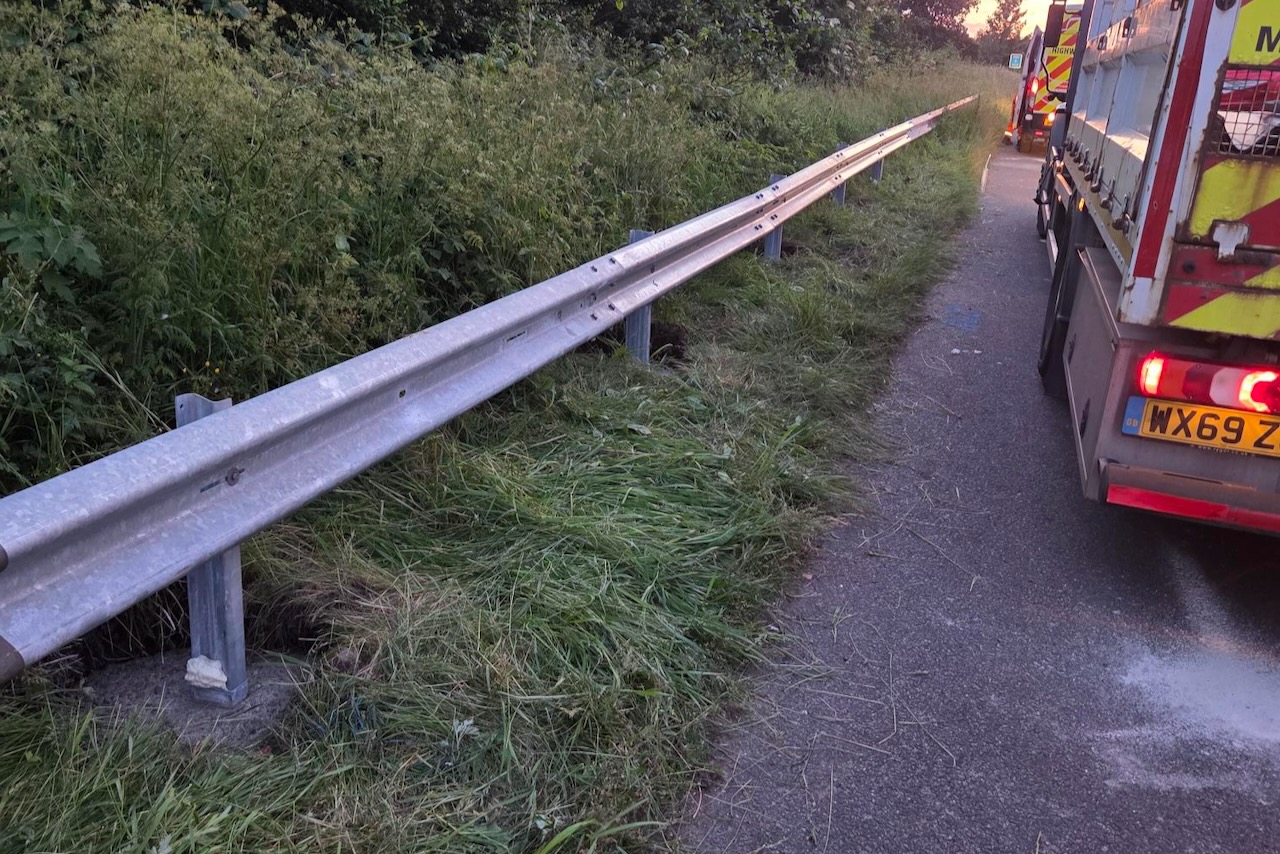
First reported on The Construction Index
30 Second Briefing
Amey has begun installing a new Hill & Smith VRS barrier system across its National Highways maintenance and response portfolio, using advanced pre‑galvanised steel to improve durability and corrosion resistance compared with conventional safety barriers. The phased rollout integrates barrier replacement into existing maintenance windows, aiming to cut unplanned lane closures, repair frequency and associated traffic management costs. Lower embodied carbon and reduced site interventions over the barrier’s life are intended to support National Highways’ net zero targets while maintaining more reliable journey times.
Technical Brief
- Barrier installation is tied into National Highways’ planned maintenance windows rather than standalone works packages.
- Phased deployment allows section-by-section replacement, limiting exposure time for crews working in live traffic.
- Reduced repair frequency directly cuts repeat traffic management setups, a key safety risk and cost driver.
- Fewer emergency interventions mean less unplanned working in adverse conditions or at short notice.
- Approach provides a template for integrating new safety hardware into routine renewals without revising corridor layouts.
Our Take
Amey’s work on long‑lasting barriers for National Highways in the Midlands sits alongside its recent £40m Eastern Region Assessment Contracts with Network Rail, signalling that its consulting and delivery teams are being positioned as a go‑to for whole‑life asset performance across both road and rail.
In our database of 869 Infrastructure stories, relatively few safety‑tagged pieces also carry a strong sustainability angle, so this Amey–Hill & Smith VRS initiative is notable as an example of safety hardware being framed explicitly as a carbon and maintenance‑reduction tool rather than just a compliance item.
Combined with Amey’s recent appointment to Transport for London’s £700m‑plus Infrastructure Improvement Framework, the Midlands barrier work suggests National Highways is likely to see solutions that are already being tested or standardised across other major UK clients, which can shorten approval cycles for novel VRS products.
Prepared by collating external sources, AI-assisted tools, and Geomechanics.io’s proprietary mining database, then reviewed for technical accuracy & edited by our geotechnical team.
Related Articles


Related Industries & Products
Mining
Geotechnical software solutions for mining operations including CMRR analysis, hydrogeological testing, and data management.
Construction
Quality control software for construction companies with material testing, batch tracking, and compliance management.
CMRR-io
Streamline coal mine roof stability assessments with our cloud-based CMRR software featuring automated calculations, multi-scenario analysis, and collaborative workflows.
HYDROGEO-io
Comprehensive hydrogeological testing platform for managing, analysing, and reporting on packer tests, lugeon values, and hydraulic conductivity assessments.
GEODB-io
Centralised geotechnical data management solution for storing, accessing, and analysing all your site investigation and material testing data.