£377M to keep Scunthorpe blast furnaces open: supply and risk lens for engineers
Reviewed by Tom Sullivan
First reported on New Civil Engineer
30 Second Briefing
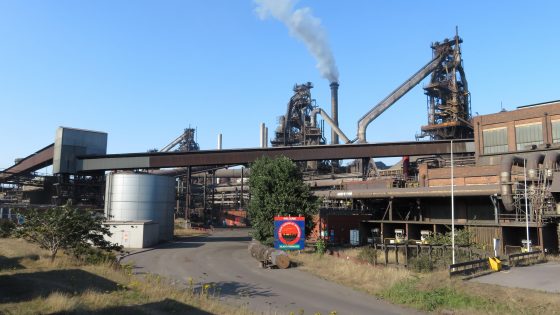
Government spending of £377M over nine months has been required to keep British Steel’s two Scunthorpe blast furnaces operating following emergency intervention by the Department for Business and Trade in April 2025, the National Audit Office has reported. The support covers ongoing operation of the integrated works, including coke ovens and basic oxygen steelmaking, which supply long products and rail sections critical to UK infrastructure projects. Engineers face continued uncertainty over future capacity, investment in low‑carbon steelmaking routes, and long‑term security of domestic steel supply for major schemes.
Technical Brief
- Intervention structured as short‑term support rather than a committed multi‑year decarbonisation or reinvestment package.
- NAO scrutiny focuses on value‑for‑money of keeping existing coke‑based route running versus alternative options.
- Report flags ongoing exposure of UK construction supply chains to single‑site long‑products capacity risk at Scunthorpe.
- NAO analysis expected to inform future conditionality on any further state aid for UK primary steelmaking.
Our Take
Within the 39 Materials stories in our database, very few involve direct UK central-government operating support for an individual industrial asset, which signals how strategically sensitive the Scunthorpe blast furnaces are viewed compared with other domestic manufacturing sites.
For UK-based projects tagged under Sustainability, most recent coverage focuses on capex for low‑carbon upgrades or closures rather than short-term operating subsidies, so the Department for Business and Trade’s intervention at Scunthorpe is likely to be scrutinised as a precedent for how the state manages high‑emissions legacy assets during transition.
The scale and speed of DBT’s outlay on the Scunthorpe blast furnaces over just nine months implies that any future decarbonisation or replacement project at British Steel’s site will need to demonstrate unusually strong value-for-money and transition metrics to satisfy the National Audit Office and Treasury tests.
Prepared by collating external sources, AI-assisted tools, and Geomechanics.io’s proprietary mining database, then reviewed for technical accuracy & edited by our geotechnical team.