$100M Great Western Highway fix: stability and access lens for engineers
Reviewed by Tom Sullivan
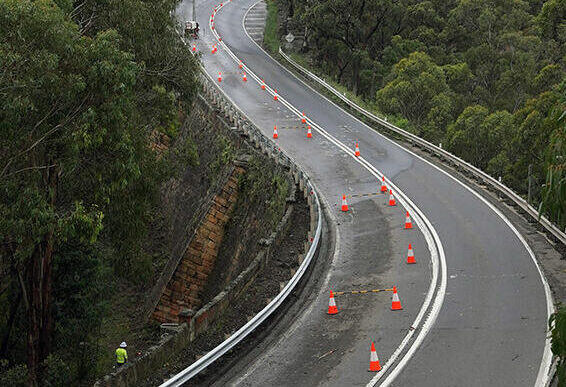
First reported on Roads & Infrastructure (AU)
30 Second Briefing
A joint $100 million commitment from the Federal and New South Wales Governments will fund rebuilding and “future‑proofing” of the Great Western Highway at Victoria Pass, where Mitchell’s Causeway and the pass have been closed since March due to serious cracking and ground movement. The package includes $50 million already announced for upgrading key detour routes, which have been carrying diverted heavy vehicles and commuter traffic. Transport for NSW has entered an alliance contract with engineering partners to design and deliver stabilisation and reconstruction works on this critical Blue Mountains freight and tourism corridor.
Technical Brief
- Alliance contract model with Transport for NSW enables integrated investigation, design and construction under a single collaborative framework.
- Alliance delivery allows rapid refinement of geotechnical design as new monitoring and investigation data become available.
Our Take
The $50 million NSW allocation for Great Western Highway detour routes sits alongside a separate $230 million programme for 83 road safety upgrades in the state, signalling that safety-led road works are being funded as a network package rather than as isolated fixes.
Seymour Whyte’s recent contract for a new crossing at Mitchells Causeway on the Great Western Highway suggests that the current $100 million ‘fix’ is being layered onto an already active construction corridor, which contractors can leverage for mobilisation and traffic management efficiencies.
Across our 921 Infrastructure stories, the New South Wales Government appears frequently as a lead client on road and motorway items, indicating that contractors positioning for this highway work are effectively bidding into a broader, sustained NSW transport capital programme rather than a one-off emergency spend.
Prepared by collating external sources, AI-assisted tools, and Geomechanics.io’s proprietary mining database, then reviewed for technical accuracy & edited by our geotechnical team.


