Geomechanics, Streamlined.
© 2026 Geomechanics.io. All rights reserved.
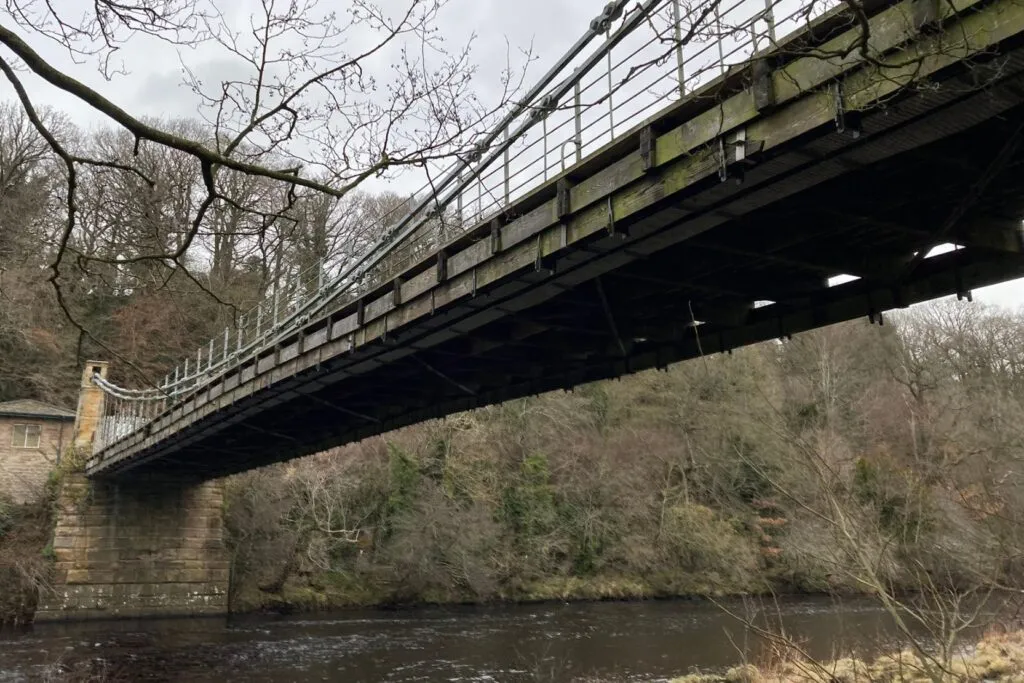
Work to reconstruct the Grade II*‑listed Whorlton Suspension Bridge in County Durham, the UK’s oldest road suspension bridge, has entered the re‑erection phase after a detailed design review deemed many original wrought‑iron components structurally unsound. Engineers are replacing or strengthening key load‑bearing elements, including hangers and deck connections, while retaining the historic suspension chains and stone towers where capacity checks confirm adequate residual strength. The project demands careful temporary works and staged lifting to control stresses in the 19th‑century fabric and meet current highway loading and inspection requirements.
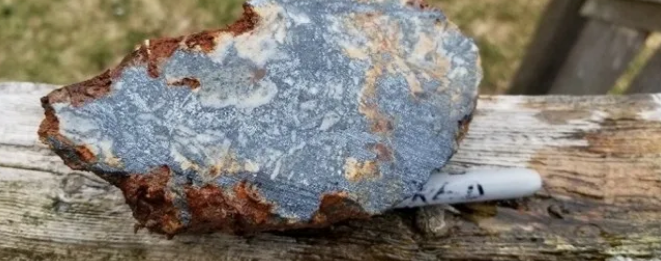
Antimony Resources Corp has exposed additional “massive” stibnite mineralisation in bedrock at the Marcus West Zone of its Bald Hill project in New Brunswick, and will immediately drill up to six shallow holes to test the zone at 30–50 m depth alongside a 10,000 m definition drilling campaign on the Main Zone. Historic trenching in the Central Zone returned 2.90% Sb over 8.18 m, including 5.79% Sb over 1.75 m and 8.47% Sb over 1.53 m, while ATMY trenching has traced South Zone stibnite over ~150 m. The 2026 programme also includes soil sampling, prospecting, and a potential airborne survey, positioning Bald Hill as a North American antimony target amid Chinese export controls.
Anglo American reported a $3.7 billion loss after a further $2.3 billion writedown on De Beers, cutting the diamond unit’s carrying value to $2.3 billion and taking total impairments to $6.8 billion in 2025, while trimming its dividend to $0.23 per share and reducing net debt to $8.6 billion. Copper and iron ore, including growth via the Teck Resources merger and assets such as Quebrada Blanca near Collahuasi, remain the core earnings focus as Anglo advances plans to exit diamonds, coal and platinum. Anglo is also in advanced talks with Mitsubishi Corp on partnering at the Woodsmith polyhalite project in northern England, which hosts the world’s largest known polyhalite deposit marketed as POLY4 and is currently on care and maintenance.
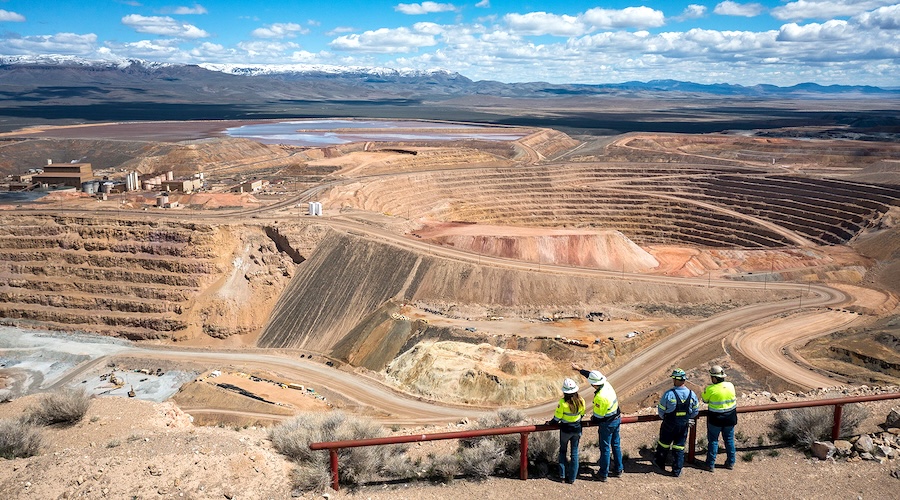
Newmont has issued Barrick with a formal notice of default, alleging Barrick diverted resources from the Nevada Gold Mines (NGM) joint venture to its wholly owned Fourmile project in breach of their 2019 JV agreement and Newmont’s right of first refusal. The dispute threatens Barrick’s plan to spin off its North American business, including its 61.5% NGM stake and Fourmile, via a 10–15% equity sale later in 2026, a move Newmont believes requires its consent. With NGM estimated by RBC to represent about 60% of Barrick’s market value and Barrick’s gold output falling for six consecutive years, any prolonged legal or operational disruption at Nevada will be closely watched by mine planners and investors.
First Quantum Minerals’ updated technical report values the Taca Taca copper-gold project in Salta, Argentina at an after-tax NPV of $5.92 billion with a 19.3% IRR, assuming $4.50/lb copper and $3,000/oz gold, more than double the 2021 NPV of $2.36 billion. The open-pit design is based on 1.99 billion tonnes of proven and probable reserves grading 0.42% Cu, 0.01% Mo and 0.09 g/t Au, supporting 35 years of mine life with initial 40 Mt/y processing, expanding to 60 Mt/y in year five. Forecast output averages 291,000 t/y Cu and 133,000 oz/y Au for the first decade at cash costs of $0.97/lb, but major capex of about $5.2 billion is unlikely before 2028, pending RIGI incentives and a restart of Cobre Panama.
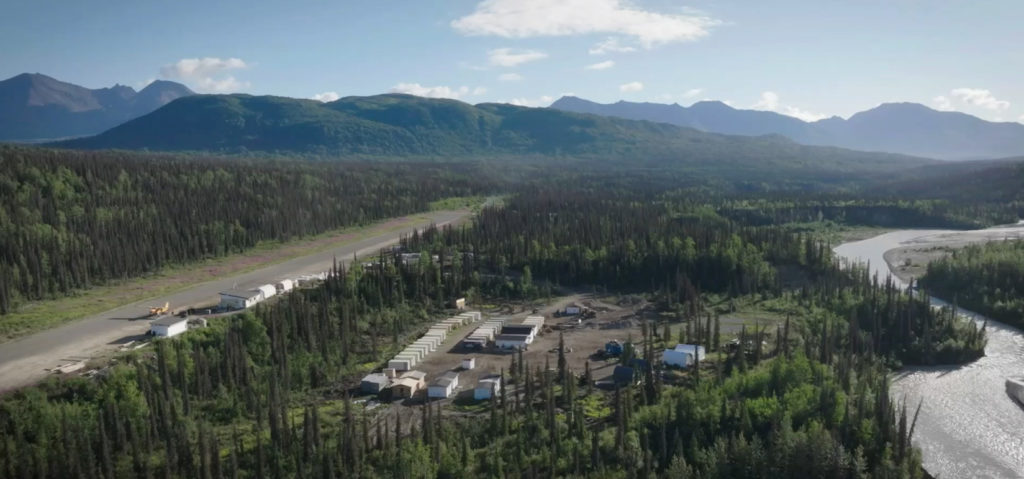
Nova Minerals’ US-listed shares rose over 6% to $6.78 (market cap $255.3 million) even as short seller Spruce Point Capital Management disclosed a short position and warned of 45–60% downside to $2.50–$3.50 per ADR, or more than 100% under adverse scenarios such as loss of US Department of War funding. Spruce Point’s report questions Nova’s ability to deliver its proposed gold–antimony mine at the 500 km² Estelle project in Alaska’s Tintina belt, citing lack of infrastructure, community opposition, severe weather and concerns over the qualifications of its “competent” and “qualified” person. Nova plans a central mining and processing hub targeting first military-grade antimony output within two years, backed by a $43.4 million DoW award, and is preparing to redomicile to the US while consolidating the remaining 15% of Estelle.
Kazatomprom has agreed a uranium supply deal with India’s Department of Atomic Energy covering more than 50% of the company’s booked asset value, potentially locking in long-term offtake from the world’s largest resource holder. The transaction, which requires shareholder approval via an extraordinary general meeting under Kazakh law, comes as Kazatomprom lifted output to 67.2 million lb U₃O₈ in 2025, up 10% year-on-year, and targets a further 9% increase this year. Analysts, including Teniz Capital, still see a structural uranium deficit despite this additional Kazakh supply.
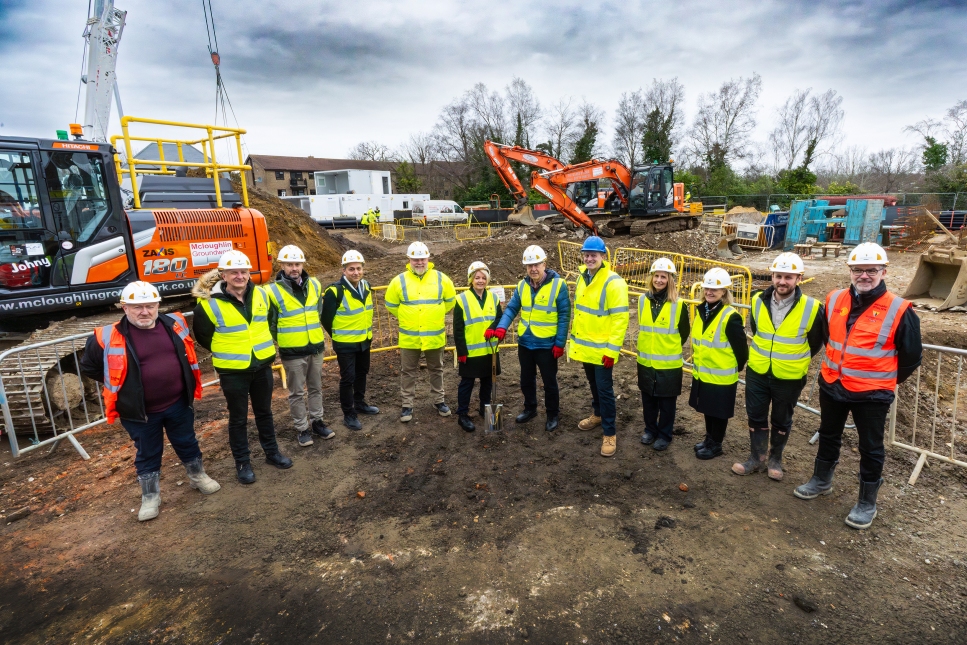
Willmott Dixon has started main construction on a £20m, two-storey health centre on the former Weybridge hospital site in Surrey, following two months of enabling works. Funded by the Department of Health & Social Care, NHS Property Services and NHS Surrey Heartlands ICB, the Murphy Philipps–designed facility is scheduled to open in spring 2027. The building will accommodate the Phoenix Family Practice plus maternity, same-day urgent care, diagnostics and wider wellbeing services, with layouts planned for long-term flexibility and future reconfiguration.
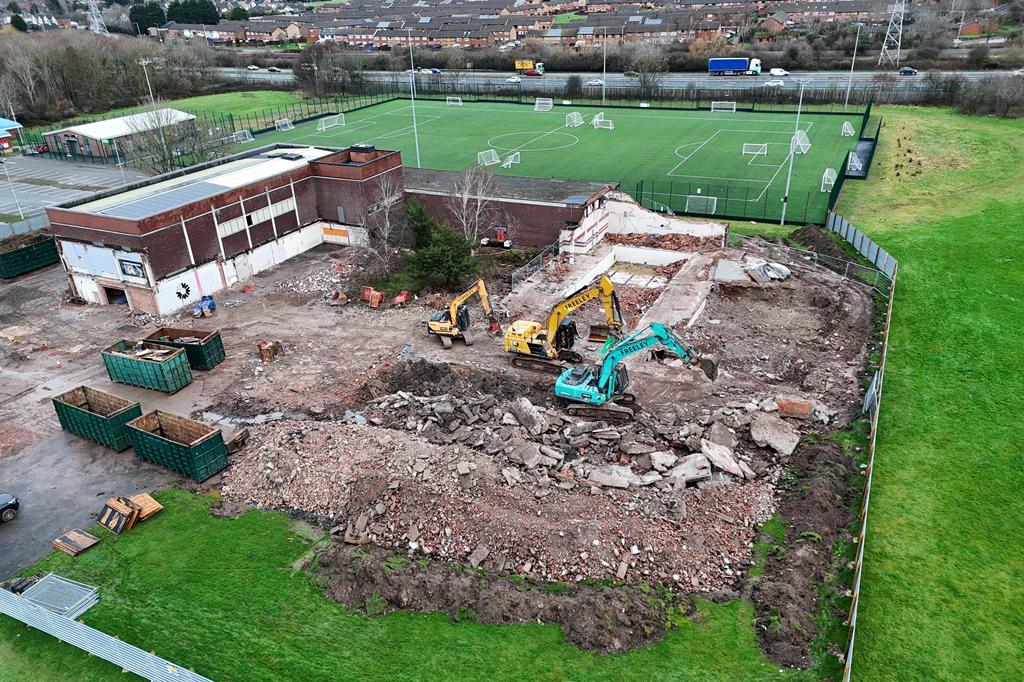
Demolition contractor J Freeley has begun dismantling the 1960s Woodchurch leisure centre in Birkenhead, following asbestos removal, with completion scheduled for April 2026. The reinforced concrete complex, which includes a disused swimming pool and indoor sports halls, sits in a dense residential setting alongside schools, a nursery and a family centre that must remain operational. Freeley has established exclusion zones, alternative pedestrian routes and tight traffic management to maintain access to the adjacent community centre and sports ground while controlling public interface risk.
Haringey Council has let a 10‑year, £570m framework to Equans Regeneration, United Infrastructure, Hugh LS McConnell and Mulalley & Company to upgrade 20,000 council homes across four geographic lots. The programme targets 14,500 renovations in the next three years, with 987 homes in 2024/25, rising to 1,929 in 2028/29, focusing on external wall and loft insulation, energy‑efficient doors and windows, new roofs, and fire safety works. The council aims to achieve 100% Decent Homes compliance by 2028 while lifting thermal performance and communal area standards.
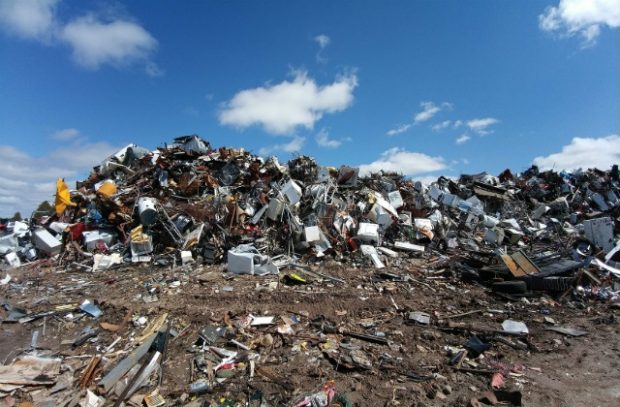
Environment Agency drones are being deployed more aggressively against organised fly-tipping, with a 33-strong pilot squad logging 272 flight hours since July and preparing to carry light detection and ranging (LiDAR) payloads for high-resolution volumetric mapping of illegal waste sites. Moving LiDAR from manned aircraft to UAVs is intended to give prosecutors precise 3D evidence of waste locations and extents, while a new screening tool cross-checks lorry licence applications against waste permit records to flag suspect operators. Enforcement capacity has been boosted with the joint waste crime unit expanded from 13 to 20 staff, supporting 751 illegal sites shut and 221 prosecutions since March 2025 under a £15.6m enforcement budget.
Hochtief PPP Solutions (UK & Ireland) has appointed former Derwent Facilities Management operations director Grahame Sheeran as its new facilities management director, based at the company’s Cheadle offices. Sheeran will oversee FM delivery across Hochtief’s national PPP portfolio, including contracts with Aspire Student Group and the specialist Data Centre Partners division, covering complex SPV and contract-led environments. His remit includes mobilising new total facilities management contracts and developing FM service solutions to support future PPP acquisitions across the UK.
A Scottish contractor, Ipsum Drainage (Scotland) Limited of Hillington Park, Glasgow, has been fined £183,000 after 28-year-old employee Ross Hanratty died in October 2022 falling 24 feet through a fragile warehouse roof at Seafield Industrial Estate, Edinburgh, while clearing gutters. Hanratty was working alone on the second block roof, wearing a harness with no suitable anchor point, and fell into a unit occupied by Rembrand Timber. Investigators found no suitable and sufficient risk assessment, no safe system of work for fragile roofs, and inadequate information, instruction and equipment for a new worker at height.
NHS Lothian has appointed Kier as main contractor to build a new Princess Alexandra Eye Pavilion on the Little France BioQuarter campus in Edinburgh, adjacent to the Royal Infirmary, Royal Hospital for Children and Young People, Simpson Centre for Reproductive Health and Edinburgh University clinical research facilities. The project replaces the existing PAEP building, which no longer adequately supports high volumes of surgical, inpatient and outpatient ophthalmic care. Kier will draw on experience from the NHS Golden Jubilee Eye Hospital in Glasgow and Sunderland Eye Infirmary to deliver a specialised, state-of-the-art clinical environment.
Celtico has been launched as a South Wales engineering collaboration uniting 12 firms, including Ledwood Mechanical Engineering, Mainstay Marine Solutions and Pro-Steel Engineering, with a combined 1,400+ staff and £250m annual turnover to target large offshore wind, tidal range and low‑carbon infrastructure contracts. Operating as a single point of engagement rather than a merged entity, the alliance offers integrated fabrication, machining, marine engineering, coating, assembly and advanced manufacturing capacity. Backed by the Swansea Bay City Deal Skills & Talent Programme, it is tying project delivery to regional skills development to build a competitive local supply chain.
Multiple sinkholes along Summit Avenue near Lewis Street in Phillipsburg, New Jersey have triggered a local state of emergency after one collapse swallowed a loaded dump truck and undermined adjacent properties. Authorities have evacuated several homes, closed the affected road section, and are investigating suspected subsurface voids linked to ageing water or sewer infrastructure beneath the asphalt pavement. Geotechnical teams now face urgent stability assessment, utility leak detection, and staged backfilling or grouting in a constrained urban corridor with active buried services.
The expansion of the West Midlands Metro, more than a decade in delivery, is reshaping Birmingham’s core with new on-street tram alignments threading through the city centre and into previously rail-poor districts. Construction has required complex utility diversions beneath historic streets, tight-radius curves around existing structures, and slab track integrated with high footfall public realm. For civil and geotechnical teams, the scheme is driving demand for shallow foundation solutions, vibration control adjacent to sensitive buildings, and staged traffic management to keep constrained urban corridors operational.
Orla Mining’s PEA for the Camino Rojo underground project in Zacatecas outlines a standalone sub-pit operation with dedicated crushing, grinding and flotation circuits, projecting 215,000 oz/y gold over the first 10 years at an AISC of $1,304/oz. The study shows an after-tax NPV of $1.3 billion and 30% IRR at $3,100/oz gold, rising to $3.3 billion and 61% IRR at $5,000/oz, with an NPV-to-initial-capital ratio of 5.5:1. A de-risking programme through 2026 will include an exploration decline and staged underground drilling ahead of a 2027 pre-feasibility study.
Canadian Nuclear Safety Commission approval of the environmental assessment and issuance of a Licence to Prepare Site and Construct a Mine and Mill clears the final regulatory hurdle for Denison Mines’ Wheeler River project in the eastern Athabasca Basin, northern Saskatchewan. The decision allows Denison, which holds a 90% operating stake alongside JCU (Canada) Exploration at 10%, to advance the high‑grade Phoenix in‑situ recovery (ISR) uranium mine towards a mid‑2028 production start, pending final investment decision. Phoenix is Canada’s first ISR‑approved uranium mine and the first large‑scale uranium mine cleared for construction in over 20 years.
AIC Mines reported first-half FY25 revenue of $110.6 million, driven by higher copper production and stronger pricing from its Eloise underground mine in north-west Queensland. The company is advancing its Jericho copper deposit, located about 4km from Eloise, with plans for an underground decline to access higher-grade ore and extend mine life. Management signalled further capital investment in processing upgrades and regional exploration around the 1.5Mtpa Eloise plant, aiming to lift throughput and reduce unit costs.
Exploration momentum is building across Australia as multiple juniors advance critical minerals, rare earths and gold projects through new drilling, resource updates and metallurgical testwork. Activity centres on high‑grade cobalt–scandium at Ida Holmes alongside rare earths prospects and emerging gold systems, with companies targeting shallow, open‑pittable mineralisation and scalable processing routes. For geotechnical and mine planners, the focus on near‑surface orebodies and critical‑metal grades signals upcoming demand for detailed pit slope design, geometallurgical characterisation and infrastructure planning in previously underdeveloped districts.
Record iron ore output and an 8 per cent rise in copper-equivalent production in 2025 have lifted Rio Tinto’s yearly performance, driven by the continued ramp-up of key growth projects. The miner is leveraging stronger throughput at its Pilbara iron ore operations and expanding copper volumes from assets such as Oyu Tolgoi and Kennecott to rebalance its portfolio towards energy-transition metals. For mine planners and process engineers, the figures signal sustained high utilisation of existing rail–port infrastructure and ongoing debottlenecking across concentrators and smelters.
Capricorn Metals is targeting a new gold growth corridor in Western Australia after acquiring the Extension Hill and Mungada project from Mount Gibson Iron in the Mid West region. The tenement package sits near Capricorn’s 130,000oz–150,000oz per annum Karlawinda operation and includes historical iron ore pits, existing haul roads and camp infrastructure that could shorten development timelines. For geotechs and mine planners, the brownfield setting, prior open-pit disturbance and established logistics corridor materially reduce early-stage ground investigation and access risks compared with a greenfield build.
Ramelius Resources has trucked the first ore from the high‑grade Never Never underground deposit at Dalgaranga to its 1.9Mtpa Mt Magnet carbon‑in‑leach processing hub, consolidating feed after shutting the Dalgaranga plant in 2023. The Never Never ore, discovered in 2022 immediately west of the Sly Fox open pit and reporting grades well above the historical Dalgaranga average, is being hauled by road train over regional haul roads designed for heavy axle loads. Centralising milling at Mt Magnet cuts duplicate processing costs and extends the hub‑and‑spoke model for Ramelius’ Mid West gold operations.