Geomechanics.io

  • Free Tools
Sign UpLog In
Built byBoxcut Studio

Geomechanics.io

Geomechanics, Streamlined.

© 2026 Geomechanics.io. All rights reserved.

Geomechanics.io

CMRR-ioGEODB-ioHYDROGEO-ioQCDB-ioFree Tools & CalculatorsBlogLatest Industry News

Industries

MiningConstructionTunnelling

Company

Terms of UsePrivacy PolicyLinkedIn
    Standard/Guideline
    Sustainability

    West Yorks councils price road works: lane rental implications for project teams

    August 6, 2026|

    Reviewed by Tom Sullivan

    West Yorks councils price road works: lane rental implications for project teams

    First reported on The Construction Index

    30 Second Briefing

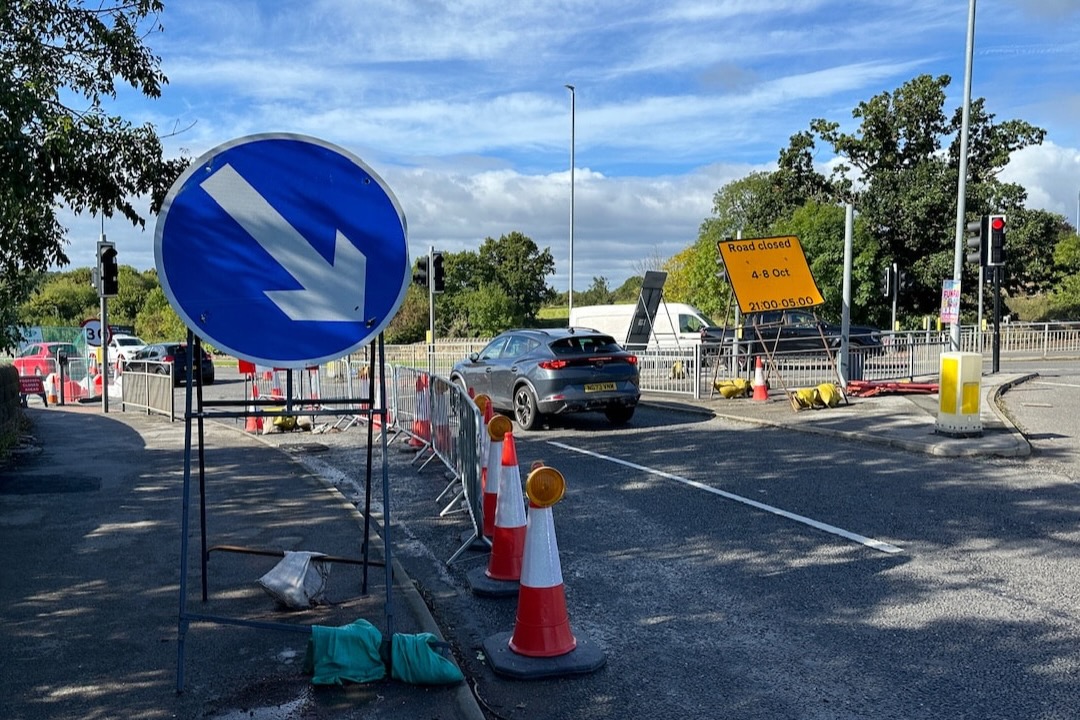
    Lane rental schemes in Leeds, Wakefield and Kirklees will charge utility and telecoms companies up to £2,500 per day for works on designated key routes from later this year, targeting peak‑time occupation of high‑traffic corridors and bus priority links. The three councils have secured Department for Transport approval and adopted a single charging framework and common rules, including simultaneous launch, to simplify permits where works cross authority boundaries. By pushing works into off‑peak windows and encouraging joint trenching, the policy aims to cut congestion‑related emissions and improve bus journey time reliability.

    Technical Brief

    • Leeds, Wakefield and Kirklees each obtained separate Department for Transport approval for their individual schemes.
    • A single charging framework and shared operating principles apply across all three highway authorities.
    • Simultaneous scheme launch is intended to avoid conflicting permit regimes during cross‑boundary utility works.
    • Common rules are expected to simplify programming for long linear works traversing multiple council areas.
    • Reduced peak‑period disruption is explicitly linked to cutting traffic‑related carbon emissions from diversion and queuing.
    • Similar unified frameworks could be replicated on other multi‑authority conurbations to manage utility streetworks.

    Our Take

    Kirklees Council appears repeatedly in our database as a client on major urban regeneration schemes in Huddersfield, which suggests any new road-works pricing standard in West Yorkshire is likely to be tested alongside a broader pipeline of town-centre upgrades rather than in isolation.

    The Department for Transport features across other Policy pieces in our coverage, including HS2 oversight and space-weather resilience guidance, indicating that any West Yorkshire road-works cost framework will probably need to align with evolving national standards on network reliability and risk management.

    Within the 638 tag-matched Standard/Guideline and Sustainability items, relatively few focus on sub‑regional councils like those in West Yorkshire, so a codified approach to pricing road works here could become a reference model for other UK local authorities looking to justify lifecycle and carbon-related cost decisions.

    Geotechnical Software for Modern Teams

    Centralise site data, logs, and lab results with GEODB-io, CMRR-io, and HYDROGEO-io.

    No credit card required.

    • Save and export unlimited calculations
    • Advanced data visualisation
    • Generate professional PDF reports
    • Cloud storage for all your projects

    Prepared by collating external sources, AI-assisted tools, and Geomechanics.io’s proprietary mining database, then reviewed for technical accuracy & edited by our geotechnical team.

    Related Articles

    AME tax breaks proposal: exploration uplift and project pipeline lens
    Policy
    about 22 hours ago

    AME tax breaks proposal: exploration uplift and project pipeline lens

    Expanding Canada’s mining tax incentives to include engineering, feasibility and technical studies as Canadian exploration expenses could lift exploration spending by up to US$1.1 billion (C$1.6 billion) per year, EY estimates for the Association for Mineral Exploration. EY projects this could advance three to five additional mines, adding C$5.2–12.2 billion to GDP from exploration and a further C$12.9–21.4 billion over mine construction plus 15–20 years of operations, against C$6.6 billion in forgone tax revenue over a decade. Budget 2025 currently proposes excluding feasibility-related costs, despite support for broader eligibility from six provinces and Yukon.

    World Gold Council refiner disclosure: key compliance takeaways for mine teams
    Policy
    about 22 hours ago

    World Gold Council refiner disclosure: key compliance takeaways for mine teams

    World Gold Council’s new disclosure framework asks doré producers to publish an annual mine-by-mine list of refining partners and their countries, covering about 1,300 tonnes per year from 33 member companies but excluding concentrates, carbon fines and low‑grade sweepings. The guidance standardises mine‑to‑refiner reporting formats, applies to toll processing where miners retain legal custody, and allows omission of shipment weights, transport routes and traders for security and commercial reasons. Recent scrutiny of Colombian cartel-linked supply to the Royal Canadian Mint and Venezuelan doré tied to Minerven and Trafigura shows why provenance transparency is under pressure.

    AME report’s C$23B boost from new Canadian mines: policy lens for project teams
    Policy
    3 days ago

    AME report’s C$23B boost from new Canadian mines: policy lens for project teams

    Federal plans to expand Canadian Exploration Expense eligibility to engineering, feasibility and technical work, alongside a broadened Mineral Exploration Tax Credit, are projected by an EY assessment for AME to add up to C$33 billion in economic growth from at least three to five new mines and increased exploration. The report estimates C$1.6 billion per year in extra exploration spend, around 34,000 full-time jobs over 10 years, and a 5:1 GDP return on each public dollar. AME says 171 mines awaiting commercial production could be kickstarted if the CEE changes are enacted in Budget 2026.

    Related Industries & Products

    Mining

    Geotechnical software solutions for mining operations including CMRR analysis, hydrogeological testing, and data management.

    Construction

    Quality control software for construction companies with material testing, batch tracking, and compliance management.

    CMRR-io

    Streamline coal mine roof stability assessments with our cloud-based CMRR software featuring automated calculations, multi-scenario analysis, and collaborative workflows.

    HYDROGEO-io

    Comprehensive hydrogeological testing platform for managing, analysing, and reporting on packer tests, lugeon values, and hydraulic conductivity assessments.

    GEODB-io

    Centralised geotechnical data management solution for storing, accessing, and analysing all your site investigation and material testing data.

    AllGeotechnicalInfrastructureHazardsEnvironmental