Wates’ Isle of Wight College hub: sustainable campus design notes for engineers
Reviewed by Tom Sullivan
First reported on The Construction Index
30 Second Briefing
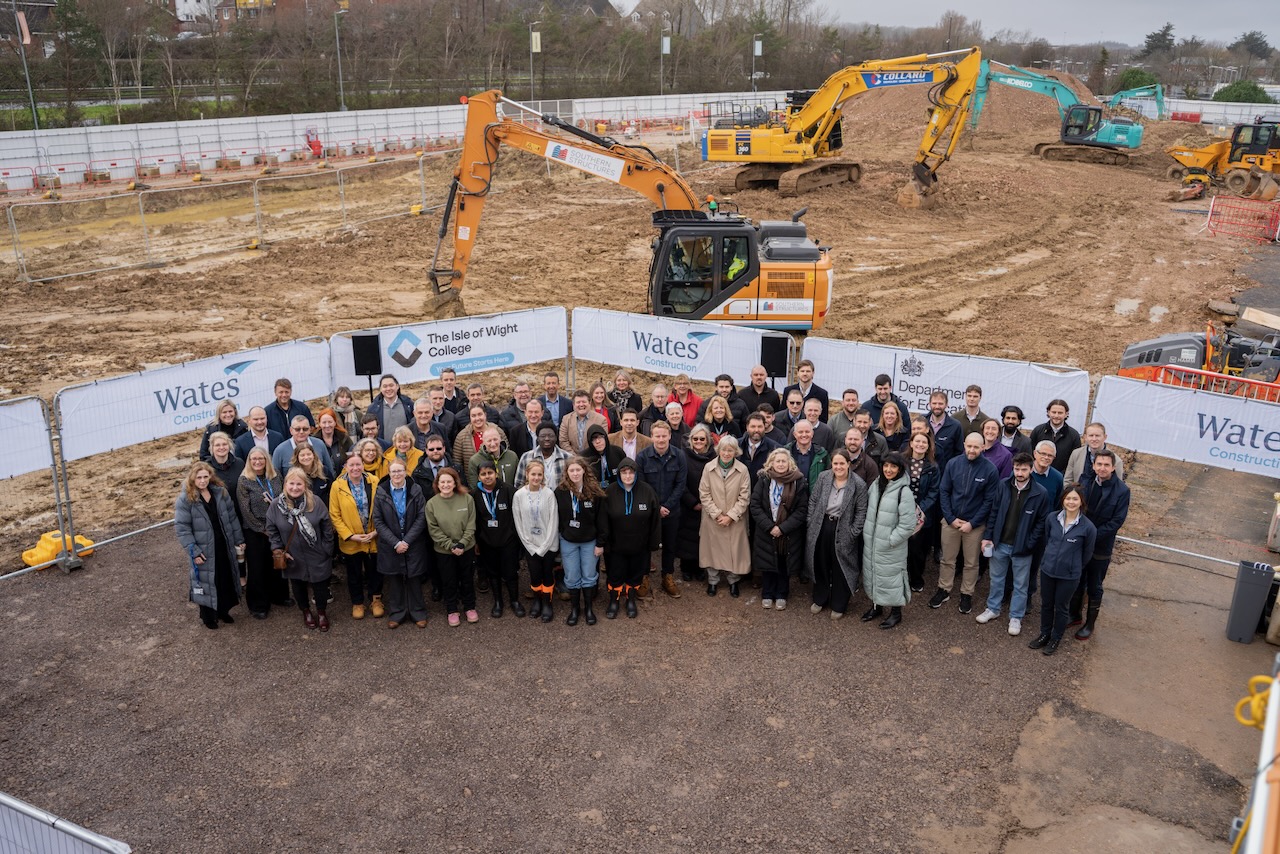
Wates Group has begun a two-phase build of a two-storey Welcome Hub at Isle of Wight College under the Department for Education’s £7bn schools construction framework, creating a new main entrance and vocational teaching centre. The hub will include industry-standard training kitchens, a training restaurant open to external customers, and flexible hybrid learning spaces for performing arts, hospitality, and travel and tourism. Sustainability measures include green roofs, rooftop solar panels, rain gardens, SuDS features and reuse of on-site materials, with completion scheduled for 2028.
Technical Brief
- Green roofs and rain gardens demand coordinated structural loading checks and detailed SuDS hydraulic design.
- On-site material reuse will require segregation, testing and possible regrading to meet current specifications.
- Industry-standard training kitchens drive high MEP loads, grease management and enhanced fire-safety provisions.
- Training restaurant open to public introduces additional egress, accessibility and parking/servicing considerations.
- Flexible hybrid learning spaces need adaptable acoustic treatment and demountable partitions for multiple vocational uses.
Our Take
Wates Group appears frequently in our UK Infrastructure coverage, and its recent HQ acquisition in Leatherhead (January 2026) signals a long-term balance-sheet commitment that underpins its ability to take on multi‑year Department for Education workstreams like this Isle of Wight College extension running through to 2028.
With the Welcome Hub delivered in two phases and only two storeys, this scheme fits the DfE’s current pattern of favouring repeatable, mid-rise education blocks, which typically enables contractors like Wates to reuse design and supply-chain solutions across multiple regional projects in the south of England.
Prepared by collating external sources, AI-assisted tools, and Geomechanics.io’s proprietary mining database, then reviewed for technical accuracy & edited by our geotechnical team.
Related Articles


Related Industries & Products
Construction
Quality control software for construction companies with material testing, batch tracking, and compliance management.
Mining
Geotechnical software solutions for mining operations including CMRR analysis, hydrogeological testing, and data management.
QCDB-io
Comprehensive quality control database for manufacturing, tunnelling, and civil construction with UCS testing, PSD analysis, and grout mix design management.