Geomechanics.io

  • Free Tools
Sign UpLog In
Built byBoxcut Studio

Geomechanics.io

Geomechanics, Streamlined.

© 2026 Geomechanics.io. All rights reserved.

Geomechanics.io

CMRR-ioGEODB-ioHYDROGEO-ioQCDB-ioFree Tools & CalculatorsBlogLatest Industry News

Industries

MiningConstructionTunnelling

Company

Terms of UsePrivacy PolicyLinkedIn
    Projects
    Sustainability

    Water scarcity in Australian mining: design and risk notes for project engineers

    October 27, 2026|

    Reviewed by Tom Sullivan

    Water scarcity in Australian mining: design and risk notes for project engineers

    First reported on Australian Mining

    30 Second Briefing

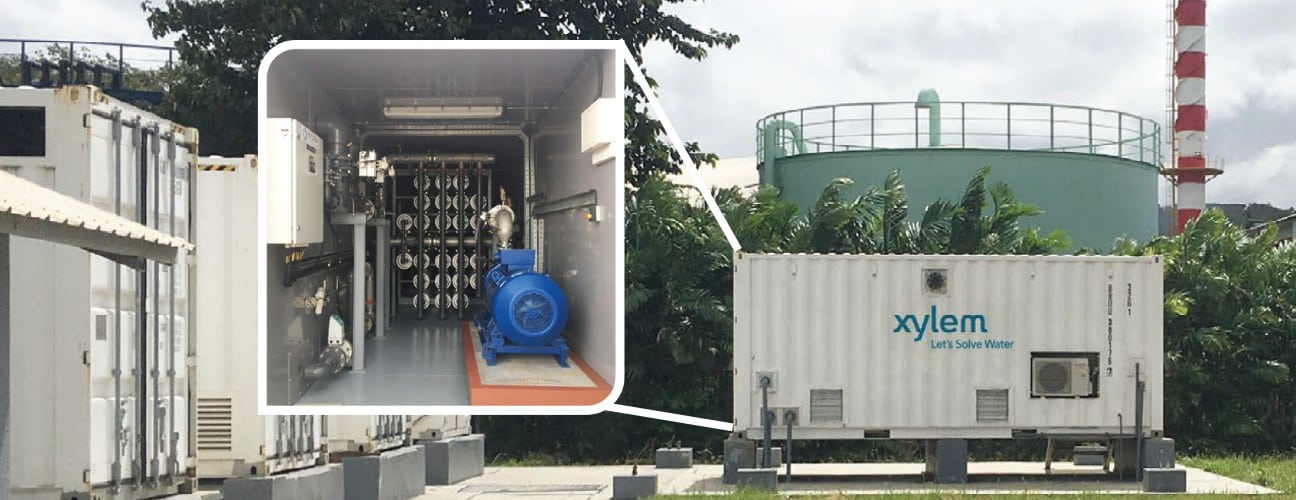
    Water scarcity is pushing Australian mines to treat water as a strategic risk, driving adoption of containerised reverse osmosis (RO) plants, advanced dewatering, and closed-loop process water circuits to cut freshwater intake. Operators are reconfiguring pit dewatering, tailings return flows and high-salinity groundwater use to cope with climate variability, tighter discharge licences and competition from agriculture and communities. For geotechnical and processing teams, this means designing pits, TSFs and pipelines around variable-quality water, higher salinity corrosion loads and more complex water balances.

    Technical Brief

    • For other dryland mining regions, similar containerised treatment trains offer a template for staged water-risk mitigation.

    Our Take

    Xylem’s recent US$1.46 billion move to acquire Cornell Pump and Roper Pump, noted in our database, signals that its smarter water management pitch to Australian mining is now backed by a much broader slurry and dewatering hardware portfolio that can be integrated into digital control strategies.

    Across the 1248 Mining stories in our coverage, Australia appears frequently in pieces about technology-driven risk and plant management; pairing Xylem’s water-focused systems with the real-time control platforms highlighted in the Aptella-related article would allow operators to treat water as a live, optimised process variable rather than a fixed constraint.

    With Australian Mining also covering tax and policy settings for juniors, smarter water management offerings from Xylem are likely to resonate most with larger or mid-tier operators first, as they are better placed to fund integrated pump–sensor–software upgrades that reduce long-term water risk on multi-decade assets.

    Geotechnical Software for Modern Teams

    Centralise site data, logs, and lab results with GEODB-io, CMRR-io, and HYDROGEO-io.

    No credit card required.

    • Save and export unlimited calculations
    • Advanced data visualisation
    • Generate professional PDF reports
    • Cloud storage for all your projects

    Prepared by collating external sources, AI-assisted tools, and Geomechanics.io’s proprietary mining database, then reviewed for technical accuracy & edited by our geotechnical team.

    Related Articles

    Epiroc Surface Automation Centers: rollout and risk lessons for open pit engineers
    Mining
    about 2 hours ago

    Epiroc Surface Automation Centers: rollout and risk lessons for open pit engineers

    Epiroc is expanding a global network of Surface Mining Automation Centers, creating dedicated innovation hubs where customers can test and deploy autonomous drilling and blasting solutions such as Pit Viper and SmartROC rigs. These centres provide remote operation rooms, high-bandwidth telemetry links and digital twins to trial multi-rig control, collision avoidance and integration with fleet management systems under controlled conditions. For mine operators, the set-up lowers on-site commissioning risk and accelerates roll-out of autonomy on large open pits with complex bench layouts and variable geotechnical conditions.

    Mining
    about 2 hours ago

    Wabtec–Razor Labs predictive maintenance: integration insights for mine fleets

    Wabtec Digital Mine is partnering with Razor Labs to deploy the DataMind AI predictive maintenance platform across Wabtec-equipped mining fleets, announced at IMARC 2026. The integration targets haul trucks and other mobile assets whose safety, operations and health have typically been managed in separate systems, consolidating condition monitoring and fault prediction into a single analytics layer. For mine operators, the move signals tighter linkage between OEM digital platforms and third‑party AI tools, with potential to cut unplanned downtime and optimise component life without major hardware retrofits.

    NSW Critical Minerals Skills Plan: workforce implications for mine project teams
    Mining
    about 3 hours ago

    NSW Critical Minerals Skills Plan: workforce implications for mine project teams

    New South Wales has launched an Australian-first Critical Minerals Skills Plan at IMARC in Sydney to build a pipeline of workers for future mining and processing of commodities such as rare earths, lithium and high‑purity alumina. The plan targets skills growth across geoscience, minerals processing, engineering, trades and environmental disciplines, with a focus on both upstream extraction and downstream refining. For operators and contractors, it signals stronger demand for specialised process engineers, mine geologists and technicians able to work in complex, multi-commodity flowsheets.

    Related Industries & Products

    Mining

    Geotechnical software solutions for mining operations including CMRR analysis, hydrogeological testing, and data management.

    CMRR-io

    Streamline coal mine roof stability assessments with our cloud-based CMRR software featuring automated calculations, multi-scenario analysis, and collaborative workflows.

    HYDROGEO-io

    Comprehensive hydrogeological testing platform for managing, analysing, and reporting on packer tests, lugeon values, and hydraulic conductivity assessments.

    GEODB-io

    Centralised geotechnical data management solution for storing, accessing, and analysing all your site investigation and material testing data.

    AllGeotechnicalInfrastructureHazardsEnvironmental