Warringah Freeway changes: early operations and design notes for traffic engineers
Reviewed by Tom Sullivan
First reported on Roads & Infrastructure (AU)
30 Second Briefing
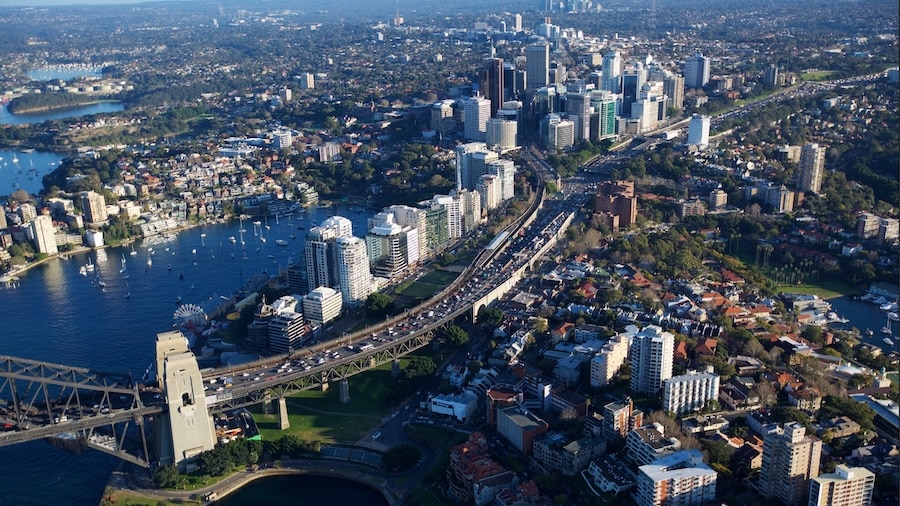
New permanent southbound lane configurations on New South Wales’ Warringah Freeway, introduced on 2 May, have operated smoothly in their first week on what is described as Australia’s busiest road. The reconfiguration alters southbound access to three major structures—the Sydney Harbour Bridge, Sydney Harbour Tunnel and Cahill Expressway—requiring drivers to commit earlier to dedicated lane paths. For designers and traffic engineers, the early performance suggests the complex weaving and merge arrangements can be managed without immediate capacity loss, but long‑term monitoring of bottlenecks at these three nodes will be critical.
Technical Brief
- Transport for NSW is treating the first week as a live validation of new merge and weaving layouts.
- Operational feedback is being used to fine‑tune line‑marking, signage placement and lane allocation for safety.
- Driver information campaigns and variable message signs are being relied on to reduce sudden lane changes and side‑swipes.
- Safety monitoring focuses on rear‑end and side‑impact crash rates at the three southbound decision points.
- Lessons on staged traffic switches under high AADT conditions are directly transferable to other brownfield motorway upgrades.
Our Take
Transport for NSW features heavily in our infrastructure coverage, with recent pieces on Mitchells Causeway, Narooma Bridge and Swan Hill Bridge indicating the agency is concurrently managing complex bridge and highway interventions across New South Wales, not just on the Warringah Freeway corridor.
The Warringah Freeway changes sit within a pattern of NSW works where safety and network resilience are being prioritised on both urban links like the Sydney Harbour Bridge–Tunnel approaches and regional routes such as the Bruxner Highway landslip repairs.
For contractors and designers, the timing of these Warringah Freeway lane changes alongside the state’s $183.2 million regional freight route upgrades suggests Transport for NSW is likely to be stretching traffic management and temporary works capability across multiple high‑impact projects at once.
Prepared by collating external sources, AI-assisted tools, and Geomechanics.io’s proprietary mining database, then reviewed for technical accuracy & edited by our geotechnical team.
Related Articles


Related Industries & Products
Construction
Quality control software for construction companies with material testing, batch tracking, and compliance management.
Tunnelling
Specialised solutions for tunnelling projects including grout mix design, hydrogeological analysis, and quality control.
CMRR-io
Streamline coal mine roof stability assessments with our cloud-based CMRR software featuring automated calculations, multi-scenario analysis, and collaborative workflows.
HYDROGEO-io
Comprehensive hydrogeological testing platform for managing, analysing, and reporting on packer tests, lugeon values, and hydraulic conductivity assessments.
GEODB-io
Centralised geotechnical data management solution for storing, accessing, and analysing all your site investigation and material testing data.