Volvo closes Rokbak business: implications for hauler design and UK plant strategy
Reviewed by Tom Sullivan
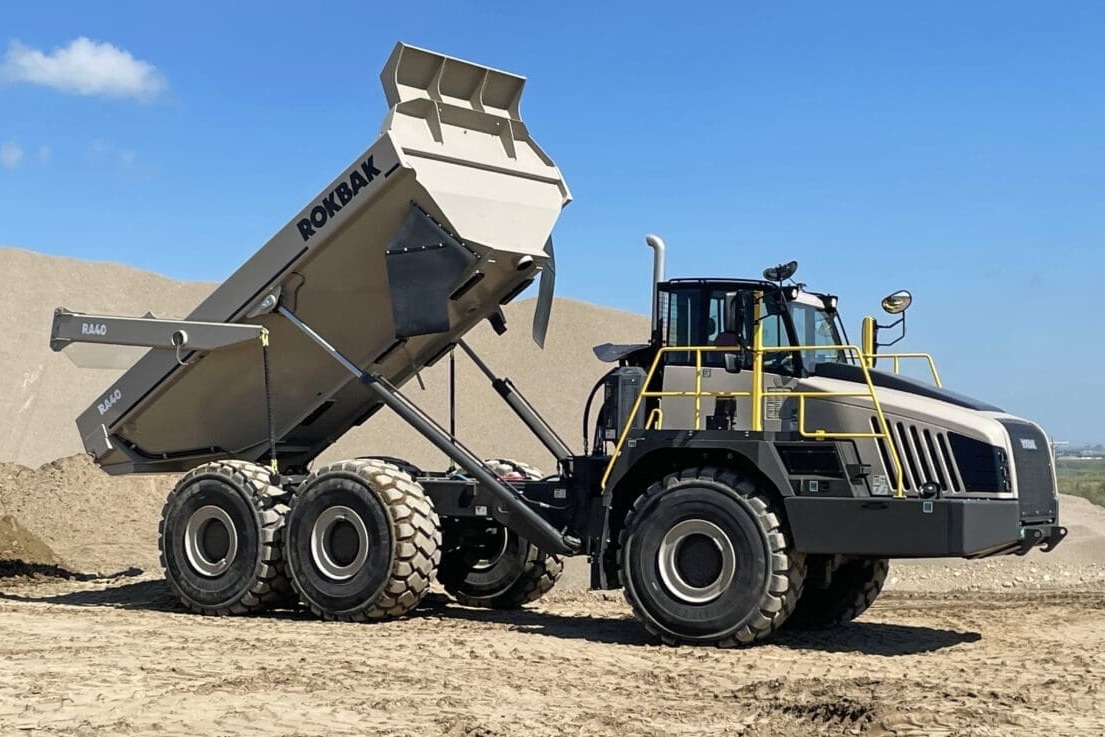
First reported on The Construction Index
30 Second Briefing
Volvo Construction Equipment is shutting its Motherwell-based Rokbak articulated hauler line by the second half of 2026, citing unsustainable financial performance driven by rising operational and supply chain costs and US tariffs. The Motherwell plant, acquired from Terex in 2014 and building articulated trucks since 1950, will be refocused solely on Volvo rigid hauler development and manufacture. A core Rokbak team will be retained for long-term product support, while Volvo negotiates with unions and government on a managed transition for affected staff.
Technical Brief
- Production of Rokbak articulated haulers at Motherwell is scheduled to cease in H2 2026, post-consultation.
- The Motherwell facility, in continuous articulated truck manufacture since 1950, will be repurposed solely to rigid haulers.
- Volvo CE attributes the decision to rising operational and supply chain costs combined with US import tariffs.
- A retained core Rokbak engineering/support team will provide long-term product support for the existing hauler fleet.
- No workforce reduction numbers have been disclosed, but Volvo has committed to a regulated consultation with unions.
- Engagement with government representatives and regulatory bodies is planned to structure a “responsible and supportive” transition.
Our Take
Within our 717 Infrastructure stories, Volvo and Volvo CE feature frequently on new product launches and upgrades (such as the recent large wheel loader and ECR355 excavator pieces), so the decision to end Rokbak production at the long-running Motherwell facility signals a strategic refocus rather than a general retreat from heavy equipment.
The 2026 production end-date at Motherwell comes as Volvo Penta engines are being adopted in underground mining fleets (see the MacLean Engineering item), suggesting the group is reallocating capital and engineering resources towards powertrains and high-spec mining/quarrying platforms rather than maintaining a legacy articulated hauler line in the UK.
Given that Rokbak/Terex trucks have been built in Scotland since 1950, the closure removes one of the UK’s longest-established off-highway manufacturing bases; for contractors and quarry operators in the United Kingdom, this is likely to increase reliance on imports and dealer networks such as SMT and others already prominent in our infrastructure equipment coverage.
Prepared by collating external sources, AI-assisted tools, and Geomechanics.io’s proprietary mining database, then reviewed for technical accuracy & edited by our geotechnical team.
Related Articles


Related Industries & Products
Mining
Geotechnical software solutions for mining operations including CMRR analysis, hydrogeological testing, and data management.
Construction
Quality control software for construction companies with material testing, batch tracking, and compliance management.
CMRR-io
Streamline coal mine roof stability assessments with our cloud-based CMRR software featuring automated calculations, multi-scenario analysis, and collaborative workflows.
QCDB-io
Comprehensive quality control database for manufacturing, tunnelling, and civil construction with UCS testing, PSD analysis, and grout mix design management.
HYDROGEO-io
Comprehensive hydrogeological testing platform for managing, analysing, and reporting on packer tests, lugeon values, and hydraulic conductivity assessments.