Vienna metro expansion tunnelling: method selection and monitoring notes for engineers
Reviewed by Joe Ashwell
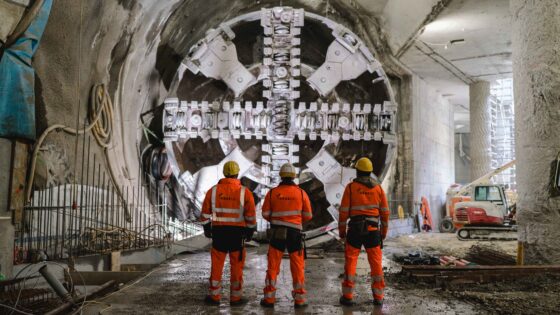
First reported on New Civil Engineer
30 Second Briefing
Two metro expansion projects in central Vienna are being built concurrently to increase public transport capacity, forcing complex underground works beneath dense historic fabric and existing U-Bahn lines. Designers are combining multiple tunnelling methods – including EPB tunnel boring machines, mined station caverns and cut-and-cover sections – to navigate mixed ground conditions and tight clearances to building foundations and utilities. Staged construction and detailed monitoring of settlement and vibration are critical to protect adjacent structures and maintain uninterrupted metro operations.
Technical Brief
- Station caverns are mined using sequential excavation with immediate shotcrete and lattice girder support to control convergence.
- Instrumentation includes automated total stations, track geometry monitoring and building tiltmeters linked to real-time alarm thresholds.
- Night-time possession windows are used for works directly above live tracks, with strict rollback criteria.
Prepared by collating external sources, AI-assisted tools, and Geomechanics.io’s proprietary mining database, then reviewed for technical accuracy & edited by our geotechnical team.
Related Articles


Related Industries & Products
Construction
Quality control software for construction companies with material testing, batch tracking, and compliance management.
Tunnelling
Specialised solutions for tunnelling projects including grout mix design, hydrogeological analysis, and quality control.
QCDB-io
Comprehensive quality control database for manufacturing, tunnelling, and civil construction with UCS testing, PSD analysis, and grout mix design management.