US rare earths regulations: supply-chain risk lens for defence engineers
Reviewed by Tom Sullivan
First reported on MINING.com
30 Second Briefing
US rare earths regulations will bar the Pentagon from buying magnets, tantalum and tungsten products mined, refined or separated in China, North Korea, Iran or Russia from 1 January 2027, closing the current loophole that allows Chinese-origin feedstock if final melting occurs elsewhere. Neodymium-iron-boron and samarium-cobalt magnets, plus gallium and germanium from December 2027, fall under tightened DFARS rules requiring full supply-chain mapping, alternative source qualification and sharply limited waivers. With US capacity still fragmented across mining, separation, metallisation and magnet production, defence contractors face near-term supply risk despite new projects with ElementUSA, Colorado School of Mines and Phoenix Tailings.
Technical Brief
- DFARS compliance will fail if material passes through any banned-country facility at any production stage.
- Executive Order 14415 mandates formal supply-chain mapping, due diligence and documented qualification of non‑covered suppliers.
- Waivers for non‑compliant magnets, tantalum and tungsten are explicitly restricted, tightening historic “national security” exemptions.
- Gallium and germanium join the restricted list from 18 December 2027, adding semiconductor‑grade feedstocks to defence audits.
- Contractors now have 44 days to secure compliant inventories before the next DFARS tightening comes into force.
- US production remains segmented across four under‑capacity steps: mining, separation, metallisation and finished magnet manufacture.
- New US processing capacity includes an ElementUSA–Colorado School of Mines facility and a Phoenix Tailings plant in New York.
- China’s paused rare earth export controls are due to resume on 10 January 2027, almost synchronised with US restrictions.
Our Take
In our database, most recent rare earths policy pieces involving China focus on export controls and technology bans, so synchronising US rules with the scheduled end of China’s paused export controls in January 2027 effectively hardens a two-sided squeeze on neodymium-iron-boron and samarium-cobalt magnet supply chains.
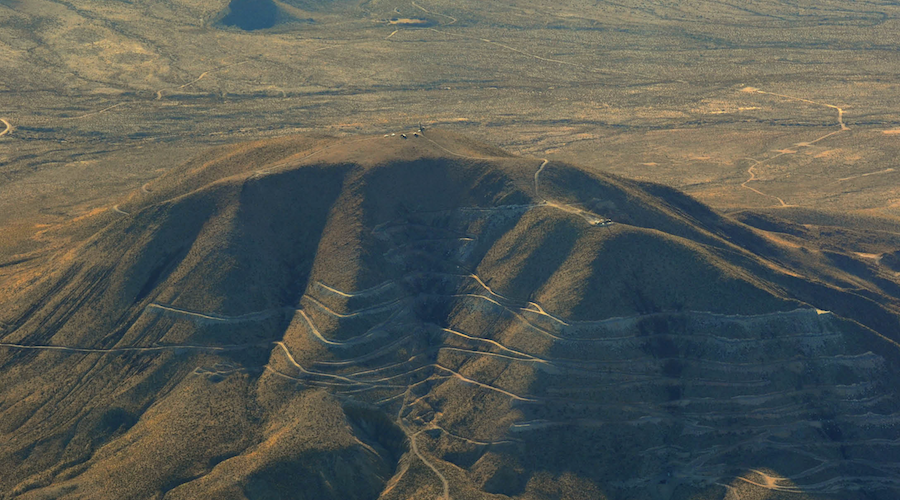
The Round Top rare earths deposit in Texas sits in the same US onshore build-out narrative as USA Rare Earth’s downstream NdFeB arrangements with Arnold Magnetic Technologies, suggesting that projects able to demonstrate secure, domestic processing routes will be structurally advantaged in Pentagon tenders once the 2027 rules bite.
Prepared by collating external sources, AI-assisted tools, and Geomechanics.io’s proprietary mining database, then reviewed for technical accuracy & edited by our geotechnical team.
Related Articles



Related Industries & Products
Mining
Geotechnical software solutions for mining operations including CMRR analysis, hydrogeological testing, and data management.
CMRR-io
Streamline coal mine roof stability assessments with our cloud-based CMRR software featuring automated calculations, multi-scenario analysis, and collaborative workflows.
HYDROGEO-io
Comprehensive hydrogeological testing platform for managing, analysing, and reporting on packer tests, lugeon values, and hydraulic conductivity assessments.
GEODB-io
Centralised geotechnical data management solution for storing, accessing, and analysing all your site investigation and material testing data.