Geomechanics.io

  • Free Tools
Sign UpLog In
Built byBoxcut Studio

Geomechanics.io

Geomechanics, Streamlined.

© 2026 Geomechanics.io. All rights reserved.

Geomechanics.io

CMRR-ioGEODB-ioHYDROGEO-ioQCDB-ioFree Tools & CalculatorsBlogLatest Industry News

Industries

MiningConstructionTunnelling

Company

Terms of UsePrivacy PolicyLinkedIn
    Projects

    UK–Welsh rail funding rift: what stalled overhaul means for project engineers

    October 31, 2026|

    Reviewed by Joe Ashwell

    UK–Welsh rail funding rift: what stalled overhaul means for project engineers

    First reported on New Civil Engineer

    30 Second Briefing

    UK Government plans to invest £14bn in rail upgrades nationwide have drawn criticism from the Welsh government, which says Wales is receiving a substantially smaller allocation than implied by the commitment. Ministers in Cardiff argue the shortfall will stall long‑planned electrification, capacity increases and resilience works on key corridors such as the South Wales Main Line and Valleys routes. For civil and rail engineers, the dispute raises uncertainty over funding timelines for track renewals, signalling upgrades and station accessibility schemes across the Welsh network.

    Technical Brief

    • Funding gap directly affects electrification design packages, delaying overhead line equipment staging and feeder station siting.
    • Signalling renewals in Wales risk being re‑sequenced, extending life‑expired interlockings and level crossing controls.
    • Station accessibility schemes may be deferred, postponing lift shafts, footbridge replacements and platform regrading works.
    • Track renewals planning faces uncertainty on ballast cleaning, rail replacement tonnages and S&C refurbishment volumes.
    • Drainage and earthwork resilience upgrades could slip, prolonging exposure to embankment instability and formation flooding.
    • Programme risk increases for contractors with framework agreements, complicating resource allocation and plant utilisation across regions.
    • For similar devolved networks, unclear central funding streams make multi‑year asset management planning and whole‑life costing harder.

    Our Take

    The £14bn GB-wide rail investment commitment referenced here aligns with earlier Welsh Government pushes (30 September 2026 item) to re‑profile that funding, signalling that current tensions are as much about timing and control of spend as about headline totals.

    Ongoing negotiations over a ringfenced Welsh share of rail capital (8 July 2026 article) suggest that any perceived stalling on upgrades could be used by Cardiff to strengthen the case for fuller devolution of rail powers away from Westminster.

    In our Policy coverage, Wales appears frequently alongside major regeneration and infrastructure pieces (such as the Penrhys housing scheme and record flood-defence budgets), so rail underinvestment risks becoming a weak link in an otherwise active public-works pipeline for the region.

    Geotechnical Software for Modern Teams

    Centralise site data, logs, and lab results with GEODB-io, CMRR-io, and HYDROGEO-io.

    No credit card required.

    • Save and export unlimited calculations
    • Advanced data visualisation
    • Generate professional PDF reports
    • Cloud storage for all your projects

    Prepared by collating external sources, AI-assisted tools, and Geomechanics.io’s proprietary mining database, then reviewed for technical accuracy & edited by our geotechnical team.

    Related Articles
    Historic Railways Estate to GBR: asset management shifts for engineers
    Policy
    about 2 hours ago

    Historic Railways Estate to GBR: asset management shifts for engineers

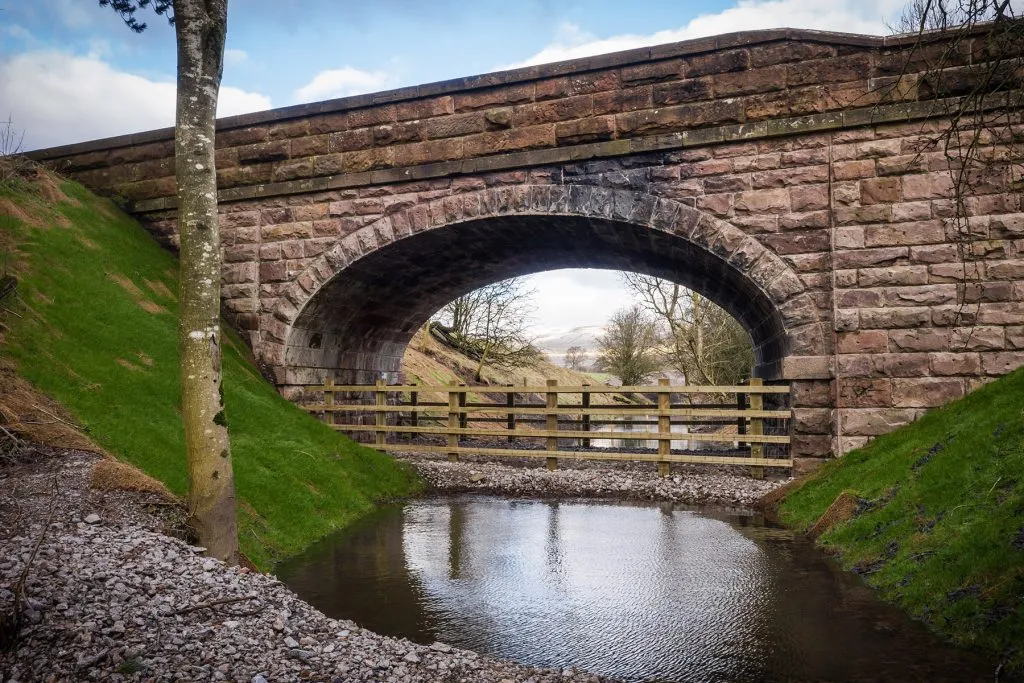
    Transfer of the UK’s Historical Railways Estate from National Highways and the Department for Transport to Great British Railways has secured backing in the House of Lords, confirming a major shift in who manages more than 3,000 legacy rail structures. The estate includes disused tunnels, masonry and brick-arch overbridges, and former trackbed earthworks that frequently interact with local highway networks and development sites. Moving the asset base into GBR’s remit is likely to change inspection, load assessment and infilling/demolition decision-making, with closer integration to future rail reopenings.

    UK Budget 2026 CCUS cuts: pipeline and cluster risks for project teams
    Policy
    1 day ago

    UK Budget 2026 CCUS cuts: pipeline and cluster risks for project teams

    Targeted cuts in the UK’s 2026 Budget to carbon capture, utilisation and storage (CCUS) and industrial cluster programmes are raising concerns over delays to major CO₂ transport and storage pipelines, coastal energy hubs and associated port upgrades. Commentators warn that scaling back support for multi‑billion‑pound cluster schemes on the Humber, Teesside and Merseyside could stall front‑end engineering design, ground investigation and consenting for large‑diameter CO₂ trunk lines and offshore storage infrastructure. Civil contractors and consultants face a thinner medium‑term workload in energy-transition earthworks, marine works and deep foundation packages.

    Budget 2026 power focus: project and grid implications for civil engineers
    Policy
    2 days ago

    Budget 2026 power focus: project and grid implications for civil engineers

    Budget 2026 commits the government to approving only new electricity generation projects that demonstrably reduce consumer bills, signalling a tilt towards low‑marginal‑cost technologies such as offshore wind, solar PV and nuclear with Contracts for Difference–style revenue models. Ministers also pledged to accelerate grid reforms, likely prioritising transmission reinforcements, new 400kV corridors and faster connection processes to clear the current multi‑year queue. For civil and geotechnical contractors, the shift points to more balance‑of‑plant, substation and cable‑route work, but tougher value‑for‑money scrutiny on capex and programme risk.

    Related Industries & Products

    Construction

    Quality control software for construction companies with material testing, batch tracking, and compliance management.

    CMRR-io

    Streamline coal mine roof stability assessments with our cloud-based CMRR software featuring automated calculations, multi-scenario analysis, and collaborative workflows.

    HYDROGEO-io

    Comprehensive hydrogeological testing platform for managing, analysing, and reporting on packer tests, lugeon values, and hydraulic conductivity assessments.

    GEODB-io

    Centralised geotechnical data management solution for storing, accessing, and analysing all your site investigation and material testing data.

    AllGeotechnicalInfrastructureHazardsEnvironmental