UK data centres’ energy and water demands: coordination lessons for engineers
Reviewed by Tom Sullivan
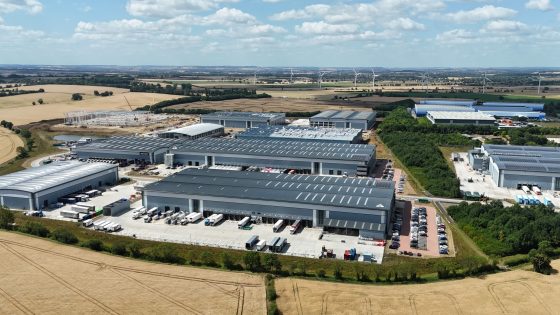
First reported on New Civil Engineer
30 Second Briefing
Surging deployment of AI workloads is driving a rapid build-out of UK data centres, but grid connection queues and constrained water resources are limiting new capacity. Developers are being pushed towards on-site generation such as gas peakers and battery storage, higher rack power densities, and liquid or hybrid cooling systems to cut reliance on potable mains supplies. For civil and M&E engineers, early coordination with DNOs, water companies and local planners is becoming critical to secure electrical import/export capacity and non-potable water sources.
Technical Brief
- Planning authorities are increasingly conditioning consents on demonstrable use of non-potable sources for at least process cooling.
- Brownfield industrial plots with legacy high-voltage connections and abstraction licences are being prioritised over greenfield farmland.
- Substations, gas peakers and large battery enclosures are driving larger set-back distances and more onerous blast and fire separation design.
- Drainage strategies must now integrate blowdown, bleed-off and potential glycol-contaminated effluent from liquid cooling systems.
Our Take
Within our 867 Infrastructure stories, UK-focused pieces that link data centres with grid and water capacity are still relatively sparse, suggesting practitioners are only beginning to treat these facilities as major infrastructure loads rather than just buildings.
New Civil Engineer’s recent coverage of BIM, CDEs and digital handover indicates that UK infrastructure clients are wrestling with lifecycle data; applying similar discipline to data centre utility interfaces could materially de-risk long-term power and cooling upgrades.
Because this article sits under both Projects and Sustainability, it signals that UK data centre schemes are increasingly being framed alongside other regulated infrastructure in our database, which is likely to influence how planners and utilities scrutinise embodied carbon and resilience in consented designs.
Prepared by collating external sources, AI-assisted tools, and Geomechanics.io’s proprietary mining database, then reviewed for technical accuracy & edited by our geotechnical team.
Related Articles


Related Industries & Products
Construction
Quality control software for construction companies with material testing, batch tracking, and compliance management.
Mining
Geotechnical software solutions for mining operations including CMRR analysis, hydrogeological testing, and data management.
CMRR-io
Streamline coal mine roof stability assessments with our cloud-based CMRR software featuring automated calculations, multi-scenario analysis, and collaborative workflows.
HYDROGEO-io
Comprehensive hydrogeological testing platform for managing, analysing, and reporting on packer tests, lugeon values, and hydraulic conductivity assessments.
GEODB-io
Centralised geotechnical data management solution for storing, accessing, and analysing all your site investigation and material testing data.