UK clean power by 2030: grid overhaul risks and lessons for engineers
Reviewed by Joe Ashwell
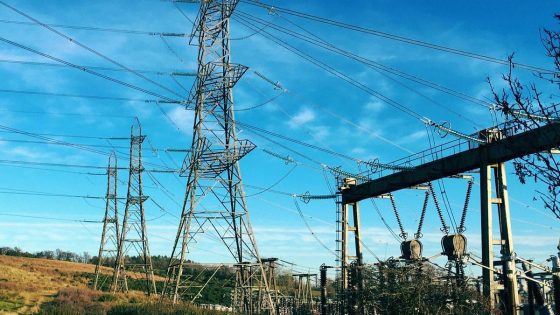
First reported on New Civil Engineer
30 Second Briefing
The UK’s 2030 target for at least 95% of electricity generation from clean sources hinges on rapidly overhauling the transmission and distribution grid rather than generation capacity alone. Delivering this requires accelerated consenting for new 400kV corridors, large-scale reinforcement of existing 132kV and 275kV networks, and coordinated connection of offshore wind, solar and storage. For civil and geotechnical engineers, the main risks are programme delay and cost escalation from slow approvals, wayleave disputes and substation and cable route design changes late in the process.
Technical Brief
- Contractors flag that stop‑start funding profiles drive inefficiency in plant utilisation and site mobilisation for grid schemes.
- Client bodies are being pushed to adopt longer framework contracts to justify factory retooling and workforce expansion.
- Risk engineers are increasingly embedded early to quantify consenting, wayleave and interface risks in investment cases.
- For other infrastructure sectors, the message is that credible long‑term pipelines are now as critical as consents.
Our Take
A 95% clean power share by 2030 in the United Kingdom implies grid reinforcement and interconnection programmes on a similar scale to the largest multi-decade infrastructure schemes in our Infrastructure database, compressing what is usually a 15–20 year delivery window into a single decade.
New Civil Engineer’s recent focus on BIM, common data environments and digital handover in its webinars suggests that achieving the UK’s 2030 target will likely hinge as much on resolving data and asset-management bottlenecks as on consent and construction capacity.
Prepared by collating external sources, AI-assisted tools, and Geomechanics.io’s proprietary mining database, then reviewed for technical accuracy & edited by our geotechnical team.
Related Articles


Related Industries & Products
Construction
Quality control software for construction companies with material testing, batch tracking, and compliance management.
Mining
Geotechnical software solutions for mining operations including CMRR analysis, hydrogeological testing, and data management.
QCDB-io
Comprehensive quality control database for manufacturing, tunnelling, and civil construction with UCS testing, PSD analysis, and grout mix design management.