UK airport capacity and decarbonisation: design notes for civil engineers
Reviewed by Tom Sullivan
First reported on New Civil Engineer
30 Second Briefing
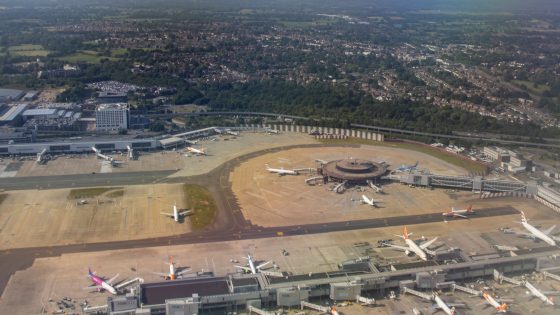
Airport expansion at UK hubs is increasingly driven by resilience and decarbonisation, with projects combining terminal capacity upgrades, airfield reconfiguration and low‑carbon energy systems rather than simply adding gates. Engineers are integrating high‑voltage electrical infrastructure for aircraft stand power, hydrogen‑ready or SAF (sustainable aviation fuel) storage and distribution, and expanded baggage and security halls designed for higher throughputs. For geotechnical and civil teams, this means complex airside phasing on constrained sites, strengthening pavements for heavier next‑generation aircraft and coordinating utility corridors for future‑proofed power and fuel networks.
Technical Brief
- Absence of detailed project data in the source limits extraction of scheme-specific dimensions, loads or phasing.
- No named UK airports, contractors, designers or specific expansion programmes are provided for reference.
- The source text gives no quantitative information on stand numbers, runway lengths, pavement thicknesses or terminal GIA.
- Constraints such as groundwater levels, settlement criteria, allowable night-time noise or airside obstacle limitation surfaces are not described.
- Geotechnical investigation scope, in situ test types, or ground improvement methods are not specified in the available content.
- Utility and fuel infrastructure layouts, pipe diameters, bunding arrangements and fire separation distances are not detailed.
- Without further article content, implications for construction sequencing, temporary works and operational risk management cannot be reliably summarised.
Our Take
New Civil Engineer’s Heathrow early careers innovation competition coverage in May 2026 suggests UK airports are already trialling graduate-led concepts around operational efficiency and sustainability, which could feed directly into how capacity expansion and decarbonisation are framed in this piece.
The recent NCE webinar on BIM, CDEs and the ‘data handover gap’ indicates that any UK airport resilience or decarbonisation programme discussed here will likely hinge on long-term digital asset management, not just on physical upgrades to terminals and airfield infrastructure.
Prepared by collating external sources, AI-assisted tools, and Geomechanics.io’s proprietary mining database, then reviewed for technical accuracy & edited by our geotechnical team.


