Geomechanics.io

  • Free Tools
Sign UpLog In

Geomechanics.io

Geomechanics, Streamlined.

© 2026 Geomechanics.io. All rights reserved.

Geomechanics.io

CMRR-ioGEODB-ioHYDROGEO-ioQCDB-ioFree Tools & CalculatorsBlogLatest Industry News

Industries

MiningConstructionTunnelling

Company

Terms of UsePrivacy PolicyLinkedIn
    Projects
    Contract Award

    Triton Uranium’s 46.5M lb Atlas project: open‑pit design and cost lens for engineers

    September 16, 2026|

    Reviewed by Tom Sullivan

    Triton Uranium’s 46.5M lb Atlas project: open‑pit design and cost lens for engineers

    First reported on MINING.com

    30 Second Briefing

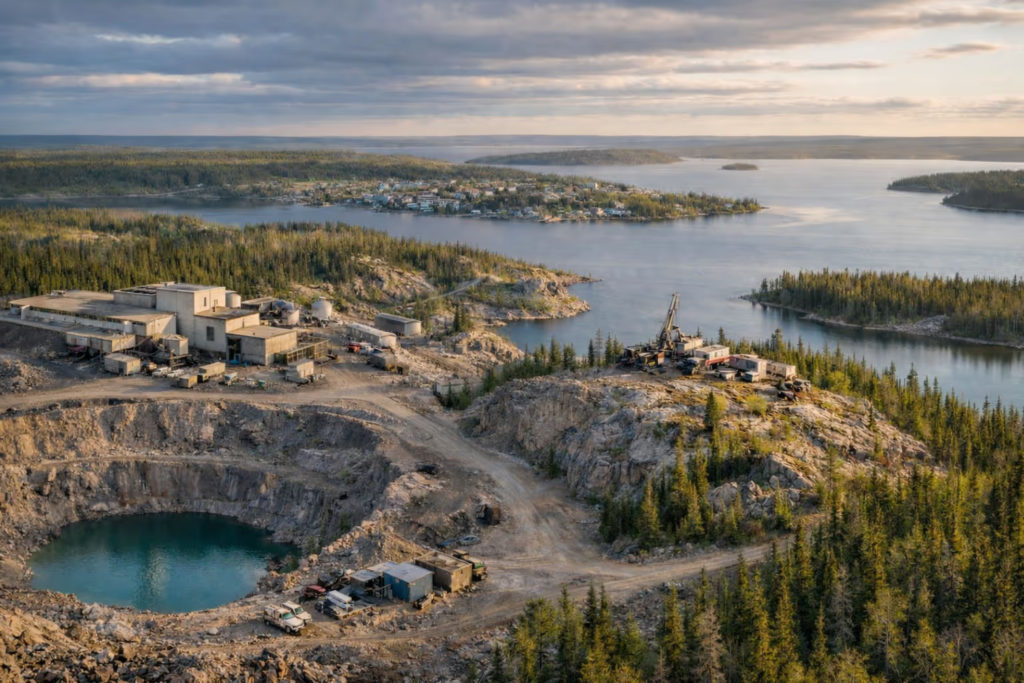
    Triton Uranium has completed four technical reports for its Atlas project in Saskatchewan’s historic Beaverlodge district, outlining low‑grade, open‑pit uranium potential of up to 46.56 million lb U₃O₈ across satellite occurrences and exploration targets. The optimised Red Rock model defines an Indicated Resource of 276,702 tonnes at 0.087% U₃O₈ (531,052 lb) and an Inferred Resource of 20,946 tonnes at 0.060% U₃O₈ (27,840 lb), with 11,035 m of new near‑surface targets now being tested in a 10,000 m drill programme. Triton aims to leverage existing Uranium City infrastructure to fast‑track what it claims could be North America’s only low‑cost, open‑pit uranium mine.

    Technical Brief

    • Atlas sits within a 46,000‑acre land package adjoining historic Ace‑Fay‑Verna, Dubyna and Cinch–Cenex mines.
    • Beaverlodge district context is strong, with ~77.8 Mlb U₃O₈ historically produced, including ~50.4 Mlb from Ace‑Fay‑Verna.
    • Triton is explicitly targeting an “infrastructure‑ready” model to shorten permitting and construction versus remote greenfield uranium camps.
    • Canada–US Critical Minerals Action Plan context positions Atlas as a potential allied uranium supply node for both grids.

    Our Take

    The Atlas project in Saskatchewan’s Beaverlodge Uranium district lines up with Canada’s stated aim to double uranium exports by 2035, suggesting Triton Uranium could benefit from federal and provincial support streams highlighted in recent coverage of C$120 billion in planned Canadian mining capex.

    Geotechnical Software for Modern Teams

    Centralise site data, logs, and lab results with GEODB-io, CMRR-io, and HYDROGEO-io.

    No credit card required.

    • Save and export unlimited calculations
    • Advanced data visualisation
    • Generate professional PDF reports
    • Cloud storage for all your projects

    Prepared by collating external sources, AI-assisted tools, and Geomechanics.io’s proprietary mining database, then reviewed for technical accuracy & edited by our geotechnical team.

    Related Articles

    Mining
    about 3 hours ago

    Alfred H Knight Mozambique lab: QA and grade-control gains for mine operators

    Alfred H Knight has opened a new metals and minerals laboratory in Maputo, Mozambique, providing local sample preparation and analytical testing for iron ore, chrome ore and other key commodities moving through southern Africa’s export corridors. The facility brings independent assay capability closer to mine sites and ports on the Indian Ocean, reducing turnaround times compared with sending samples to overseas labs. For operators, nearer real-time grade control and shipment certification should tighten quality assurance on bulk cargoes and support contract compliance.

    Zibulo North Shaft decline: mechanised development lessons for mine engineers
    Mining
    about 3 hours ago

    Zibulo North Shaft decline: mechanised development lessons for mine engineers

    Cementation Africa has completed Thungela Resources’ Zibulo North Shaft decline under demanding underground conditions, using a continuous miner for a critical phase of advance rather than conventional drill-and-blast. Project Manager Peter Mazibuko credits the team’s underground coal expertise and close collaboration with the client for enabling safe deployment of the continuous miner in a constrained decline environment. For mine developers, the project signals growing confidence in mechanised decline development to accelerate schedules where geology and layout permit.

    Mining
    about 3 hours ago

    First Quantum’s Quantum Electra-Haul: design and power notes for mine planners

    First Quantum Minerals has secured a patent and trademark for Quantum Electra-Haul, its proprietary trolley-assist haulage system, formalising the technology it has been rolling out across its global copper operations. The system integrates overhead electric trolley lines with large diesel-electric haul trucks, allowing trucks to draw grid power on uphill hauls and cut diesel burn and emissions on high-intensity ramps. For mine planners and electrical engineers, the move signals continued large-scale investment in trolley-ready pit designs, high-voltage reticulation, and compatible truck fleets.

    Related Industries & Products

    Mining

    Geotechnical software solutions for mining operations including CMRR analysis, hydrogeological testing, and data management.

    Construction

    Quality control software for construction companies with material testing, batch tracking, and compliance management.

    CMRR-io

    Streamline coal mine roof stability assessments with our cloud-based CMRR software featuring automated calculations, multi-scenario analysis, and collaborative workflows.

    HYDROGEO-io

    Comprehensive hydrogeological testing platform for managing, analysing, and reporting on packer tests, lugeon values, and hydraulic conductivity assessments.

    GEODB-io

    Centralised geotechnical data management solution for storing, accessing, and analysing all your site investigation and material testing data.

    AllGeotechnicalInfrastructureHazardsEnvironmental