Geomechanics.io

  • Free Tools
Sign UpLog In
Built byBoxcut Studio

Geomechanics.io

Geomechanics, Streamlined.

© 2026 Geomechanics.io. All rights reserved.

Geomechanics.io

CMRR-ioGEODB-ioHYDROGEO-ioQCDB-ioFree Tools & CalculatorsBlogLatest Industry News

Industries

MiningConstructionTunnelling

Company

Terms of UsePrivacy PolicyLinkedIn
    Projects
    Product

    Thurston Ottringham facility: design and capacity notes for infrastructure engineers

    November 5, 2026|

    Reviewed by Joe Ashwell

    Thurston Ottringham facility: design and capacity notes for infrastructure engineers

    First reported on The Construction Index

    30 Second Briefing

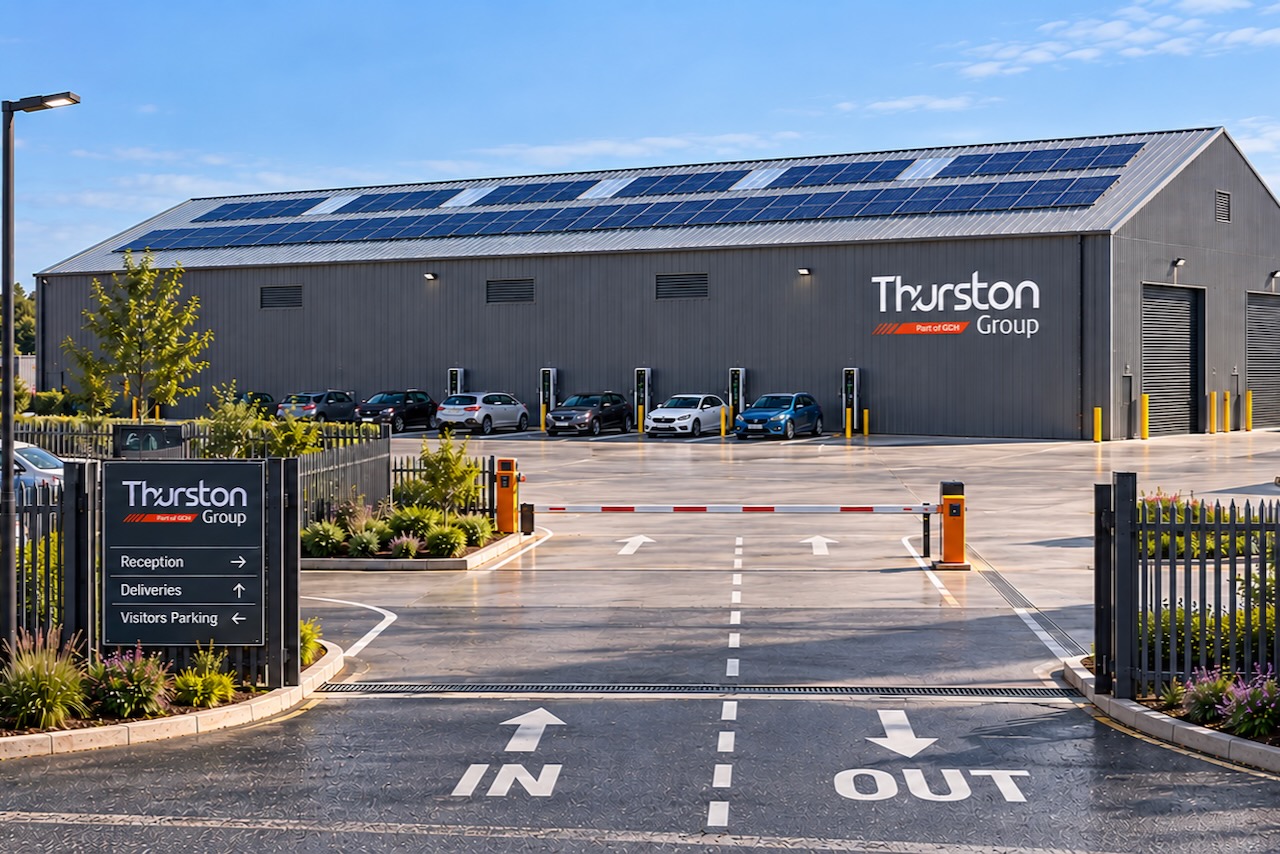
    Thurston Group is making a multi-million-pound investment in a new 1,250 m² purpose-built facility at Ottringham to manufacture blast-resistant buildings, toxic refuges, battery and electrolyser enclosures, and bespoke containerised solutions for energy, hydrogen, oil and gas, data centres, utilities, rail and defence clients. Backed by owner GCH Corporation and due online in the first half of 2027, the plant is intended to lift specialist manufacturing output by 158% towards more than £40m annual capacity. The facility will integrate dedicated fabrication with overhead lifting, a specialist shot blast booth, controlled paint finishing and a final inspection bay, with segregated production zones to improve flow and surface durability for long-life offshore and industrial structures.

    Technical Brief

    • Engineered products include blast-resistant buildings, toxic refuges and control housings for hazardous, regulated locations.
    • Structures are designed to protect personnel and house critical equipment in offshore and industrial environments.
    • Equipment housings and enclosures target hydrogen, offshore energy and other high-specification process plant applications.
    • Ottringham site becomes the dedicated base for Thurston’s engineered solutions business within the wider group.
    • Investment is funded by owner GCH Corporation as part of a wider capital programme across Thurston.
    • Facility layout integrates fabrication, surface preparation, coating and final inspection into a single controlled workflow.
    • Segregated production zones are intended to improve safety, reduce cross-contamination and optimise throughput.
    • Demand growth is strongest in hydrogen, offshore energy and equipment housings, driving higher specification and QA requirements.

    Our Take

    The 158% uplift in specialist output at the Ottringham manufacturing facility suggests Thurston is moving beyond simple survival after its 2026 pre-pack sale to GCH Corporation, positioning the business to sweat those newly acquired assets rather than just preserve jobs.

    Targeting £40 million annual output by the first half of 2027 puts Thurston into the upper tier of UK modular manufacturers in our infrastructure database, which typically translates into stronger bargaining power on framework agreements with public-sector clients.

    Within our 927 Infrastructure stories, UK modular capacity expansions of this scale are relatively rare, signalling that GCH’s backing could make Thurston one of the few domestically based players able to respond quickly to large, multi-site programmes such as schools, healthcare and temporary accommodation builds.

    Geotechnical Software for Modern Teams

    Centralise site data, logs, and lab results with GEODB-io, CMRR-io, and HYDROGEO-io.

    No credit card required.

    • Save and export unlimited calculations
    • Advanced data visualisation
    • Generate professional PDF reports
    • Cloud storage for all your projects

    Prepared by collating external sources, AI-assisted tools, and Geomechanics.io’s proprietary mining database, then reviewed for technical accuracy & edited by our geotechnical team.

    Related Articles

    Strabag’s Pfaffensteig Tunnel contract: design and delivery notes for rail engineers
    Infrastructure
    6 months ago

    Strabag’s Pfaffensteig Tunnel contract: design and delivery notes for rail engineers

    Strabag and Group company Züblin have secured the design-and-build structural works for the ABS Gäubahn Nord/Pfaffensteig Tunnel in south-west Germany, centred on an 11km twin-bore rail tunnel linking Stuttgart Airport station directly to the Gäubahn line towards Switzerland. About 9.8km will be driven by two TBMs, with conventional tunnelling for the A8 motorway undercrossing and airport connection, plus a 240m cut-and-cover section, retaining structures, railway underpasses and a grade-separated crossing. A 3km surface section will be upgraded and partially realigned for 200km/h operation, delivered under an integrated project delivery model with Ed. Züblin, Wayss & Freytag and Strabag AG sharing tunnelling, structural and earthworks packages.

    National Grid TBM under the Thames: tunnelling design and risk notes for engineers
    Infrastructure
    8 months ago

    National Grid TBM under the Thames: tunnelling design and risk notes for engineers

    A 271.5‑tonne Herrenknecht Mixshield TBM, Caroline, has started driving a 2.2km electricity cable tunnel with a 4m internal diameter beneath the River Thames in Essex for National Grid’s Grain to Tilbury project, delivered by the Ferrovial BEMO joint venture. The drive will pass through variable Thames estuary ground conditions between 35m‑deep launch and reception shafts of 15m and 12m diameter, with tunnelling continuing into 2026 and overall scheme completion targeted for 2029. The new tunnel will replace the 1969 Thames Cable Tunnel and carry new high‑voltage circuits between Grain and Tilbury substations.

    Panama Canal Mixshield undercrossing: design and tunnelling lessons for engineers
    Infrastructure
    9 months ago

    Panama Canal Mixshield undercrossing: design and tunnelling lessons for engineers

    A 13.46m diameter Herrenknecht Mixshield TBM has broken through into the future Balboa station on Panama Metro Line 3 after completing the first-ever TBM undercrossing of the Panama Canal at depths exceeding 60m below sea level. The 5,600kW, 26,616kNm machine, fitted with an accessible cutterhead and more than 4,500 sensors linked via the Herrenknecht.Connected platform, has achieved peak advance of 150 segment rings (about 300m) per month through mixed sandstone, tuff, breccias and basalt. Around 1.5km of the 4.5km twin-track tunnel remains to final breakthrough.

    Related Industries & Products

    Construction

    Quality control software for construction companies with material testing, batch tracking, and compliance management.

    Mining

    Geotechnical software solutions for mining operations including CMRR analysis, hydrogeological testing, and data management.

    QCDB-io

    Comprehensive quality control database for manufacturing, tunnelling, and civil construction with UCS testing, PSD analysis, and grout mix design management.

    AllGeotechnicalInfrastructureHazardsEnvironmental