Three machines now tunnelling on Suburban Rail Loop: control and risk notes for engineers
Reviewed by Joe Ashwell
First reported on Roads & Infrastructure (AU)
30 Second Briefing
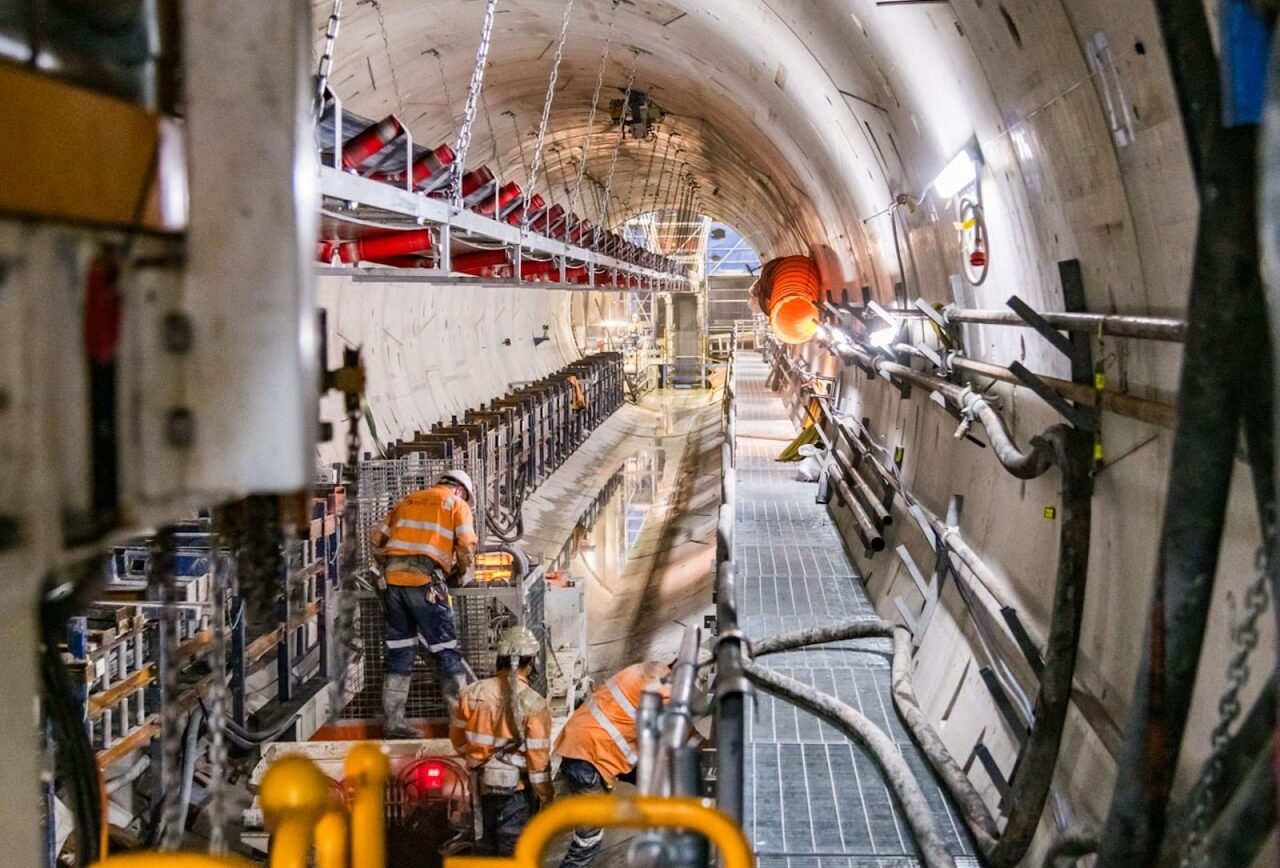
Three tunnel boring machines – TBM Hacia, TBM Alice and TBM Aayushi – are now simultaneously driving the Suburban Rail Loop East twin tunnels in Victoria, with Hacia joining Alice on the Burwood–Glen Waverley section and Aayushi commencing on the southern section. Running multiple TBMs in parallel accelerates excavation of the twin-bore alignment and intensifies logistics for segment supply, spoil removal and ground monitoring. Contractors will need tight control of settlement, vibration and interface management as drives converge beneath existing suburbs and utilities.
Technical Brief
- Running three TBMs concurrently demands tightly sequenced segment delivery, spoil haulage and maintenance access underground.
- Parallel drives increase cumulative face-pressure influence zones, requiring coordinated groundwater and settlement monitoring between headings.
- Simultaneous tunnelling beneath existing suburbs intensifies utility strike risk, driving stricter permit-to-dig and survey controls.
- Multiple machines in close proximity complicate ventilation design, gas monitoring and emergency egress route planning.
- Control-room integration of all TBM data streams becomes critical for real-time alarms, interlocks and stoppage decisions.
- Shift rostering and access management must prevent interface conflicts between crews at cross-passages and launch/receival shafts.
Our Take
The Suburban Rail Loop and SRL East sit alongside the Victorian Government’s Level Crossing Removal Project work at Ruthven Street and Diggers Rest in our coverage, signalling a long-term strategy to separate road–rail interfaces across Melbourne rather than treat each corridor in isolation.
Having three tunnel boring machines operating concurrently on SRL East implies a programme intensity comparable to other multi-TBM metro builds, which typically compresses geotechnical risk into a shorter window but demands tighter coordination on spoil logistics and settlement monitoring in suburbs such as Burwood and Glen Waverley.
Prepared by collating external sources, AI-assisted tools, and Geomechanics.io’s proprietary mining database, then reviewed for technical accuracy & edited by our geotechnical team.
Related Articles


Related Industries & Products
Tunnelling
Specialised solutions for tunnelling projects including grout mix design, hydrogeological analysis, and quality control.
Mining
Geotechnical software solutions for mining operations including CMRR analysis, hydrogeological testing, and data management.
QCDB-io
Comprehensive quality control database for manufacturing, tunnelling, and civil construction with UCS testing, PSD analysis, and grout mix design management.