The data centre water myth: design takeaways for AI-ready infrastructure
Reviewed by Joe Ashwell
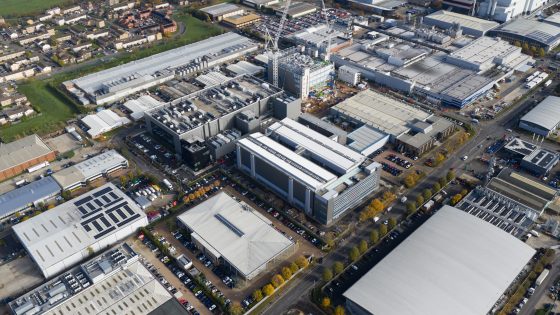
First reported on New Civil Engineer
30 Second Briefing
Claims that AI-ready data centres must consume unsustainable volumes of water are challenged by engineers pointing to closed-loop liquid cooling, adiabatic systems and air-side economisers that can cut potable water use close to zero in suitable climates. Designers are instead urged to prioritise grid-capable electrical infrastructure, high-density racks above 50kW, and resilient 132kV connections over evaporative cooling towers where local water stress is high. For civil and M&E teams, the message is to treat water as a site-specific constraint, not a universal blocker to large-scale AI deployments.
Technical Brief
- Planning objections increasingly focus on visual bulk, noise and grid impact rather than direct water draw.
- Civil layouts must reserve large footprints for electrical compounds and transformers, not just chiller yards.
- Structural grids are being optimised for heavy electrical rooms and battery systems as much as for server racks.
Our Take
The earlier New Civil Engineer webinar on BIM, CDEs and the ‘data handover gap’ (4 June 2026) shows the same publisher pushing clients to think about lifecycle information management; extending that thinking to AI data centres suggests future UK projects may be expected to evidence water and energy performance at handover as rigorously as structural compliance.
Because this piece sits under both ‘Projects’ and ‘Sustainability’ in a corpus with 2,385 tag-matched items, it is likely to influence how design teams justify cooling technology choices to planning authorities and local communities, especially where potable water competition is already a concern on major infrastructure corridors.
Prepared by collating external sources, AI-assisted tools, and Geomechanics.io’s proprietary mining database, then reviewed for technical accuracy & edited by our geotechnical team.
Related Articles


Related Industries & Products
Construction
Quality control software for construction companies with material testing, batch tracking, and compliance management.
CMRR-io
Streamline coal mine roof stability assessments with our cloud-based CMRR software featuring automated calculations, multi-scenario analysis, and collaborative workflows.
HYDROGEO-io
Comprehensive hydrogeological testing platform for managing, analysing, and reporting on packer tests, lugeon values, and hydraulic conductivity assessments.
GEODB-io
Centralised geotechnical data management solution for storing, accessing, and analysing all your site investigation and material testing data.