Sunderland–Sunniside pre-development deal: infrastructure and ground risks for engineers
Reviewed by Tom Sullivan
First reported on The Construction Index
30 Second Briefing
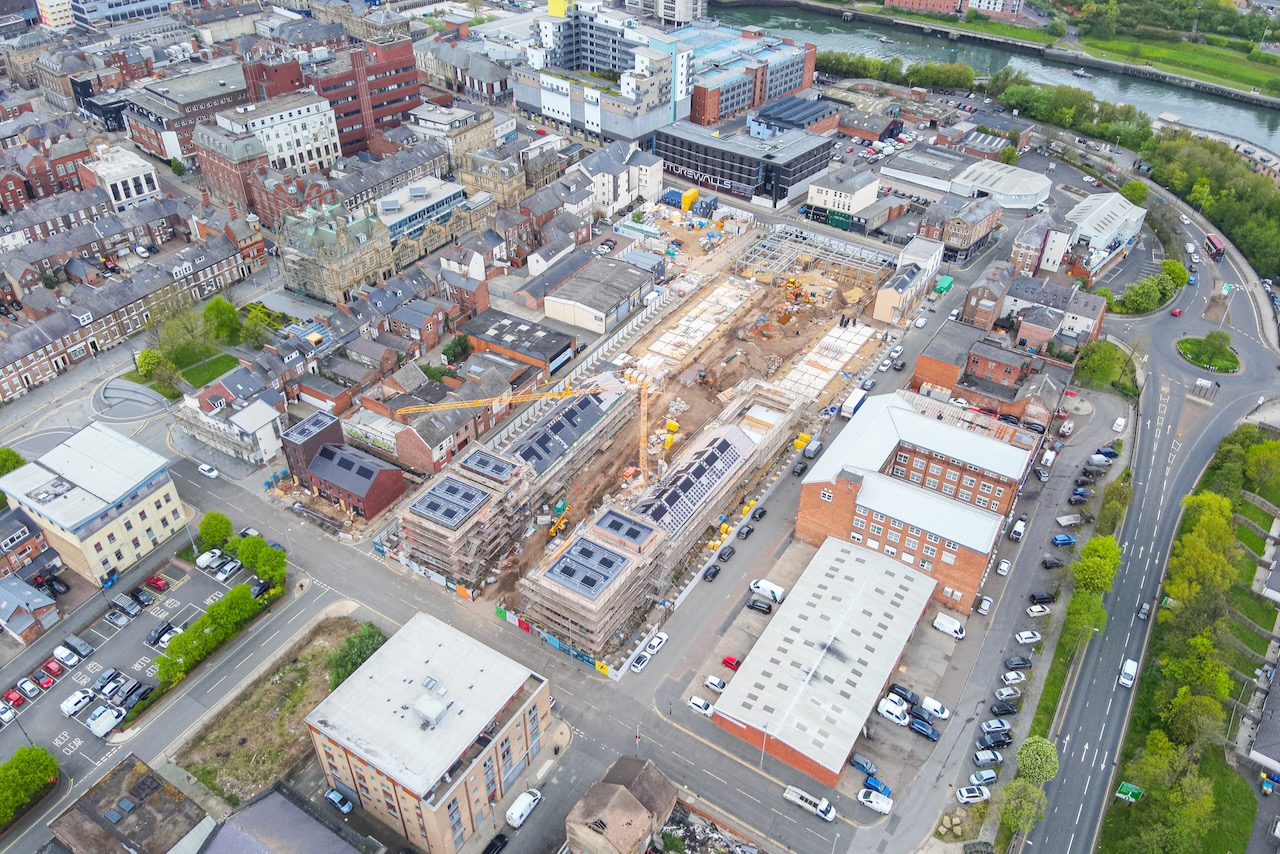
Sunderland City Council has signed a pre-development agreement with Muse, procured via Pagabo’s developer-led framework, to lead a masterplan for the Sunniside district. The plan could deliver around 1,000 new homes, implying substantial brownfield remediation, new utilities corridors and local street upgrades in a dense urban setting. Early engagement under a framework route signals scope for integrated ground investigation, drainage strategy and phased infrastructure design before detailed planning and procurement.
Technical Brief
- Framework route allows early packaging of site investigations, remediation and enabling works under a single developer.
- Pre-development agreement stage typically funds concept masterplanning, viability testing and infrastructure phasing strategies.
- Brownfield city-centre context implies complex interfaces with existing building basements, party walls and buried services.
- Early masterplanning enables integrated surface water management, blue–green corridors and future-proofed drainage outfalls.
- Staged delivery is likely to require temporary traffic management, haul routes and construction access within constrained streets.
Our Take
Muse appears repeatedly in our UK Infrastructure coverage, including Crescent Salford (Homes England/L&G-backed ECF scheme) and Holbeche Place in Solihull, signalling that Sunderland City Council is tapping a developer with an active pipeline of complex urban regeneration projects.
Within the 873 Infrastructure stories in our database, Muse-linked schemes often sit inside wider city‑region regeneration frameworks (e.g. Manchester and Salford), so a Sunniside pre‑development agreement likely positions Sunderland for a multi‑phase, council‑led renewal rather than a standalone build.
The use of a national framework provider such as Pagabo in England typically shortens procurement timelines and standardises risk allocation, which can be critical in de‑risking early‑stage city‑centre regeneration where ground conditions, existing utilities and heritage assets are often uncertain.
Prepared by collating external sources, AI-assisted tools, and Geomechanics.io’s proprietary mining database, then reviewed for technical accuracy & edited by our geotechnical team.
Related Articles


Related Industries & Products
Construction
Quality control software for construction companies with material testing, batch tracking, and compliance management.
Mining
Geotechnical software solutions for mining operations including CMRR analysis, hydrogeological testing, and data management.
HYDROGEO-io
Comprehensive hydrogeological testing platform for managing, analysing, and reporting on packer tests, lugeon values, and hydraulic conductivity assessments.
GEODB-io
Centralised geotechnical data management solution for storing, accessing, and analysing all your site investigation and material testing data.
QCDB-io
Comprehensive quality control database for manufacturing, tunnelling, and civil construction with UCS testing, PSD analysis, and grout mix design management.