Structural timber at Westminster: net-zero design takeaways for UK housebuilders
Reviewed by Tom Sullivan
First reported on The Construction Index
30 Second Briefing
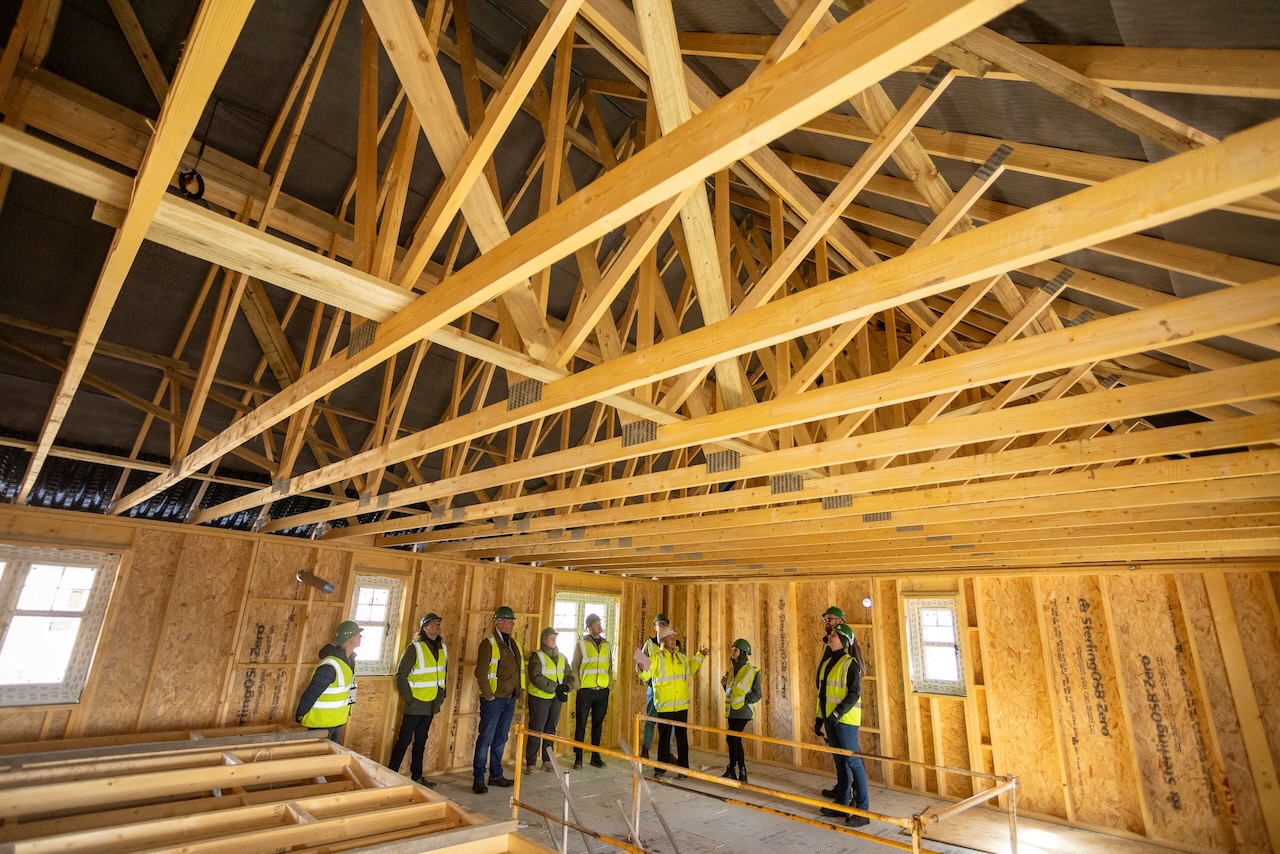
Structural timber’s role in accelerating UK housebuilding was pushed at a Palace of Westminster panel chaired by Matt Turmaine MP and Baroness Ritchie, with senior figures from the Structural Timber Association, Egger UK, Lowfield Timber Frames and Places for People addressing major housebuilders and social housing providers. STA CEO Andrew Orriss noted that seven of the UK’s top 15 housebuilders plan to manufacture in timber frame, aligning with DEFRA’s Timber in Construction Roadmap and Net Zero 2050 targets. Timber’s lower embodied carbon and carbon sequestration were positioned as key advantages over traditional materials.
Technical Brief
- Panel convened at the Palace of Westminster, signalling direct engagement with central government decision‑makers.
- Session chaired by Matt Turmaine MP and Baroness Ritchie, giving cross‑House political sponsorship.
- Structural Timber Association fronted the technical case, with CEO Andrew Orriss leading industry input.
- Supply‑chain representation included Egger UK (engineered timber products) and Lowfield Timber Frames (offsite frames).
- Client‑side perspective came from Places for People’s production director for developments, linking to volume delivery.
- Audience targeted major housebuilders and social housing providers, i.e. organisations controlling large build pipelines.
- STA promoted timber from managed forests as “zero impact” on the natural environment when responsibly harvested.
- Britain’s adopters cited by name: Vistry, Taylor Wimpey, Barratt, Redrow Developments, Bellway, Persimmon, Cala, Avant.
- Timber’s carbon sequestration during tree growth was framed as a differentiator versus traditional structural materials.
Our Take
The involvement of the House of Commons Public Accounts Committee links this timber push to a body that, in our coverage, has recently been highly critical of cost control and delivery risk on major schemes like Sizewell C and the Atomic Weapons Establishment, suggesting any large-scale shift to structural timber will be scrutinised on value-for-money grounds as much as on carbon benefits.
With 15 top UK housebuilders in the frame and a policy horizon stretching into the 2030s and towards the 2050 net zero target, structural timber adoption in Britain is likely to be shaped as much by DEFRA’s land-use and forestry policy as by planning or building regulations, which could affect long-term supply security for firms such as Egger UK and Lowfield Timber Frames.
Materials pieces in our database tagged to Sustainability and Projects increasingly feature UK-wide decarbonisation targets rather than project-by-project goals, so this Westminster-focused timber initiative positions the Structural Timber Association alongside other sector bodies trying to influence national frameworks rather than just individual developments.
Prepared by collating external sources, AI-assisted tools, and Geomechanics.io’s proprietary mining database, then reviewed for technical accuracy & edited by our geotechnical team.
Related Articles



Related Industries & Products
Construction
Quality control software for construction companies with material testing, batch tracking, and compliance management.
Mining
Geotechnical software solutions for mining operations including CMRR analysis, hydrogeological testing, and data management.
QCDB-io
Comprehensive quality control database for manufacturing, tunnelling, and civil construction with UCS testing, PSD analysis, and grout mix design management.