Geomechanics.io

  • Free Tools
Sign UpLog In
Built byBoxcut Studio

Geomechanics.io

Geomechanics, Streamlined.

© 2026 Geomechanics.io. All rights reserved.

Geomechanics.io

CMRR-ioGEODB-ioHYDROGEO-ioQCDB-ioFree Tools & CalculatorsBlogLatest Industry News

Industries

MiningConstructionTunnelling

Company

Terms of UsePrivacy PolicyLinkedIn
    Projects
    Safety

    Stockton bridge demolition withdrawal: structural options and risks for engineers

    October 5, 2026|

    Reviewed by Tom Sullivan

    Stockton bridge demolition withdrawal: structural options and risks for engineers

    First reported on New Civil Engineer

    30 Second Briefing

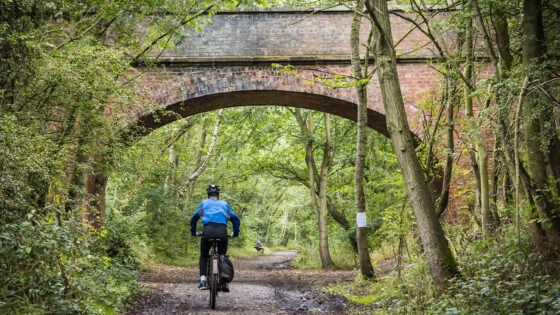
    Stockton-on-Tees Borough Council has withdrawn its planning application to demolish two historic bridges following a campaign by heritage engineering activists. The decision keeps the existing bridge structures in service for now, avoiding immediate removal and associated works such as deck breaking, abutment demolition and traffic management on adjacent approaches. Engineers in the region can expect further structural assessment, options appraisal and potential retrofit or strengthening proposals rather than wholesale replacement.

    Technical Brief

    • Withdrawal of the demolition application pauses any immediate heavy plant mobilisation and temporary works installation on site.
    • Stockton-on-Tees Borough Council must now rely on existing inspection regimes to justify ongoing bridge serviceability.
    • Any revised proposals will likely require refreshed structural assessments, including updated load rating against current highway standards.
    • Retention of the structures prolongs management of ageing materials, including potential fatigue, corrosion and bearing deterioration issues.
    • Safety risk now shifts towards interim monitoring, defect tracking and reactive maintenance rather than controlled demolition risk.
    • Heritage engineering campaigners’ input increases pressure for transparent publication of assessment methodologies and safety factors used.
    • Planning withdrawal defers traffic management impacts from demolition, but extends exposure to current parapet and approach-road standards.
    • Similar contested heritage bridges may now face stronger scrutiny of demolition justifications and alternative strengthening options.

    Our Take

    The earlier 11 September 2026 piece in our database shows Stockton-on-Tees Borough Council was already under pressure from the Historical Railways Estate (HRE) Group over these two disused railway bridges, so the withdrawal signals how effective heritage campaigners can be in shaping local authority asset decisions.

    The recent proposal for a National Bridge Retrofit Library highlighted at New Civil Engineer’s Bridges Conference suggests that, instead of demolition, councils such as Stockton-on-Tees could increasingly draw on standardised retrofit solutions for disused or low‑use bridges to address safety while preserving heritage value.

    Geotechnical Software for Modern Teams

    Centralise site data, logs, and lab results with GEODB-io, CMRR-io, and HYDROGEO-io.

    No credit card required.

    • Save and export unlimited calculations
    • Advanced data visualisation
    • Generate professional PDF reports
    • Cloud storage for all your projects

    Prepared by collating external sources, AI-assisted tools, and Geomechanics.io’s proprietary mining database, then reviewed for technical accuracy & edited by our geotechnical team.

    Related Articles

    Strabag’s Pfaffensteig Tunnel contract: design and delivery notes for rail engineers
    Infrastructure
    5 months ago

    Strabag’s Pfaffensteig Tunnel contract: design and delivery notes for rail engineers

    Strabag and Group company Züblin have secured the design-and-build structural works for the ABS Gäubahn Nord/Pfaffensteig Tunnel in south-west Germany, centred on an 11km twin-bore rail tunnel linking Stuttgart Airport station directly to the Gäubahn line towards Switzerland. About 9.8km will be driven by two TBMs, with conventional tunnelling for the A8 motorway undercrossing and airport connection, plus a 240m cut-and-cover section, retaining structures, railway underpasses and a grade-separated crossing. A 3km surface section will be upgraded and partially realigned for 200km/h operation, delivered under an integrated project delivery model with Ed. Züblin, Wayss & Freytag and Strabag AG sharing tunnelling, structural and earthworks packages.

    National Grid TBM under the Thames: tunnelling design and risk notes for engineers
    Infrastructure
    7 months ago

    National Grid TBM under the Thames: tunnelling design and risk notes for engineers

    A 271.5‑tonne Herrenknecht Mixshield TBM, Caroline, has started driving a 2.2km electricity cable tunnel with a 4m internal diameter beneath the River Thames in Essex for National Grid’s Grain to Tilbury project, delivered by the Ferrovial BEMO joint venture. The drive will pass through variable Thames estuary ground conditions between 35m‑deep launch and reception shafts of 15m and 12m diameter, with tunnelling continuing into 2026 and overall scheme completion targeted for 2029. The new tunnel will replace the 1969 Thames Cable Tunnel and carry new high‑voltage circuits between Grain and Tilbury substations.

    Panama Canal Mixshield undercrossing: design and tunnelling lessons for engineers
    Infrastructure
    8 months ago

    Panama Canal Mixshield undercrossing: design and tunnelling lessons for engineers

    A 13.46m diameter Herrenknecht Mixshield TBM has broken through into the future Balboa station on Panama Metro Line 3 after completing the first-ever TBM undercrossing of the Panama Canal at depths exceeding 60m below sea level. The 5,600kW, 26,616kNm machine, fitted with an accessible cutterhead and more than 4,500 sensors linked via the Herrenknecht.Connected platform, has achieved peak advance of 150 segment rings (about 300m) per month through mixed sandstone, tuff, breccias and basalt. Around 1.5km of the 4.5km twin-track tunnel remains to final breakthrough.

    Related Industries & Products

    Construction

    Quality control software for construction companies with material testing, batch tracking, and compliance management.

    CMRR-io

    Streamline coal mine roof stability assessments with our cloud-based CMRR software featuring automated calculations, multi-scenario analysis, and collaborative workflows.

    HYDROGEO-io

    Comprehensive hydrogeological testing platform for managing, analysing, and reporting on packer tests, lugeon values, and hydraulic conductivity assessments.

    GEODB-io

    Centralised geotechnical data management solution for storing, accessing, and analysing all your site investigation and material testing data.

    AllGeotechnicalInfrastructureHazardsEnvironmental