Geomechanics.io

  • Free Tools
Sign UpLog In
Built byBoxcut Studio

Geomechanics.io

Geomechanics, Streamlined.

© 2026 Geomechanics.io. All rights reserved.

Geomechanics.io

CMRR-ioGEODB-ioHYDROGEO-ioQCDB-ioFree Tools & CalculatorsBlogLatest Industry News

Industries

MiningConstructionTunnelling

Company

Terms of UsePrivacy PolicyLinkedIn
    Projects
    Sustainability

    Severn Trent wastewater failings: regulatory and design lessons for engineers

    July 10, 2026|

    Reviewed by Tom Sullivan

    Severn Trent wastewater failings: regulatory and design lessons for engineers

    First reported on New Civil Engineer

    30 Second Briefing

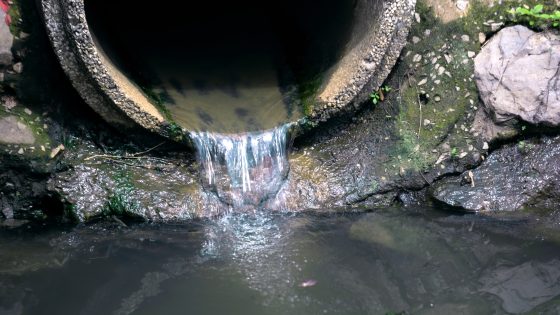
    Severn Trent Water has avoided a financial penalty from Ofwat despite “serious failings” in wastewater and sewage management, after committing to wastewater treatment works expansions and nature-based interventions such as wetlands and catchment measures. The company’s programme includes increasing capacity at existing wastewater facilities and deploying natural attenuation and storage solutions to reduce storm overflow discharges. For civil and environmental engineers, the case signals regulatory weight behind early engagement, demonstrable upgrade plans and integrated grey–green infrastructure rather than purely end-of-pipe compliance.

    Technical Brief

    • Ofwat framed the outcome as contingent on “proactive engagement”, signalling process expectations for future enforcement cases.

    Our Take

    Ofwat’s acceptance of a £44.7M enforcement package from Dŵr Cymru Welsh Water (8 June 2026) shows that, in our coverage, the regulator is increasingly tying serious wastewater failings to structured remediation programmes rather than relying solely on financial penalties.

    The Defra white paper on compulsory condition monitoring across England’s water networks (20 January 2026) suggests that operators facing ‘serious failings’ will soon be judged not just on incident response but on the robustness of their ongoing asset health data and inspection regimes.

    Across Environmental-tagged pieces involving Ofwat, there is a clear pattern of linking enforcement outcomes to future capital and operational commitments, which signals that water companies may need to budget for proactive network upgrades as a quasi-regulatory requirement rather than discretionary spend.

    Geotechnical Software for Modern Teams

    Centralise site data, logs, and lab results with GEODB-io, CMRR-io, and HYDROGEO-io.

    No credit card required.

    • Save and export unlimited calculations
    • Advanced data visualisation
    • Generate professional PDF reports
    • Cloud storage for all your projects

    Prepared by collating external sources, AI-assisted tools, and Geomechanics.io’s proprietary mining database, then reviewed for technical accuracy & edited by our geotechnical team.

    Related Articles

    Sewage discharges under-reported: implications for UK drainage engineers
    Environmental
    3 days ago

    Sewage discharges under-reported: implications for UK drainage engineers

    England’s nine water and sewerage companies failed to report more than 50,000 sewage discharges within the legally required timeframe in the first half of 2026, according to campaign group Surfers Against Sewage. The missed notifications affect storm overflow and combined sewer outfall events that should trigger rapid incident reporting to regulators and local authorities. For drainage and wastewater engineers, the scale of under-reporting complicates network performance assessment, spill frequency analysis and the design of storage, screening and real-time control upgrades.

    England’s low reservoir levels: operational implications for water engineers
    Environmental
    6 days ago

    England’s low reservoir levels: operational implications for water engineers

    Most reservoirs in England are now at “notably” or “exceptionally” low storage levels after a sixth consecutive dry month, triggering government intervention and temporary drought measures to safeguard public supply. The Environment Agency has activated drought plans and is working with water companies on options including reduced abstraction from sensitive catchments and accelerated deployment of temporary use bans. Civil and water engineers should anticipate tighter operating constraints on raw water intakes, revised yield assumptions for treatment works, and potential fast‑tracked resilience schemes such as inter‑basin transfers and leakage reduction projects.

    South West Water £7.87M pollution fine: operational lessons for civil engineers
    Environmental
    11 days ago

    South West Water £7.87M pollution fine: operational lessons for civil engineers

    South West Water has been fined £7.87M after a judge ruled that multiple environmental offences across Devon and Cornwall stemmed from “reckless failures” in its management systems and responses to known pollution risks. The case centres on repeated discharges from wastewater assets, with the court pointing to inadequate operational controls and risk management rather than isolated incidents. For civil and environmental engineers, the ruling signals closer scrutiny of sewerage network operation, monitoring regimes and contingency planning for combined sewer overflows and treatment works.

    Related Industries & Products

    Construction

    Quality control software for construction companies with material testing, batch tracking, and compliance management.

    CMRR-io

    Streamline coal mine roof stability assessments with our cloud-based CMRR software featuring automated calculations, multi-scenario analysis, and collaborative workflows.

    HYDROGEO-io

    Comprehensive hydrogeological testing platform for managing, analysing, and reporting on packer tests, lugeon values, and hydraulic conductivity assessments.

    GEODB-io

    Centralised geotechnical data management solution for storing, accessing, and analysing all your site investigation and material testing data.

    AllGeotechnicalInfrastructureHazardsEnvironmental