Schneider’s 720kW StarCharge Fast 720: depot design and load notes for engineers
Reviewed by Tom Sullivan
First reported on The Construction Index
30 Second Briefing
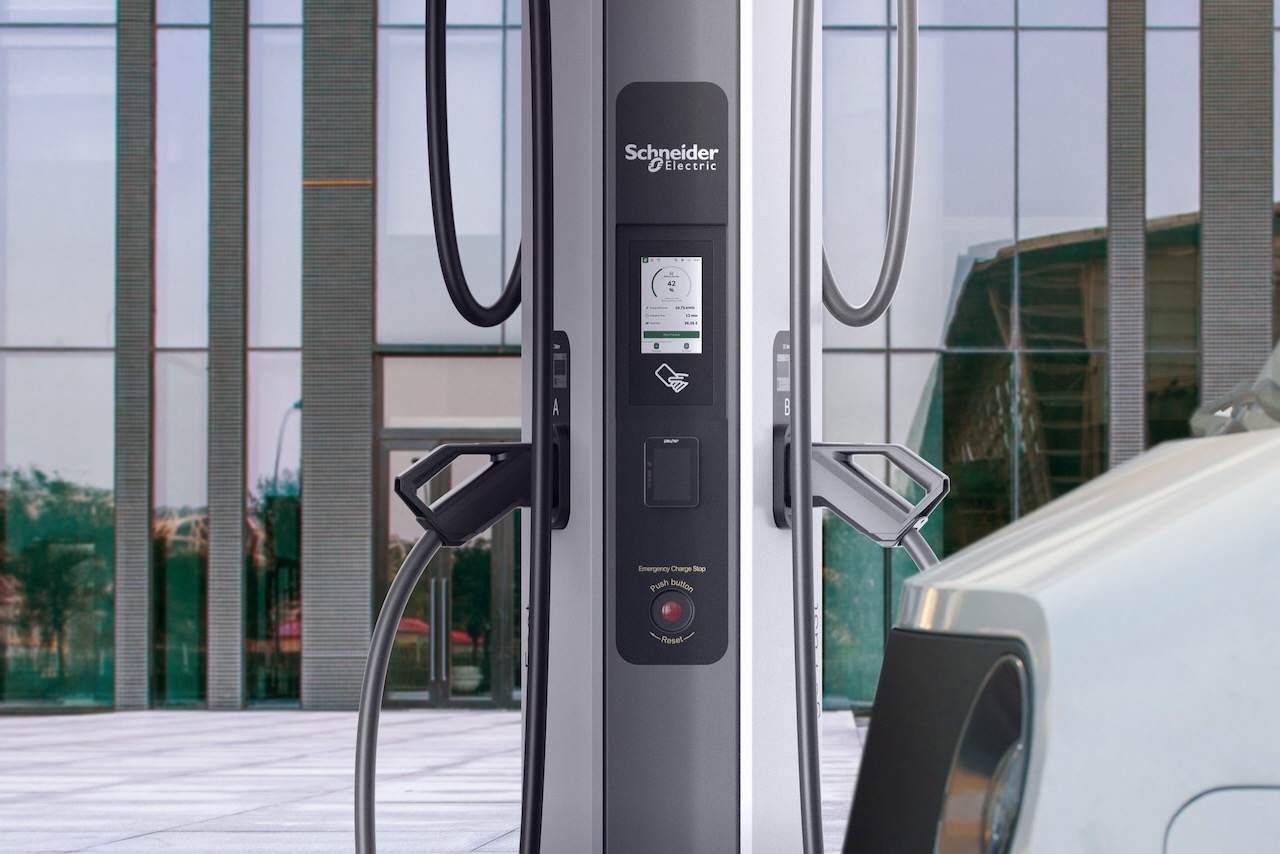
Schneider Electric has introduced its StarCharge Fast 720 system to the UK, delivering up to 720kW DC and simultaneously charging up to 12 EVs for fleet and heavy-duty transport depots. The unit operates at 97% efficiency and uses dynamic load management to optimise charging across mixed vehicle types while a decentralised layout allows up to six dispensers to be sited within 80m of a single Boost Pro+ Power Cabinet, limiting grid connection points and installation works. Remote monitoring via the EcoStruxure Energy Asset Portal and 24/7 support target high-availability, mission-critical charging yards.
Technical Brief
- StarCharge Fast 720 is aimed specifically at commercial, industrial and fleet depot installations, not retail forecourts.
- Architecture separates Boost Pro+ Power Cabinet from up to six satellite dispensers to decouple grid and parking layouts.
- Dispensers can be distributed within an 80 m radius, easing integration around existing yards, buildings and traffic flows.
- Fewer grid connection points reduce DNO interface works, trenching and switchgear compared with multiple standalone chargers.
- Decentralised layout and cabinet siting strategy are intended to cut perceived acoustic impact in noise‑sensitive depots.
- EcoStruxure Energy Asset Portal enables remote condition monitoring and fault response without on‑site electrical staff presence.
- Lifecycle package includes tailored maintenance plans, relevant for operators needing guaranteed uptime for duty‑cycle‑critical fleets.
- For large logistics or construction plant depots, the topology suits phased expansion of charging capacity without major re‑cabling.
Our Take
Schneider Electric’s use of the EcoStruxure Energy Asset Portal here links directly to its broader software‑defined automation push seen in the EcoStruxure Foxboro launch (10 Feb 2026), signalling that high‑power EV infrastructure is being folded into the same digital control and optimisation stack as process plants.
The 720 kW, 12‑vehicle configuration and 80 m dispenser radius are well suited to depot‑style layouts for mining or construction fleets in the UK, where operators often retrofit constrained brownfield yards and need to minimise new high‑voltage connection points.
In our database of 814 Infrastructure stories, Schneider Electric increasingly appears not just as an equipment vendor but as a systems integrator for energy efficiency, and this mirrors its MoU with Codelco (3 Feb 2026) where electrified fleets and power‑quality management are central themes.
Prepared by collating external sources, AI-assisted tools, and Geomechanics.io’s proprietary mining database, then reviewed for technical accuracy & edited by our geotechnical team.
Related Articles


Related Industries & Products
Construction
Quality control software for construction companies with material testing, batch tracking, and compliance management.
Mining
Geotechnical software solutions for mining operations including CMRR analysis, hydrogeological testing, and data management.
CMRR-io
Streamline coal mine roof stability assessments with our cloud-based CMRR software featuring automated calculations, multi-scenario analysis, and collaborative workflows.
HYDROGEO-io
Comprehensive hydrogeological testing platform for managing, analysing, and reporting on packer tests, lugeon values, and hydraulic conductivity assessments.
GEODB-io
Centralised geotechnical data management solution for storing, accessing, and analysing all your site investigation and material testing data.