Schindler R.I.S.E robots: installation, safety and shaft tolerances for engineers
Reviewed by Joe Ashwell
First reported on The Construction Index
30 Second Briefing
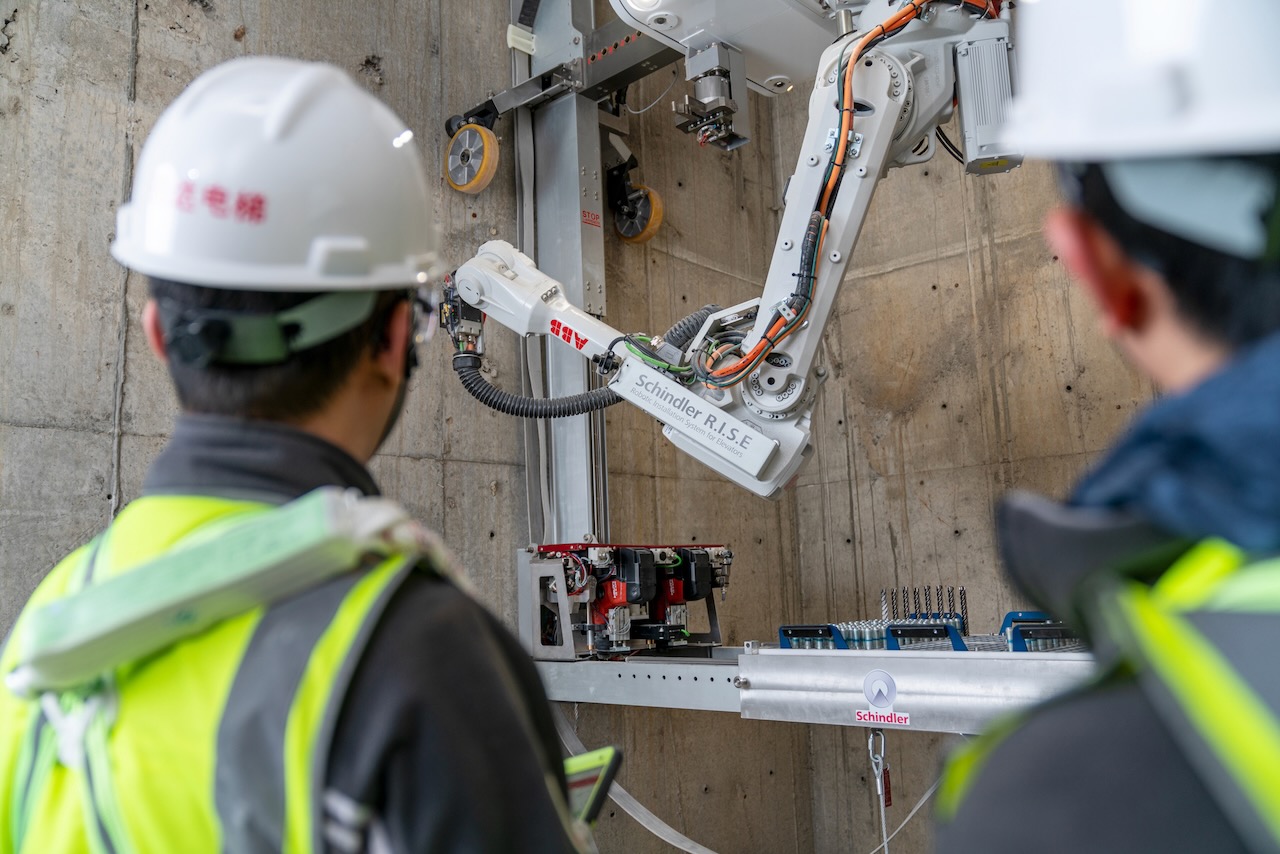
Schindler has expanded its R.I.S.E robotic elevator installation fleet from five to seven units, using automated drilling and anchor-setting to cut manual handling and overhead work in lift shafts. The robots are deployed in hoistways to perform repetitive, high-precision tasks such as bracket positioning and fastening, reducing installer exposure to work at height and confined spaces. For contractors and structural engineers, wider R.I.S.E use could influence shaft tolerance requirements, fixing layouts, and programme durations on high-rise core construction.
Technical Brief
- R.I.S.E units are configured as self-climbing platforms that progress floor-by-floor within the hoistway.
- Robots integrate drilling, anchor insertion and torque-controlled fastening in a single automated work sequence.
- Positioning is guided by digital layout data, tightening tolerances on bracket locations versus manual tape-out.
- Embedded sensors log drilling parameters and torque values, enabling traceable QA records for each fixing point.
- Remote supervision reduces the number of operatives required inside the shaft during early core construction.
- Reduced manual overhead drilling directly targets musculoskeletal injury risk and hand–arm vibration exposure.
- Consistent drilling and fixing patterns support more predictable load transfer into shaft walls and inserts.
- Wider adoption could push contractors to standardise hoistway geometries and cast-in features to suit robotic access.
Our Take
For infrastructure practitioners, Schindler’s R.I.S.E work suggests that lift and vertical-transport OEMs may increasingly dictate construction sequencing and shaft design tolerances, in much the same way that tunnelling and TBM suppliers already shape contract packaging and risk allocation on major projects.
Prepared by collating external sources, AI-assisted tools, and Geomechanics.io’s proprietary mining database, then reviewed for technical accuracy & edited by our geotechnical team.
Related Articles


Related Industries & Products
Construction
Quality control software for construction companies with material testing, batch tracking, and compliance management.
Tunnelling
Specialised solutions for tunnelling projects including grout mix design, hydrogeological analysis, and quality control.
QCDB-io
Comprehensive quality control database for manufacturing, tunnelling, and civil construction with UCS testing, PSD analysis, and grout mix design management.