Geomechanics.io

  • Free Tools
Sign UpLog In
Built byBoxcut Studio

Geomechanics.io

Geomechanics, Streamlined.

© 2026 Geomechanics.io. All rights reserved.

Geomechanics.io

CMRR-ioGEODB-ioHYDROGEO-ioQCDB-ioFree Tools & CalculatorsBlogLatest Industry News

Industries

MiningConstructionTunnelling

Company

Terms of UsePrivacy PolicyLinkedIn
    Projects
    Product

    San Francisco Bay Area mining tech funding: key signals for project teams

    November 6, 2026|

    Reviewed by Tom Sullivan

    San Francisco Bay Area mining tech funding: key signals for project teams

    First reported on MINING.com

    30 Second Briefing

    San Francisco Bay Area mining tech startups have attracted $2.1 billion, or 35% of global funding tracked across 170 companies in 22 countries, despite hosting only 13 firms versus 10 in Santiago and nine in Perth, which together raised $92 million. Five companies – led by KoBold Metals on $1.2 billion, Boston Metal on $485 million and Mariana Minerals on $394 million – account for $2.8 billion, with processing and refining drawing 38% of capital while mine-operations software gets just 5%. Rio Tinto and BHP Ventures dominate corporate backing, supporting 23 and 17 startups respectively, while Latin America’s 29 firms secure only $59 million despite Chile and Peru supplying 35% of global copper.

    Technical Brief

    • Funding review covers 170 mining-tech startups across 22 countries, giving a reasonably broad sample.
    • 84 of the 170 companies were founded from 2020 onwards, indicating a very young cohort.
    • Processing and refining category attracted $2.2 billion, equating to 38% of all tracked capital.
    • Mine-operations software segment comprises 54 startups yet secures only 5% of total funding.
    • Five largest recipients together raised $2.8 billion, led by KoBold Metals, Boston Metal and Mariana Minerals.
    • Australia recorded 33 mining-tech exits on $274 million of venture capital deployed.
    • Canada shows 25 exits but on a much higher $910 million of venture funding.
    • United States achieved only 13 exits, yet associated venture funding reached $3.5 billion.
    • Latin America’s 29 startups collectively attracted $59 million, despite Chile and Peru’s 35% share of global copper output.
    • For mine operators, skewed funding towards processing/refining suggests slower commercial maturation of operational software tools.

    Our Take

    The concentration of venture funding into KoBold Metals and Boston Metal aligns with our broader coverage showing listed majors like BHP and Rio Tinto under equity-market pressure, suggesting more of the innovation risk in copper, nickel and other critical minerals is being shifted to private tech vehicles rather than balance sheets of the MINING.COM TOP 50.

    Australia and Canada’s relatively high mining-tech exit counts versus their more modest venture funding tallies in this dataset imply those ecosystems are already recycling capital from earlier generations of mine-operations and processing software into new cobalt, copper and gold-focused startups, which can matter for service providers choosing where to base product teams.

    Geotechnical Software for Modern Teams

    Centralise site data, logs, and lab results with GEODB-io, CMRR-io, and HYDROGEO-io.

    No credit card required.

    • Save and export unlimited calculations
    • Advanced data visualisation
    • Generate professional PDF reports
    • Cloud storage for all your projects

    Prepared by collating external sources, AI-assisted tools, and Geomechanics.io’s proprietary mining database, then reviewed for technical accuracy & edited by our geotechnical team.

    Related Articles
    HazardProof in mining projects: hazardous area compliance explained for engineers
    Mining
    about 2 hours ago

    HazardProof in mining projects: hazardous area compliance explained for engineers

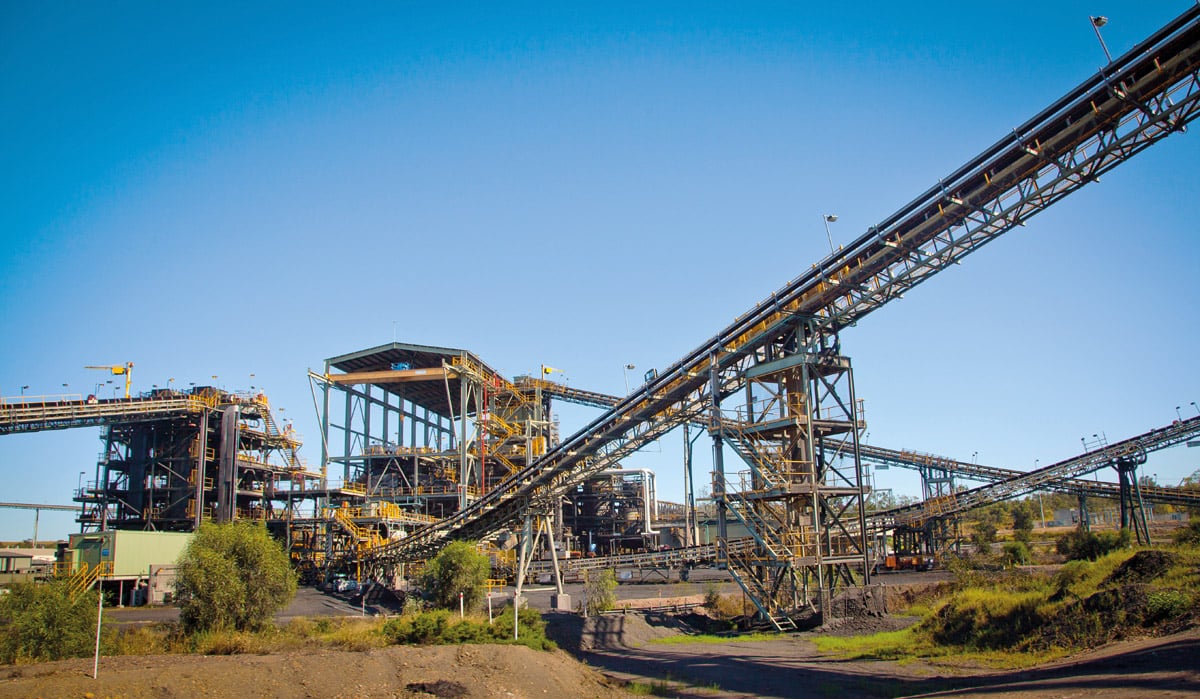
    HazardProof is a specialist electrical engineering services firm formed by Chris and Olivia Mapleson in 2024 to integrate hazardous area compliance into the full design and delivery cycle of mining projects. The company focuses on aligning high-voltage and low-voltage installations, switchrooms and process plant electrics with AS/NZS hazardous area classifications, zoning and equipment protection levels as mine infrastructure is upgraded or expanded. For operators, the model reduces rework during brownfield modifications and helps keep critical power and control systems compliant as standards and site layouts change.

    BBA on faster mine approvals: planning and design lessons for project teams
    Mining
    about 2 hours ago

    BBA on faster mine approvals: planning and design lessons for project teams

    Faster mine approvals hinge on resolving key technical, environmental and social questions much earlier in project planning, with BBA urging proponents to integrate geotechnical design, water management and community impact workstreams from the outset. The firm points to bottlenecks such as late-stage tailings storage facility concept changes and incomplete baseline hydrogeological data that trigger regulator queries and schedule slippage. For engineers, this means front-loading trade-off studies, closure concepts and cumulative effects assessments rather than deferring them to feasibility or permitting stages.

    AngloGold $900m mine expansion: project IRR and safety notes for engineers
    Mining
    about 2 hours ago

    AngloGold $900m mine expansion: project IRR and safety notes for engineers

    AngloGold Ashanti will invest up to $900 million in brownfield expansions at Geita in Tanzania, Siguiri in Guinea, Cuiabá in Brazil and the ramp-up at Obuasi in Ghana, targeting an extra 300,000–450,000 oz/y of gold by 2030 and real IRRs above 35% by leveraging existing shafts, plants and infrastructure. Geita will take as much as $580 million to lift output to 600,000 oz/y, with Cuiabá receiving $200–250 million for roughly 75,000 oz/y more and Siguiri $70 million for about 100,000 oz/y. Q3 2026 EBITDA rose 12% year-on-year to $1.568 billion on an average realised gold price of $4,239/oz, while all-in costs climbed to $1,534/oz and a fatal rockfall occurred at the Sukari underground mine in August.

    Related Industries & Products

    Mining

    Geotechnical software solutions for mining operations including CMRR analysis, hydrogeological testing, and data management.

    CMRR-io

    Streamline coal mine roof stability assessments with our cloud-based CMRR software featuring automated calculations, multi-scenario analysis, and collaborative workflows.

    HYDROGEO-io

    Comprehensive hydrogeological testing platform for managing, analysing, and reporting on packer tests, lugeon values, and hydraulic conductivity assessments.

    GEODB-io

    Centralised geotechnical data management solution for storing, accessing, and analysing all your site investigation and material testing data.

    AllGeotechnicalInfrastructureHazardsEnvironmental