Geomechanics.io

  • Free Tools
Sign UpLog In
Built byBoxcut Studio

Geomechanics.io

Geomechanics, Streamlined.

© 2026 Geomechanics.io. All rights reserved.

Geomechanics.io

CMRR-ioGEODB-ioHYDROGEO-ioQCDB-ioFree Tools & CalculatorsBlogLatest Industry News

Industries

MiningConstructionTunnelling

Company

Terms of UsePrivacy PolicyLinkedIn
    Projects
    Contract Award

    Perpetua Resources’ $40m US Army award: tungsten project lens for mine planners

    October 28, 2026|

    Reviewed by Joe Ashwell

    Perpetua Resources’ $40m US Army award: tungsten project lens for mine planners

    First reported on MINING.com

    30 Second Briefing

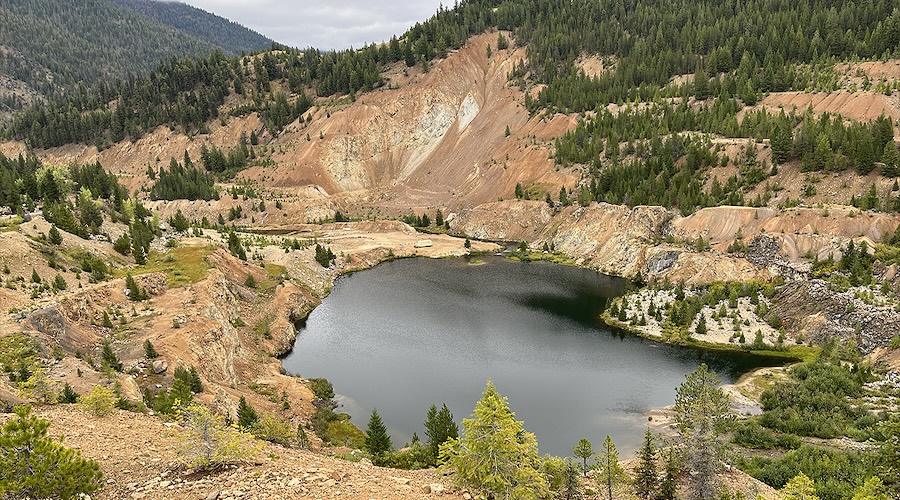
    Perpetua Resources has secured a 36‑month, US$40 million cost‑share award from the US Army’s Defense Ordnance Technology Consortium to evaluate tungsten concentrate production at the Stibnite gold‑antimony project in Idaho, with Perpetua matching the funding. The programme covers surface drilling to define a tungsten resource, metallurgical test work on a 550 kg sample grading 9.2% antimony and 4.2% tungsten, and design and permitting of an exploration decline beneath the Hangar Flats pit. Drilling to date has returned up to 9.8 m at 4.6% tungsten and 8.3% antimony, indicating potential high‑grade feed beneath existing gold–antimony resources.

    Technical Brief

    • Initial 18‑month phase budgeted at US$18 million, split equally between Perpetua and the US Army.
    • Subsequent phases’ scope and cost will be gated by preceding drilling, metallurgy, engineering and permitting outcomes.
    • Exploration decline is intended to access high‑grade antimony–tungsten–gold beneath the currently permitted Hangar Flats pit.
    • Any work outside the existing Stibnite mine plan footprint will trigger additional regulatory review and permitting.
    • Hangar Flats currently hosts ~1.37 Moz gold and >95 Mlb antimony resources not in the mine plan.
    • Wider district exploration could add to 3.1 Moz indicated/inferred gold and 99.8 Mlb antimony outside reserves.
    • Stibnite historically supplied ~50% of US tungsten and ~90% of US antimony demand during World War II.
    • US Government critical‑minerals awards to Perpetua now total US$126 million since 2022 across antimony and tungsten.
    • No commercial tungsten mining has operated in the US since 2015, leaving defence supply wholly import‑dependent.

    Our Take

    The high tungsten and antimony grades in the Hangar Flats and Yellow Pine area (with several intercepts above 1% W and >8% Sb) align with the US Army–INL modular pilot plant work reported in July 2026, suggesting that process flowsheets proven on antimony could be rapidly adapted to a tungsten–antimony concentrate stream from the same orebody.

    Within our 1243 Mining stories, tungsten appears far less frequently than gold, so this US-based tungsten revival at the Stibnite mining district stands out as one of the few pieces where tungsten, antimony and gold are all being advanced under a single, federally supported mine plan in the United States.

    Geotechnical Software for Modern Teams

    Centralise site data, logs, and lab results with GEODB-io, CMRR-io, and HYDROGEO-io.

    No credit card required.

    • Save and export unlimited calculations
    • Advanced data visualisation
    • Generate professional PDF reports
    • Cloud storage for all your projects

    Prepared by collating external sources, AI-assisted tools, and Geomechanics.io’s proprietary mining database, then reviewed for technical accuracy & edited by our geotechnical team.

    Related Articles

    Mining
    about 2 hours ago

    BHP’s Basto performance pillars: integration and safety lens for mine engineers

    Edgar Basto, Chief Enterprise Performance Officer at BHP, is targeting the next wave of performance gains by combining the company’s existing operational expertise with new technology deployments and a group-wide safety programme, outlined at IMARC 2026 in Sydney. The enterprise-level approach centralises performance improvement across BHP’s portfolio rather than by individual asset, signalling more standardised operating systems, data architectures and decision-support tools across iron ore, copper and coal. For engineers and managers, this points to tighter integration of technology, process discipline and safety metrics in future project and operations planning.

    Anfield Energy’s Utah uranium mill approvals: design and licensing notes for engineers
    Mining
    about 2 hours ago

    Anfield Energy’s Utah uranium mill approvals: design and licensing notes for engineers

    Anfield Energy has received draft renewal documents for the radioactive materials licence and groundwater discharge permit for its Shootaring Canyon Mill in Garfield County, Utah, one of only three constructed conventional uranium mills in the US. The draft licence would cap production at 1,500 tonnes, or 3 million lb, of yellowcake per year and mandates a financial surety, a defined groundwater monitoring network, and best available technology standards for process ponds, the South Cell and decontamination pad. Anfield is stripping legacy mill equipment ahead of targeted licence renewal in Q2 2027, while its Velvet-Wood project holds 4.6 million lb eU3O8 measured and indicated plus 552,000 lb inferred.

    FireFly copper-gold system near Nugget Pond: mine planning notes for engineers
    Mining
    about 2 hours ago

    FireFly copper-gold system near Nugget Pond: mine planning notes for engineers

    FireFly Metals has intersected a new volcanogenic massive sulphide copper-gold system at Mount Joy, just 2.6 km from its idle Nugget Pond mill and 35 km east of the Ming mine, with hole FFR26-071 cutting 22.5 m at 1.87% Cu and 0.64 g/t Au from 109 m, including 9 m at 2.95% Cu and 0.95 g/t Au. Follow-up drilling guided by downhole EM has hit ~40 m of semi-massive sulphides in FFR26-076 (240–280 m, assays pending), and a winter access road from Nugget Pond is planned to support further work. The discovery sits within the broader Green Bay plan, which currently envisages a 1.8 Mt/y plant over >32 years on 60.2 Mt at 1.9% Cu and 0.5 g/t Au, with a feasibility study and potential FID targeted for 2027.

    Related Industries & Products

    Mining

    Geotechnical software solutions for mining operations including CMRR analysis, hydrogeological testing, and data management.

    CMRR-io

    Streamline coal mine roof stability assessments with our cloud-based CMRR software featuring automated calculations, multi-scenario analysis, and collaborative workflows.

    HYDROGEO-io

    Comprehensive hydrogeological testing platform for managing, analysing, and reporting on packer tests, lugeon values, and hydraulic conductivity assessments.

    GEODB-io

    Centralised geotechnical data management solution for storing, accessing, and analysing all your site investigation and material testing data.

    AllGeotechnicalInfrastructureHazardsEnvironmental