Oxfordshire road resurfacing scheme: carbon and logistics lessons for engineers
Reviewed by Tom Sullivan
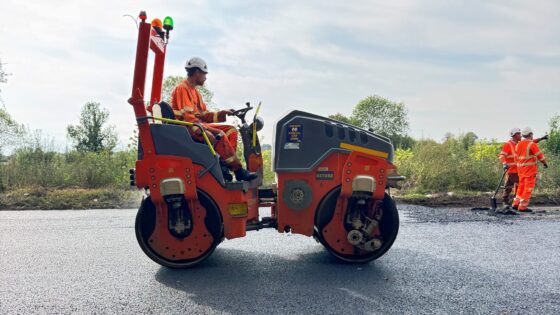
First reported on New Civil Engineer
30 Second Briefing
A 300m road resurfacing scheme in Chinnor, Oxfordshire has achieved an estimated 30t CO₂e reduction, nearly 40% lower than conventional resurfacing emissions from materials and plant. The trial focused on cutting embodied carbon in asphalt and binder, and reducing fuel use from on-site equipment over the short urban section. For practitioners, the result signals meaningful carbon savings are achievable even on small-scale, 300m interventions if low-carbon materials and optimised construction logistics are specified.
Technical Brief
- Estimated saving of ~30t CO₂e equates to roughly 0.1t CO₂e per linear metre treated.
- Results provide a quantified benchmark for low‑carbon resurfacing against “conventional methods” baselines used by the promoter.
- Short scheme length implies logistics optimisation (haul distances, plant utilisation) was material to emissions performance.
- Carbon outcome is reported as “estimated”, indicating reliance on lifecycle or PAS‑type calculation tools rather than direct measurement.
- For similar minor works, designers gain a data point supporting specification-stage carbon targets on sub‑kilometre resurfacing jobs.
Our Take
A 30t CO2e saving on just 300m of resurfacing in Oxfordshire suggests that, if replicated across even a modest local authority network, similar methods could materially shift highways maintenance carbon baselines without waiting for network-wide reconstruction cycles.
Within our 974 Infrastructure stories, relatively few projects quantify emissions reduction at the scheme scale as clearly as this 40% materials and equipment cut, which makes the Chinnor scheme a useful benchmark for other councils seeking defensible carbon accounting on small works.
The focus on quantified carbon outcomes here aligns with themes in New Civil Engineer’s recent webinar on BIM and asset data handover, implying that robust digital records of interventions like this resurfacing will be increasingly important for whole-life carbon reporting and future funding bids.
Prepared by collating external sources, AI-assisted tools, and Geomechanics.io’s proprietary mining database, then reviewed for technical accuracy & edited by our geotechnical team.


