Onshore wind farm expansion plan: design and groundworks lens for engineers
Reviewed by Tom Sullivan
First reported on New Civil Engineer
30 Second Briefing
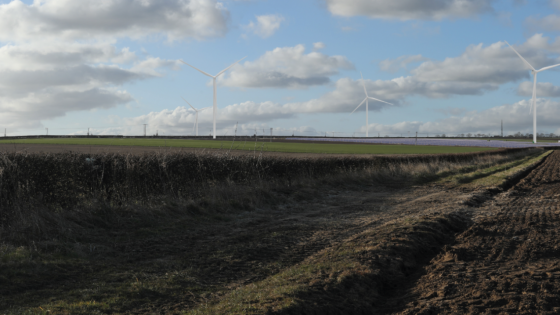
Plans have been lodged for a six‑turbine onshore wind farm extension in the East Riding of Yorkshire, making it one of the first new English onshore schemes to come forward since the government relaxed planning rules. The project would expand an existing renewable energy park, allowing connection to established grid and access infrastructure rather than building a standalone site. For civil and geotechnical teams, the brownfield-style extension suggests focused work on turbine foundations, access upgrades and grid reinforcement rather than full greenfield enabling works.
Technical Brief
- Six additional turbines trigger incremental foundation loading and turbine spacing checks against existing park geometry.
- Brownfield-style extension allows reuse of established site access tracks, reducing new earthworks and drainage interventions.
- Connection into the existing grid node limits new substation civil works to localised expansion and cable routing.
- Co-location with current assets raises cumulative noise, shadow flicker and visual impact constraints for layout optimisation.
- Shared construction compound and laydown areas minimise new hardstanding, but intensify bearing capacity and trafficking design.
- Existing ground investigation and geotechnical models can be updated rather than commissioned from first principles.
- Interface with operational turbines demands phased construction, exclusion zones and strict crane movement planning.
- For other English onshore schemes, similar extension strategies could materially cut enabling works cost and programme.
Our Take
Because New Civil Engineer also hosts webinars on BIM, CDEs and asset data handover, this kind of incremental wind expansion in the United Kingdom is a likely candidate for more rigorous digital asset management from design through to operation than earlier generations of onshore wind farms received.
Prepared by collating external sources, AI-assisted tools, and Geomechanics.io’s proprietary mining database, then reviewed for technical accuracy & edited by our geotechnical team.
Related Articles


Related Industries & Products
Construction
Quality control software for construction companies with material testing, batch tracking, and compliance management.
Mining
Geotechnical software solutions for mining operations including CMRR analysis, hydrogeological testing, and data management.
QCDB-io
Comprehensive quality control database for manufacturing, tunnelling, and civil construction with UCS testing, PSD analysis, and grout mix design management.