Old Oak £12bn partner search: ground and delivery risks for project teams
Reviewed by Tom Sullivan
First reported on The Construction Index
30 Second Briefing
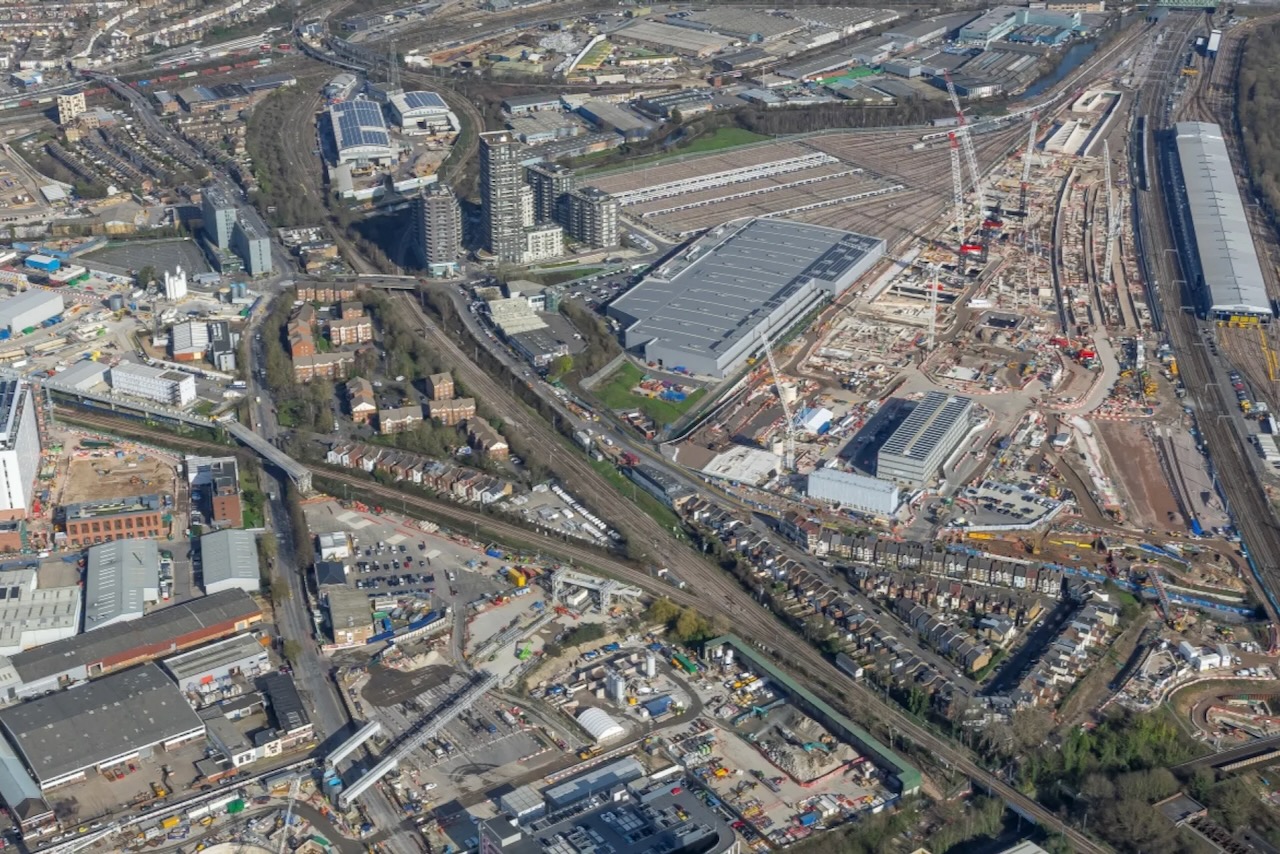
Heads of terms have been agreed to consolidate 70 acres around HS2’s Old Oak Common station into a single development site, triggering a £12bn search for a private sector delivery partner. The unified brownfield landholding, billed as London’s largest, is expected to support high-density mixed-use construction directly interfacing with the new HS2/Elizabeth line interchange. For civil and geotechnical teams, the scale and rail adjacency point to complex ground remediation, deep foundations and major utility diversions in a heavily constrained urban rail environment.
Technical Brief
- Heads of terms enable land assembly into a single legal and planning entity for procurement.
- Unified control over 70 acres simplifies phased infrastructure delivery, utilities corridors and site-wide groundworks.
- Rail-adjacent brownfield status implies extensive legacy foundations, buried services and contamination requiring remediation.
- Long-term concession or JV structures are likely, given the multi-decade, multi-billion-pound capex profile.
- Integration with HS2 and existing rail assets will drive stringent possession planning and vibration control requirements.
Our Take
Within our 838 Infrastructure stories, very few schemes match the scale of the HS2 Old Oak Common station area in central London, which signals that partner selection here will likely attract global tier-one developers rather than purely UK-focused contractors.
A unified 70-acre site around HS2 Old Oak Common in London gives unusual scope for integrated rail, over-station development and utilities corridors, which in practice tends to favour consortia that can bundle transport engineering, high-density urban regeneration and long-term asset management.
Prepared by collating external sources, AI-assisted tools, and Geomechanics.io’s proprietary mining database, then reviewed for technical accuracy & edited by our geotechnical team.


